
24/7 Customer Support

Free returns

Same-day & Next-day Delivery

Quality Guaranteed

Unlock Your Welcome Offers: FREE Delivery | Up to 80% OFF | Free 30-day JoyPlus trial
Download the APP
Custard is a convenient way to finish a crumble, pie or sponge pudding, but the wrong format can lead to waste, unsuitable ingredients or more preparation than expected. UK shoppers often compare products by appearance alone, while the details that affect everyday use are found in the ingredients, storage instructions and portion information.
Before choosing, watch for three common buying pitfalls:
Ready-to-serve custard is suitable for quick desserts. It can often be eaten chilled or warmed gently in a saucepan or microwave. This format is useful for weekday meals, family gatherings and anyone who does not want to measure ingredients.
Custard powder offers more control over consistency and serving size. It can be useful when preparing a larger pudding, trifle or sauce, but it needs to be made according to the pack directions. Once prepared, it should generally be treated as fresh food and refrigerated.
For a cupboard staple, check whether the unopened product can be stored at room temperature. After opening, follow the label instructions closely. Several ready-to-serve products in this selection advise refrigeration and consumption within three days.
Use the per 100g column when comparing calories, fat, saturates, carbohydrate, sugars and salt. Portion sizes vary, so comparing a stated serving alone can make one product appear lighter simply because the portion is smaller.
For example, Ambrosia Light Devon Custard lists 78 kcal, 2.0g fat and 7.4g sugars per 100g. Ambrosia Devon Custard lists 96 kcal, 2.9g fat and 10.6g sugars per 100g. These figures provide a practical comparison, although the preferred option depends on taste, portion size and intended use.
The term low-fat custard should also be read alongside the full nutrition panel. It does not mean that the product is free from sugar or suitable for every dietary plan.
Milk is a key ingredient in many classic products, including ready-to-serve Devon custard and egg custard. Anyone with a milk allergy should avoid products listing milk, buttermilk, whey or milk powder. Always recheck packaging because formulations can change.
For babies, age guidance is essential. Heinz Egg Custard and Heinz Fruit Medley Custard are labelled for children aged 6+ months. Follow the preparation, storage and supervision instructions, check the temperature before serving and discard leftovers fed directly from an opened pot.
Those seeking gluten-free custard should look for an explicit statement on the packaging. Heinz Fruit Medley Custard is described as free from cereals containing gluten, while Heinz Egg Custard is described as using a gluten-free recipe. This does not remove the need to check the latest label.
Flavour is another consideration. Vanilla custard suits traditional puddings, while strawberry custard or banana custard can work with fruit, pancakes and simple sponge desserts. For a vegan chocolate dessert, Alpro Smooth Chocolate Dessert is a plant-based option, but it is a chocolate dessert rather than traditional vanilla custard. It contains soy, so check the allergen information.
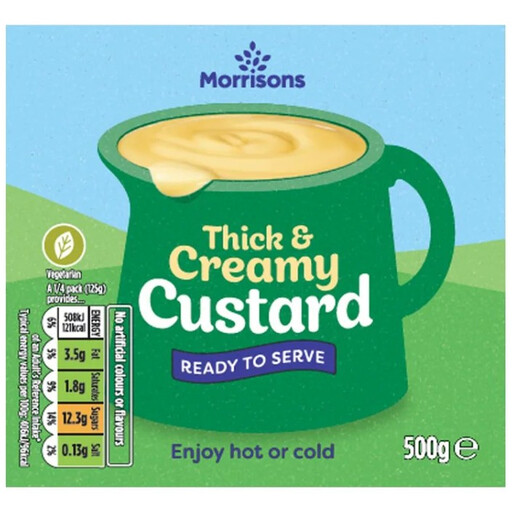
Why This Fits Their Persona: A practical 500g format for households wanting a ready-to-pour accompaniment for pies, crumbles and fruit without preparing powder.
It is clearly labelled ready to serve, reducing the risk of buying a powder when immediate convenience is the priority.
Vegetarian-friendly; 96 kcal and 2.8g fat per 100g according to the supplied product information.

Why This Fits Their Persona: Suits shoppers looking for a traditional Devon-style custard made with West Country milk and suitable for hot or cold serving.
The 400g can makes the quantity clear, helping shoppers avoid paying for a large pack when they need a smaller dessert accompaniment.
Ready to serve; contains 100mg calcium per 100g and is suitable for vegetarians.

Why This Fits Their Persona: A family-sized option for frequent dessert serving, with approximately eight servings and instructions for hob or microwave heating.
The 1kg quantity is stated clearly, making it easier to judge value for regular use rather than repeatedly buying small packs.
78 kcal and 7.4g sugars per 100g; the supplied information states 30% less sugar and fat than standard Ambrosia Devon Custard.
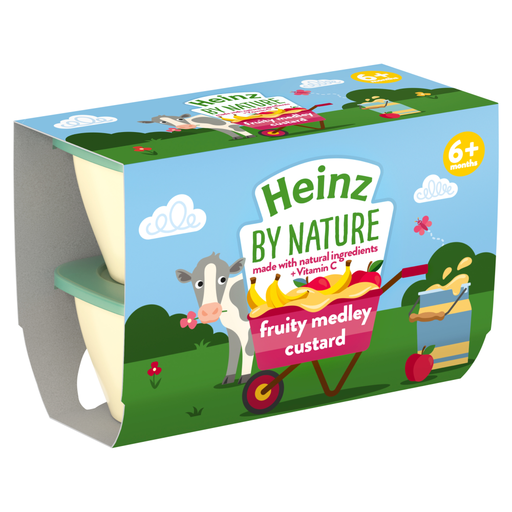
Why This Fits Their Persona: Portion-sized pots combine apple, banana and peach with custard for babies aged 6+ months, useful at home or when travelling.
The age guidance, 4x100g format and gluten-free recipe are stated, helping parents check suitability before buying.
Contains no added sugar according to the supplied description; each 100g pot provides fruit ingredients and vitamin C.
We have compiled a complete, real-time list of products that fully satisfy these strict selection criteria and UK safety regulations.
It depends on pack price, the amount of milk needed and how much you use per serving. Powder can be practical for making a larger quantity, but it requires preparation and refrigeration once made. Ready-to-serve custard may offer better convenience for smaller portions or occasional desserts.
Some ready-to-serve products provide microwave instructions, but the method varies. Transfer the custard to a microwave-safe container where required, cover it, stir during heating and check that it is evenly warm. Do not boil unless the packaging specifically instructs you to do so.
Follow the individual label. The ready-to-serve products listed here commonly advise keeping unused custard refrigerated and consuming it within three days. Baby pots have different instructions, including discarding food left after direct feeding and refrigerating unopened portions for the stated period.