Bake-sale stall organisers
If you plan to portion food from a packet or box, decide how it will be handled and keep each product’s ingredient information where families can consult it.


Choose ordinary custard creams if the stall plans to offer biscuits in small portions; choose an assorted chocolate box if the box and variety are the point. A chocolate-coated custard cream is still a biscuit, not an assortment. For any option, check the exact pack against the school’s arrangements for pupils with allergies and keep its ingredient information available when serving.
If you plan to portion food from a packet or box, decide how it will be handled and keep each product’s ingredient information where families can consult it.
Check the exact label and the school’s arrangements for the pupil concerned. The standard Tesco and Asda custard creams described in their listings contain milk and wheat; the biscuit’s name alone cannot establish suitability.
A chocolate-coated biscuit and a box of assorted chocolates offer different ways to display and hand out treats. Decide whether the stall needs biscuits, a selection of chocolates or a box to offer intact.
Choose the serving format first, then check the purchased product’s label and the school’s arrangements before deciding how to offer it.
Choose when: The stall wants biscuits that it can offer in small portions.
Bear in mind: Opening a shared packet calls for a serving arrangement that keeps the food and its ingredient information together.
Choose when: You want a biscuit with a chocolate coating; M&S describes its 191 g version as coated in milk chocolate.
Bear in mind: This remains a biscuit rather than an assortment of chocolates, and its ingredients need checking on the purchased pack.
Choose when: A box and a selection of chocolates matter more than offering biscuits.
Bear in mind: A boxed assortment does not, by itself, tell you whether individual pieces are wrapped or labelled.
| Priority | What to check | Your needs |
|---|---|---|
| Allergen information | Read the exact pack’s ingredients and allergen statement. Keep its label identifiable if food is taken out for serving, and check the school’s arrangements for pupils with allergies. | I want families to be able to identify the treat being offered. The standard Tesco and Asda custard cream listings both identify milk and wheat. |
| Format and portions | Check the pack format and how many portions the purchased item actually provides. Do not use its weight alone as a biscuit or chocolate-piece count. | Will the stall hand out biscuits, offer pieces from an assortment or display a box intact? A chocolate-coated custard cream is still a biscuit. |
| Dietary alternatives | Assess any specifically labelled alternative against the pupil’s requirements and its physical pack. Asda lists a distinct 125 g Free From custard cream as milk-free and gluten-free. | If a pupil needs an alternative, I would not assume an ordinary custard cream—or every product described as free from—meets that pupil’s requirements. |
Tesco and Asda list milk ingredients in their standard custard creams, so the flavour description cannot answer an allergen question.
Read the purchased pack. If an alternative is needed, assess a specifically labelled product against the pupil’s requirements.
Once biscuits or chocolates are separated from their packaging, families may have no straightforward way to check which ingredients belong to which treat.
Keep the original packaging with its serving arrangement, and avoid mixing foods whose labels could be confused.
Good Housekeeping Institute’s custard cream test dates from September 2020 and assessed appearance, aroma, taste and texture. Its positions do not describe the ingredients or pack of a product bought for this event.
Choose using the identity, size and label of the pack you intend to bring.
Tesco lists a 400 g packet of standard custard creams for the ordinary-biscuit route.
Asda lists both a 400 g standard custard cream packet and a separate 125 g Free From product.
M&S lists a 165 g Extra Cream custard cream and a distinct 191 g milk-chocolate-coated version.
Tesco lists Crawford's custard creams as a 300 g ordinary-biscuit packet.
A Joybuy listing describes McVitie's Tasties Custard Creams as a 300 g biscuit packet.
Cadbury describes its 312 g Milk Tray as an assorted milk-chocolate box, illustrating the boxed-chocolate route.
These options include a custard cream, assorted chocolates and other packaged treats. The custard pie and Smarties tubes are alternatives for the stall, not custard cream biscuits or boxes of assorted chocolates.
 No image available
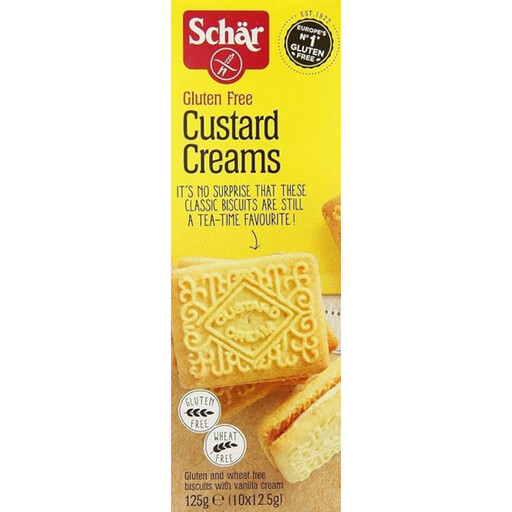
A 125g custard cream packet to assess if the stall needs a gluten-free biscuit option. Check the exact pack against each pupil’s requirements; gluten-free does not establish that it is free from other allergens.
 No image available
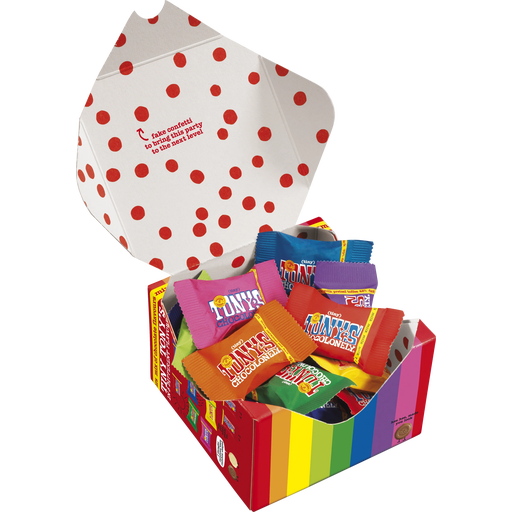
This 180g chocolate box fits a stall that wants an assorted-chocolate format rather than biscuits. Check the purchased box for its contents, ingredient information and how the chocolates can be served.
 No image available
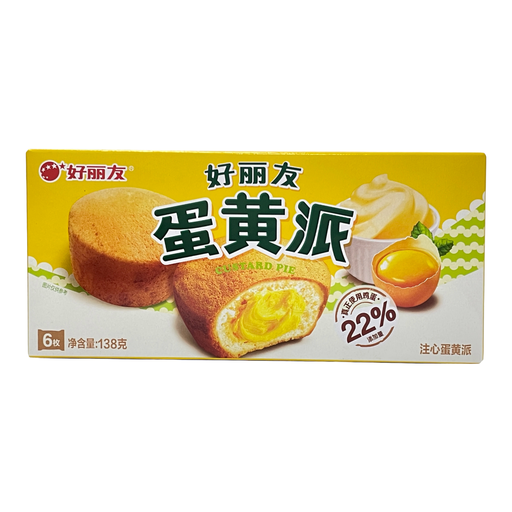
This custard pie offers a cake-like alternative rather than a custard cream biscuit. The 138g product is described as containing six small packs; check their labels and the outer packaging before offering them separately.
 No image available
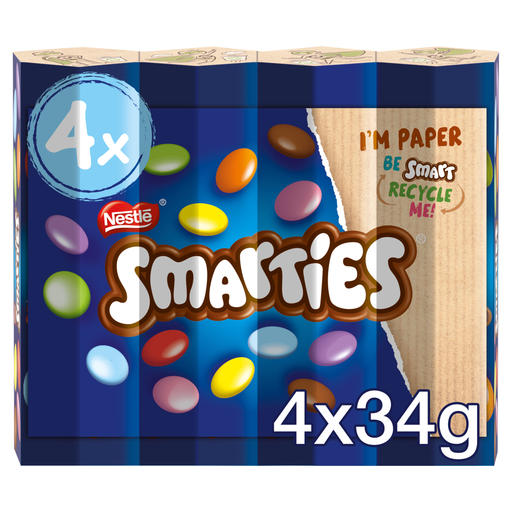
Four tubes provide a packaged confectionery option for a stall considering separate items. The 136g multipack is neither a biscuit nor a box of assorted chocolates; retain its ingredient information if the tubes are separated.
 No image available
This 200g assorted chocolate cornet is an alternative to bringing biscuits. Check the purchased pack for its ingredient information and whether its contents suit the stall’s intended way of serving chocolates.
Decide first how the bags will be offered and how families will identify the original product. Keep its ingredient information with the serving arrangement and check the event’s requirements before packing food in advance; do not assume repacking makes allergen information unnecessary.
Follow the purchased pack’s storage instructions. Tesco’s listed custard creams specify cool, dry storage and an airtight container once opened. If the stall also has chilled food, Food Standards Scotland advises keeping foods that would normally be refrigerated at home cool at the event.
The label must be checked against that pupil’s particular requirements and the school’s allergy arrangements. A free-from description identifies specific exclusions, not suitability for every allergy; England’s Department for Education guidance describes schools’ duty to support pupils with medical conditions, including allergies.