Dark-chocolate cake bakers
If your recipe specifies dark chocolate by cocoa percentage, check that ingredient separately. A milk-chocolate coating on a custard cream does not fulfil the same specification.


Choose ordinary custard creams and buy dark chocolate separately when the cake recipe specifies a cocoa percentage. The M&S and Morrisons chocolate-coated custard creams described in their product listings use milk chocolate instead; they suit a cake where you want a coated biscuit, but they do not replace a specified dark-chocolate ingredient.
If your recipe specifies dark chocolate by cocoa percentage, check that ingredient separately. A milk-chocolate coating on a custard cream does not fulfil the same specification.
If you want recognisable biscuit pieces or decoration, an ordinary vanilla-filled custard cream provides that format without a coating. Check the pack’s allergens and storage directions alongside the other cake ingredients.
Decide whether the chocolate is a specified recipe ingredient or simply part of the biscuit, then check the format and labels of everything going into the cake.
Choose this when: You want custard-cream pieces while selecting chocolate to match a recipe’s stated cocoa percentage.
Bear in mind: You need both ingredients. Good Food’s chocolate fridge-cake recipe specifies 70% cocoa-solids chocolate but uses digestives, so substituting custard creams changes the recipe.
Choose this when: You want the biscuit and its chocolate coating together, without needing that coating to meet a dark-chocolate specification.
Bear in mind: M&S and Morrisons identify their checked coatings as milk chocolate; their cocoa-solids figures describe the chocolate, not the whole biscuit.
| Priority | What to check | Your needs |
|---|---|---|
| Chocolate type | Read the chocolate type and cocoa percentage on the ingredient you plan to use. Do not confuse the coating’s share of a biscuit with its cocoa-solids percentage: M&S lists 52% milk chocolate, with at least 28% cocoa solids in that chocolate. | My recipe calls for a particular dark chocolate, so I need chocolate that matches its specification rather than relying on a coated biscuit. |
| Biscuit format | Choose between an uncoated vanilla-filled sandwich biscuit and a coated one. If substituting biscuits in a recipe, check what biscuit it originally specifies. | I want visible custard-cream pieces, but I can choose whether those pieces bring a chocolate coating into the cake. |
| Allergens | Check the current labels of the biscuits, chocolate and every other cake ingredient. The checked ordinary biscuits declare wheat and milk; the checked coated products also declare soya. | If someone eating the cake needs to avoid an ingredient, I have to assess the completed cake, not just the biscuit packet. |
| Storage | Follow the purchased biscuit pack before assembly. Tesco and ASDA specify cool, dry storage and an airtight container after opening; check the finished cake’s other ingredients for their own storage requirements. | If I am saving biscuits for later decoration, I want to keep the opened pack as its label directs. |
M&S and Morrisons describe the coatings on their checked custard creams as milk chocolate. Good Food’s chocolate fridge-cake recipe, by contrast, specifies dark chocolate with 70% cocoa solids.
Read the chocolate type and cocoa-solids declaration. If the recipe specifies dark chocolate, select that ingredient separately rather than treating the coating percentage as a substitute.
That approach requires a separate chocolate ingredient as well as the biscuits.
The checked Iceland listing for Crawford’s and Sainsbury’s listing for its own custard creams show those packs as unavailable there; a Joybuy listing for McVitie’s Tasties says that item is no longer available. A listing’s status does not establish availability at other retailers.
Check a current product page and whether the pack can be delivered to your location before settling on the biscuit for your bake.
The chocolate and other cake ingredients can have allergen declarations different from the biscuit’s. The finished cake needs to be considered as a whole.
Read every current ingredient label. If you sell the cake, check the allergen-information and labelling rules that apply to how you package and sell it.
Tesco’s checked 400 g custard creams are vanilla-filled and uncoated, making them a biscuit option when chocolate is a separate ingredient.
ASDA’s checked 400 g custard creams are another vanilla-filled, uncoated biscuit option.
M&S’s checked 191 g custard cream is coated in milk chocolate, not identified as a dark-chocolate variety.
The checked Tasties 300 g product is a custard-flavoured filled biscuit rather than a documented dark-chocolate variety.
The checked 300 g product is a vanilla-filled sandwich biscuit, not a documented dark-chocolate option.
Sainsbury’s checked 200 g custard creams are an uncoated biscuit option.
These are separate chocolate ingredients for a cake made with custard creams, not custard-cream biscuits. Check your recipe’s chocolate type and cocoa percentage before choosing a bar or chips, and obtain the biscuits separately.
 No image available
A separate dark-chocolate bar to consider when your cake calls for chocolate alongside the biscuits. The product name specifies 72% cocoa and a 100 g pack; check the recipe before substituting it for a different percentage.
 No image available
This is the chocolate component, not the custard-cream biscuit component. Its name specifies 85% cocoa and 100 g; check whether that percentage matches the chocolate required by your recipe.
 No image available
This 85% dark-chocolate bar is a separate ingredient to pair with biscuits if the recipe calls for chocolate. The named pack is 90 g, so check the quantity your recipe requires.
 No image available
This bar supplies a separately chosen chocolate ingredient while custard creams supply the biscuit element. Its name specifies 85% cocoa and 100 g; compare both figures with your recipe.
 No image available
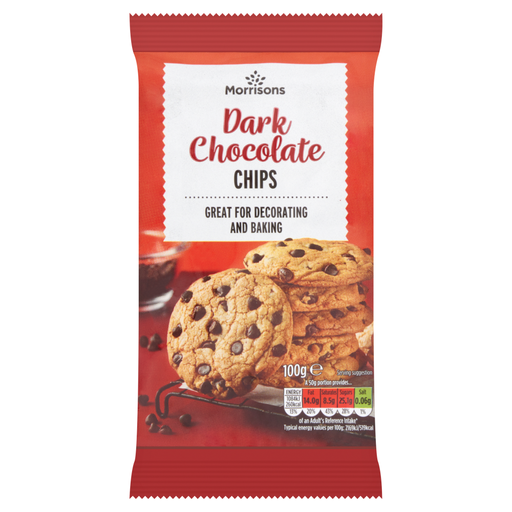
These dark-chocolate chips are a separate chocolate ingredient in a 100 g pack, not coated custard creams. If your recipe specifies a cocoa percentage, check the current pack before using these in its place.
You can try the substitution, but it changes Good Food’s chocolate fridge-cake recipe, which specifies digestives and dark chocolate with 70% cocoa solids. Do not assume its stated quantities or result will be the same with a filled biscuit.
The checked M&S and Morrisons products do not: both identify their coatings as milk chocolate. Their stated cocoa-solids minima apply to the chocolate coating, not the whole biscuit.
Follow the pack you buy. The checked Tesco and ASDA packs specify a cool, dry place and an airtight container after opening; storage of the finished cake also depends on its other ingredients.
Check the current packaging of every ingredient, including the biscuits and chocolate. GOV.UK’s prepacked-food guidance says regulated allergens present as ingredients must be clearly identified in the ingredients list; the checked biscuits declare allergens including wheat and milk, while the checked coated products also declare soya.
Check that the particular pack is currently available for your location before planning the bake around it. The checked Iceland and Sainsbury’s biscuit listings show their respective packs as unavailable there, and a Joybuy listing for McVitie’s Tasties says that item is no longer available; those statuses do not establish availability elsewhere.