Tea-break biscuit buyers
If you are choosing between a classic custard cream and a variation, compare the filling, any coating and the pack size. Similar names need not describe the same biscuit.


Choose a classic vanilla-filled custard cream for a familiar tea-break biscuit, a chocolate-coated version when you want chocolate, or a specifically labelled free-from version that meets your guest’s requirements. Assess Fairtrade separately: check the mark and any named ingredient on the particular pack rather than treating chocolate or another sourcing logo as proof of a Fairtrade claim. Read the current pack’s allergen information before serving someone with an allergy.
If you are choosing between a classic custard cream and a variation, compare the filling, any coating and the pack size. Similar names need not describe the same biscuit.
If sourcing affects your choice, check what the mark on the particular pack covers. The Fairtrade Foundation distinguishes its Fairtrade Sourced Ingredient Mark, which identifies a Fairtrade-sourced ingredient, from a claim about the product more broadly.
If a guest needs to avoid gluten or milk, assess the exact biscuit and its current label. A product specifically labelled free from those ingredients is a different choice from a conventional custard cream.
Choose the biscuit style and any required dietary exclusions first, then assess sourcing claims on that particular pack.
| Priority | What to check | Your needs |
|---|---|---|
| Fairtrade claim | Look for the mark on the pack and any named Fairtrade-sourced ingredient. The Fairtrade Foundation says its white-background Sourced Ingredient Mark identifies one Fairtrade-sourced ingredient; do not substitute another sourcing scheme for it. | I want to know exactly what a certification claim covers, rather than assuming it applies to every ingredient. |
| Biscuit style | Compare a vanilla-filled sandwich biscuit with an extra-cream or chocolate-coated version. ASDA lists milk chocolate as 52% of its coated custard creams; that listing identifies Rainforest Alliance-certified cocoa, not Fairtrade cocoa. | For tea, I might prefer the familiar vanilla filling, more filling or a chocolate coating. Chocolate matters only if I choose a biscuit that contains it. |
| Allergens | Read the current ingredients and allergen information for the exact pack. The examined conventional ASDA and Tesco biscuits list wheat and milk-derived ingredients; a separately labelled ASDA Free From version states gluten-free and milk-free exclusions. | If I am serving someone who avoids gluten or milk, the specific free-from claim and the current pack label matter more than the biscuit’s name. |
| Pack and storage | Check pack weight against how many biscuits you need. Follow the pack’s storage directions; Tesco directs buyers to keep its opened classic custard creams in an airtight container. | I want a suitable quantity for the tea break and need to know how to store any biscuits left over. |
ASDA identifies Rainforest Alliance-certified cocoa on an examined chocolate-coated biscuit. Other product claims concern palm oil. Neither statement, by itself, establishes a Fairtrade claim.
Check the precise mark on the biscuit pack and whether it names a particular sourced ingredient. The Fairtrade Foundation says its Fairtrade Sourced Ingredient Mark identifies one Fairtrade-sourced ingredient.
The examined classic ASDA and Tesco ingredient lists do not list chocolate. A chocolate-coated custard cream is a different product with its own ingredients and sourcing claims.
Choose the biscuit style you want before assessing a cocoa claim on the exact product.
Examined conventional biscuits contain wheat and milk-derived ingredients, while a separately labelled free-from biscuit states different exclusions. The distinction matters when serving a guest with an allergy.
Ask what the guest needs to avoid, then read the current physical pack’s ingredients, allergen information and any free-from claim.
These examples show how named custard creams differ; a brand name alone does not establish a Fairtrade claim for a particular pack.
Iceland describes McVitie’s Tasties Custard Cream Biscuits 300g as a custard-filled sandwich biscuit.
Iceland identifies a 300g Crawford’s custard cream sandwich-biscuit pack.
Tesco Custard Cream Biscuits 400G are listed as sandwich biscuits with a vanilla-flavoured filling.
A 200g Sainsbury’s Custard Creams pack provides another classic-biscuit option to assess.
The examined ASDA products include classic, milk-chocolate-coated and separately labelled free-from custard creams.
M&S describes an Extra Cream custard cream and a separate milk-chocolate-coated variation.
These options cover a gluten-free custard cream and a baked apple and custard-flavoured biscuit for a tea break. The latter is a custard-themed alternative, not a traditional custard cream sandwich biscuit; check either pack for a Fairtrade mark if certified sourcing is part of your choice.
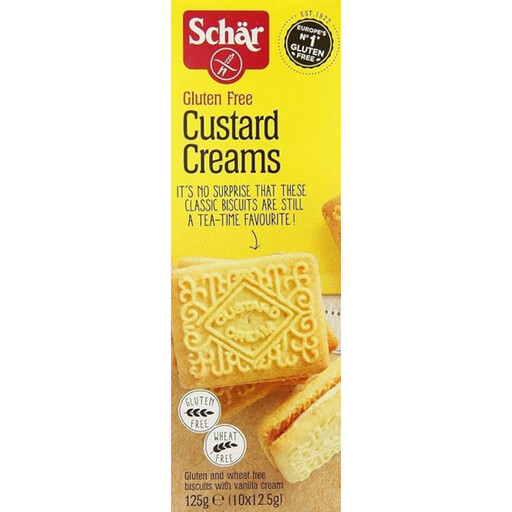 Image unavailable
A custard cream option to assess when you need a gluten-free biscuit for a tea break. The pack is 125g; check its current allergen information for any other exclusions and look for a specific mark if Fairtrade sourcing matters.
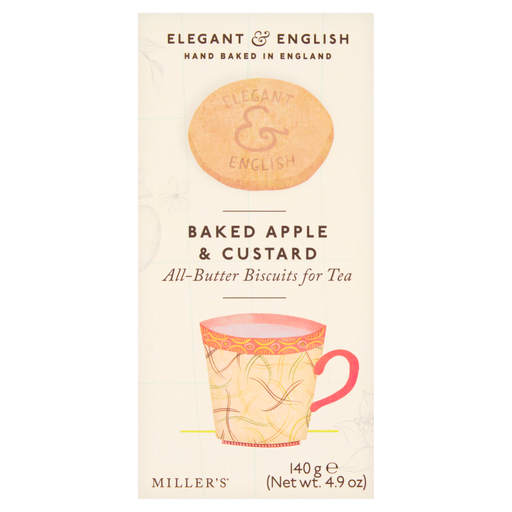 Image unavailable
Consider this 140g baked apple and custard variation if you want a custard-themed biscuit rather than a traditional custard cream sandwich biscuit. Check the current ingredients and allergen information, as well as any sourcing mark, against your requirements.
No. Those statements concern their named sourcing schemes, not Fairtrade certification. Check the particular biscuit pack for a Fairtrade mark and any ingredient it identifies; the Fairtrade Foundation says its Sourced Ingredient Mark indicates that one ingredient is Fairtrade-sourced.
Read the current pack’s ingredients and allergen information against what the guest needs to avoid. GOV.UK says relevant allergens in UK prepacked food must be clearly identified in the ingredients list; the examined conventional biscuits list wheat and milk-derived ingredients. Do not assume that a vegan label answers a separate allergy question.
Follow the directions on the pack you buy. Tesco directs buyers to store its classic custard creams in a cool, dry place and, once opened, in an airtight container.