Hosts setting out a Halloween snack table
If guests will help themselves, compare sugar figures on the packs you are considering and decide how biscuits will be served, rather than relying on their small size as a sugar guide.


A small custard cream is not automatically a reduced-sugar choice: the Sainsbury's, Tesco, Crawford's and M&S product information lists 26.5g to 40.2g sugars per 100g across the standard biscuits considered here. For a Halloween party, compare labels on the same per-100g basis, check sugars per biscuit when planning servings, and keep allergen information with the food. If the party is at a school in England, confirm the school's requirements rather than treating retail HFSS promotion rules as school-food rules.
If guests will help themselves, compare sugar figures on the packs you are considering and decide how biscuits will be served, rather than relying on their small size as a sugar guide.
Per-biscuit figures help with serving plans, while the exact pack's ingredient and allergen information matters when choosing food for the guest list.
Check the school's current food policy and whether school-food requirements apply to the event. Retail HFSS promotion rules address a different setting.
Start with the kind of biscuit you want to serve, then compare its nutrition information and ingredient label against the needs of your guests.
| Priority | What to check | Your needs and survey context |
|---|---|---|
| Reduced-sugar wording | Check the exact claim on the pack; compare sugars per 100g with a similar product. A smaller biscuit is not, by itself, evidence of a reduced-sugar recipe. | I want a custard cream, but I do not want to mistake an ordinary one for a product making a reduced-sugar claim. |
| Party servings | Read sugars per biscuit as well as per 100g; use the pack size and expected guest numbers to plan how biscuits will be set out. | If guests can return to the snack table, I want to decide on servings before putting out a shared bowl. |
| Nutrition labels | Use the current nutrition panel for a like-for-like comparison; read any traffic-light labelling alongside the stated quantity per 100g or per serving. | I want to compare packs rather than judge them by their front labels alone. In the Food Standards Agency's Making Food Better Tracker Survey, 49% of 611 adults interviewed in Northern Ireland between 16 September and 23 November 2024 said they actively used traffic-light labelling when shopping for food. |
| Allergens | Check the exact pack's ingredients and precautionary statements; keep that information available when serving. The product information from Tesco, Sainsbury's, Crawford's and M&S identifies different relevant ingredients or warnings. | With different guests coming, I need to know what each biscuit contains rather than assume every custard cream has the same recipe. |
| School setting | Ask whether the school's food policy or catering requirements apply to the event. Check those separately from rules concerning retail HFSS promotions in England. | Before buying biscuits for a school party, I want the organiser or catering lead to confirm what can be served there. |
Sugar per biscuit varies with biscuit size, so it cannot replace a per-100g comparison. The Sainsbury's, Tesco, Crawford's and M&S product information lists 26.5g to 40.2g sugars per 100g for the standard products considered here.
Check whether the exact product makes a reduced-sugar claim, then compare its per-100g figure and the serving you intend to offer.
A larger pack provides more biscuits for the table; its weight does not tell you the sugar concentration or how many biscuits an individual guest might take.
Use pack size to plan quantities, and use sugars per 100g and per biscuit for the separate nutrition and serving decisions.
The Tesco, Sainsbury's and Crawford's product information identifies wheat and milk; Tesco and Crawford's also carry precautionary sesame statements. The M&S Extra Cream product information identifies soya as well as wheat and milk.
Check each current pack and keep its allergen information beside the biscuits. Take care not to mix them with foods intended for guests avoiding those ingredients.
Department of Health and Social Care guidance concerns promotions and placement by qualifying retailers selling to England. Department for Education school-food guidance has a separate scope for state-funded schools in England; proposed changes are subject to Parliamentary approval and are planned for September 2027.
Ask the school which current policy and catering requirements apply to its Halloween event before choosing what to bring.
These figures describe the named packs in retailer product information, not every biscuit sold under each brand.
Tesco Custard Cream Biscuits come in a 400g pack; pack weight helps plan party quantities, while the nutrition panel answers a different question.
The Sainsbury's Custard Creams 200g pack offers another standard custard cream for a per-100g label comparison.
Crawford's Custard Creams 300g retain the familiar sandwich-biscuit format for a party spread.
M&S Extra Cream Custard Creams are a different recipe choice from the standard custard creams above, not a reduced-sugar substitute.
These options include a custard cream and other biscuit styles for a Halloween table. The alternatives are not custard creams: check each exact pack if the biscuit type, sugar wording or allergens are important to your choice.
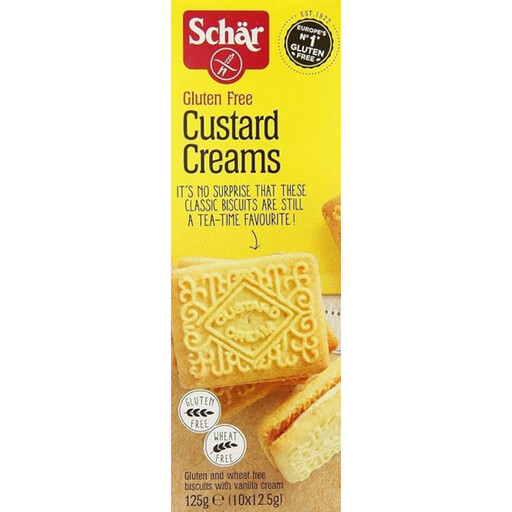 No image available
This is the custard cream in the selection. The name identifies it as gluten-free; check the current pack for sugars per 100g, serving information and its complete allergen declaration.
 No image available
A cookies-and-cream alternative if serving custard creams is optional. 'No Added Sugar' is part of the product name, not the same claim as 'reduced sugar'; read the current nutrition and ingredient labels before choosing it for guests.
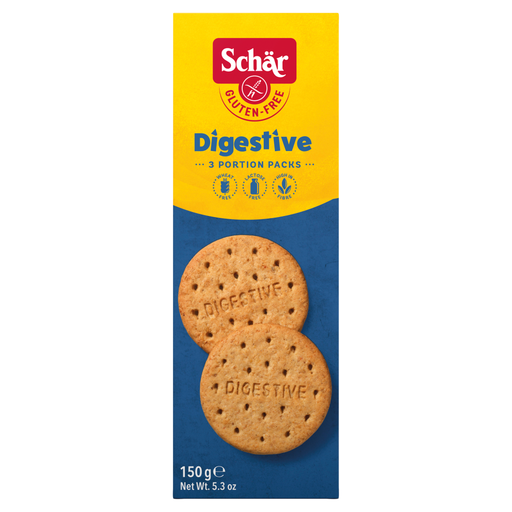 No image available
Choose this biscuit style only if digestives suit the party in place of custard creams. The name identifies the 150g pack as gluten-free; check its current sugar figures and full allergen information separately.
 No image available
This is a sandwich cookie rather than a custard cream. 'Zero Sugar' appears in its product name; use the current pack's nutrition and ingredient information when deciding whether it fits the party.
 No image available
The dark-chocolate-and-ginger oat-biscuit style is distinct from a custard cream. If it suits the planned spread, check the exact pack's nutrition, ingredients and allergen statements before serving.
Do not assume so from their size. The Sainsbury's, Tesco, Crawford's and M&S product information lists 26.5g to 40.2g sugars per 100g for the standard biscuits considered here; check the exact pack for a reduced-sugar claim and compare its nutrition panel with a similar product.
No. Public Health England's sugar-reduction material describes a reduced-content claim as a comparison with a similar product. 'No added sugar' is different wording, so check the actual sugars per 100g and the planned serving rather than treating the claims as interchangeable.
Read the exact pack's sugars-per-biscuit figure and decide how many biscuits to set out at a time. The NHS figures for daily free sugars concern a different measure from total sugars on a nutrition label, so the label figure should not be used as an exact free-sugars calculation.
Check the current pack of every product you serve. The Tesco, Sainsbury's and Crawford's product information identifies wheat and milk; Tesco and Crawford's also carry precautionary sesame statements. M&S identifies wheat, milk and soya in its Extra Cream product.
No: Department of Health and Social Care guidance addresses HFSS promotions and placement by qualifying retailers selling to England, not the school's event menu. Department for Education guidance addresses food provided in state-funded schools in England, while proposed changes are subject to Parliamentary approval and planned for September 2027. Ask the school which current food policy and catering requirements apply to its event.