Long-run fuel planners
If you intend to eat during a prolonged run, you need a carbohydrate portion you can measure and practise consuming while moving. Sweetness alone does not tell you the total carbohydrate in a biscuit.


Do not choose a custard cream on the assumption that it is sugar-free: the regular and free-from varieties compared here all declare sugars. For marathon training, decide separately whether you want an ordinary snack or a measured carbohydrate portion to consume during a run. Check the carbohydrate per serving and practise eating your chosen food while running rather than assuming a biscuit will suit you.
If you intend to eat during a prolonged run, you need a carbohydrate portion you can measure and practise consuming while moving. Sweetness alone does not tell you the total carbohydrate in a biscuit.
If limiting sugar matters to you, compare the sugars line with the separate total-carbohydrate line. A smaller sugars figure does not, by itself, describe how much carbohydrate a serving provides.
If you need to avoid gluten, milk or another ingredient, check the exact pack’s exclusions and ingredients. An allergen-related ‘free from’ label is not a sugar-free claim.
Start with the job the food needs to do, then compare its labelled portion and ingredients. Sports Science Exchange’s 2022 endurance-nutrition guidance discusses carbohydrate intake during exercise lasting more than an hour; it does not establish that every runner needs the same food or portion.
| Priority | What to check | Your needs |
|---|---|---|
| Carbohydrate portion | Read carbohydrate per biscuit or prepared serving, not just sugars. Tesco lists 8.4 g carbohydrate per custard cream; ASDA lists 8.1 g per custard cream. Check how many portions you plan to carry and eat. | I want to know the amount of carbohydrate in the portion I plan to eat, especially if I am taking food on a long run. |
| Sugar goal | Check the particular pack’s sugars declaration and any specific sugar-free claim. Tesco and ASDA each list 3.4 g sugars per regular biscuit; their figures do not make either biscuit sugar-free. | Limiting sugar matters to me, but I do not want to confuse an allergen-free biscuit or a lower sugars figure with a sugar-free product. |
| Eating during a run | Consider the serving format and practise consuming the intended portion during training. Tesco lists 2.5 g fat per biscuit and ASDA lists 2.6 g; nutrition figures alone cannot establish how a biscuit will feel while you run. | I need food I can carry and manage while moving, rather than choosing solely from the nutrition panel. |
| Ingredients and allergens | Read the current ingredients and allergen information for the exact variety. Sainsbury’s and ASDA list gluten- and milk-free custard creams, but each free-from biscuit also lists 3.5 g sugars. | If I avoid a particular ingredient, its stated exclusion matters to me; I will assess sugar separately. |
The gluten- and milk-free custard creams listed by Sainsbury’s and ASDA each declare 3.5 g sugars per biscuit.
Check what the ‘free from’ wording excludes, then read sugars and total carbohydrate as separate figures.
A sugars figure does not give the total carbohydrate portion. Sports Science Exchange’s 2022 guidance discusses carbohydrate intake during prolonged exercise, but a biscuit’s nutrition panel cannot tell you whether it will suit you while running.
Plan portions using labelled carbohydrate per serving and practise your intended food during training.
Good Housekeeping Institute’s 2020 first-place M&S custard cream was a 200 g product tested for sensory qualities. The M&S Extra Cream listing is a different 165 g product; that result says nothing about its use as run fuel.
For a current purchase, compare the exact pack’s ingredients, serving size and nutrition declaration.
These figures describe the named listings and serving sizes, not every custard cream sold under each brand. Check the pack when choosing a particular variety.
Tesco’s regular 400 g custard creams have a declared per-biscuit portion for planning an ordinary snack.
ASDA lists both a regular custard cream and a separately labelled gluten- and milk-free variety.
Sainsbury’s lists regular and gluten- and milk-free custard creams, allowing shoppers to check the exact variety against ingredient restrictions.
Tesco lists nutrition per biscuit for Crawford’s regular 300 g custard creams.
M&S Extra Cream Custard Creams are a 165 g variety for an ordinary biscuit snack.
A UK Joybuy listing identifies McVitie’s Tasties Custard Creams as a 300 g variety.
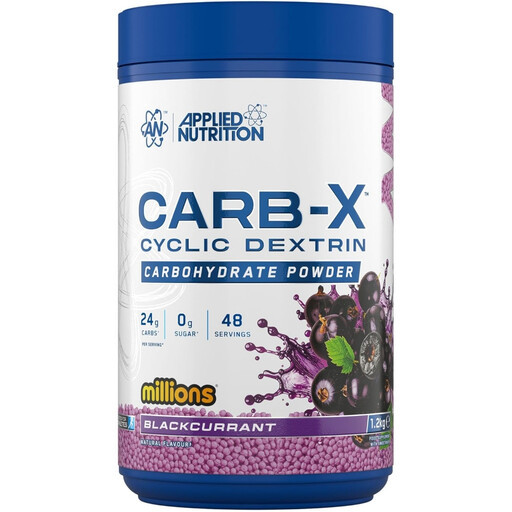
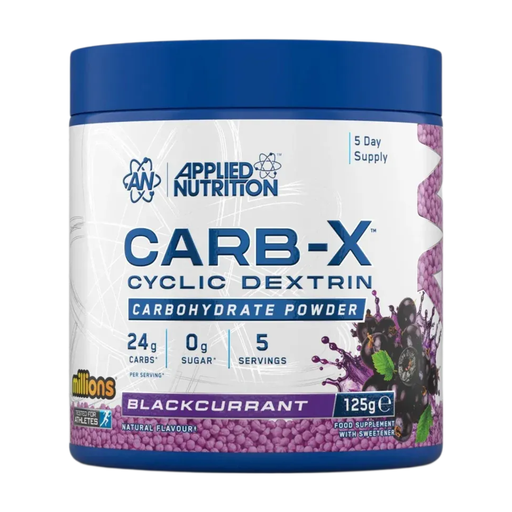
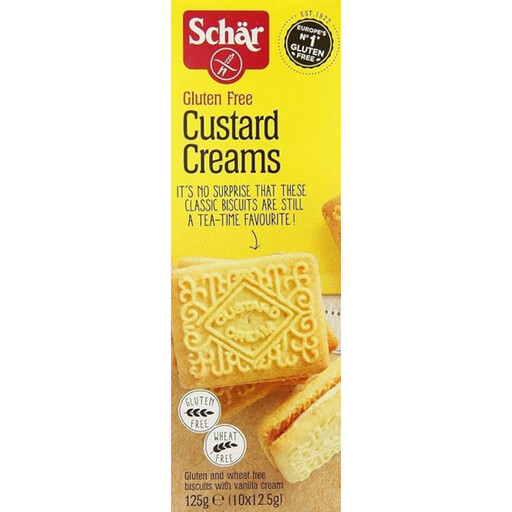
These options cover carbohydrate powder to portion for a run and a gluten-free custard cream to consider as a biscuit snack. The biscuit is a different choice from the powders: gluten-free does not mean sugar-free.
 No image available
A carbohydrate powder to consider if you want to plan a drink portion for a long run rather than carry biscuits. Mix it with water before consuming; check the current label for the carbohydrate per serving, sugars and allergen information.
 No image available
A smaller pack of carbohydrate powder to consider when planning a drink portion for training. It needs mixing with water; check the current label for serving instructions, sugars and allergen information.
 No image available
A gluten-free custard cream to consider if you want a biscuit snack. Its gluten-free description does not establish that it is sugar-free; check the current pack’s sugars, carbohydrate and allergen information before choosing it for your needs.
No. Read total carbohydrate separately: Tesco lists 8.4 g carbohydrate per custard cream, of which 3.4 g is sugars. If you are planning food for a long run, use the carbohydrate figure for the portion you intend to eat and practise that portion during training.
No. The free-from custard creams listed by Sainsbury’s and ASDA each declare 3.5 g sugars per biscuit. Check the stated allergen exclusions and the nutrition declaration separately; ‘free from’ does not by itself make a sugar-free claim.
Check its ingredients, carbohydrate declaration and any pack warning before taking it on a run. NHS guidance says that when added polyols make up more than 10% of a product, its label must warn that excessive consumption may produce laxative effects.
Check the ingredients list on the particular pack. GOV.UK guidance says that any of the 14 specified allergens present in a prepacked food must be clearly identified there. Also read any precautionary information relevant to your restriction.
Use the current pack’s ingredients, allergen information and nutrition declaration when deciding whether that biscuit meets your requirements. Do not rely on an older listing for a particular recipe or serving size.