Tesco Groceries, Sainsbury's, ASDA Groceries and Marks & Spencer list sugar ingredients in the custard creams reviewed, including products labelled gluten-free or milk-free; do not treat those biscuits as sugar-free. If sugar-free is a firm requirement for the office tin, check a different biscuit's exact claim, ingredients and nutrition panel. Otherwise, choose a conventional pack for general sharing or a clearly labelled free-from product for a specific colleague's requirements.
Who is the biscuit tin for?
Buyers with a firm sugar-free requirement
Check the sugar-related claim on the exact biscuit you plan to buy. An ordinary custard cream, or one labelled free from gluten or milk, does not meet that requirement simply because of its category or dietary label.
Organisers of a general office tin
If no sugar-free or allergen-related requirement has been set, a conventional pack may suit shared use. Keep its ingredients and allergen information available so colleagues can decide whether to take one.
Buyers accommodating a named dietary need
Look for claims covering the particular need, such as gluten-free or milk-free, on the exact product. Keep that biscuit identifiable and check its sugar and nutrition information separately.
What should you check before buying?
Start with the requirement that cannot be compromised, then compare the pack format and storage instructions for the way the office will use the biscuits.
| Priority | What to check | Your needs |
|---|
| Sugar claim |
Read the exact sugar-related claim, ingredient list and sugars figures per biscuit and per 100g. A gluten-free, milk-free or vegan label answers a different question. |
If the tin needs a genuinely sugar-free option, I cannot use a free-from custard cream as a substitute without checking its sugar information. |
| Carbohydrate and portion |
Check total carbohydrate as well as sugars, using the stated portion size to compare products. Diabetes UK advises reading total carbohydrate on the pack rather than relying on front-of-pack information alone. |
For an individual dietary need, I want the full nutrition panel available so the person concerned can make their own choice. |
| Ingredients and allergens |
Check the current pack for wheat, milk and other relevant allergens. Match any gluten-free, milk-free, lactose-free or vegan claim to the specific need; keep a separate option identifiable. |
A colleague needs to avoid a particular ingredient, so I need to know which biscuits meet that requirement rather than assuming the shared tin suits everyone. |
| Pack and storage |
Compare pack weight and whether individual portions would be useful. Follow the pack's instructions for storing biscuits after opening. |
For a busy shared tin, I want a pack that fits how often it is refilled; individually packed servings may make more sense for a separately identified option. |
Mistakes to avoid
-
Treating “free from” as “sugar-free”
ASDA Groceries lists sugar ingredients in both its Free From custard creams and Schär's gluten-free custard creams. Their free-from claims do not establish a sugar-free option.
For a firm sugar-free requirement, check the exact product's sugar claim, ingredients and nutrition panel rather than relying on its gluten-free, milk-free or vegan label.
-
Assuming a conventional biscuit suits everyone
The Tesco, Sainsbury's and Crawford's custard creams reviewed contain wheat and milk; the M&S product also lists soya. Mixing packs in one tin can make it harder to identify a biscuit bought for a particular need.
Ask which ingredients colleagues need to avoid. Keep the original packaging or ingredient information available, and keep a specifically purchased free-from option clearly identifiable.
-
Using a sugar claim as a medical suitability claim
A sugar-related label alone does not describe a biscuit's total carbohydrate or establish that it suits an individual's dietary requirements. Diabetes UK advises checking total carbohydrate on the pack.
Make the nutrition information available without describing an office biscuit as suitable for everyone with a particular condition.
-
Comparing packs without checking their format
A larger loose pack and smaller individually packed servings work differently in a shared tin, particularly when one option needs to stay identifiable.
Compare pack weight and portion format after confirming that each product meets the relevant ingredient or dietary requirement.
Brand and product-line references
These details apply to the named custard creams, not to every biscuit made by each brand. Check the current pack before putting biscuits into a shared tin.
Tesco
Tesco Custard Cream Biscuits come in a 400g conventional pack.
- Tesco Groceries instructs buyers to keep the biscuits in an airtight container once opened.
- The listing gives 3.4g sugars per biscuit and lists wheat, milk ingredients, sugar and glucose syrup; this is not a sugar-free or wheat- and milk-free option.
Sainsbury's
Sainsbury's Custard Creams are a conventional 200g pack.
- The smaller pack may suit an office that does not need as much of a conventional biscuit at once.
- Sainsbury's lists 3.3g sugars per biscuit, wheat and milk ingredients, and says the product is not suitable for customers with a barley allergy because of manufacturing methods.
Asda
ASDA Free From Custard Creams are labelled free from gluten-containing cereals and milk, and carry a Vegan Society vegan claim.
- Those stated claims provide checks for a named gluten- or milk-avoidance need.
- ASDA Groceries lists sugar and syrups in the ingredients and 3.5g sugars per biscuit; the product is not sugar-free.
Schär
Schär Gluten-Free Custard Creams are listed as gluten-free, wheat-free and suitable for vegans; Joybuy describes the product as lactose-free.
- The 125g product is supplied as five portion packs, which can help keep servings separate.
- ASDA Groceries lists sugar ingredients and 2.8g sugars per biscuit, so this is not a sugar-free choice.
Crawford's
Crawford's Custard Creams are conventional sandwich biscuits sold in a 300g pack.
- Tesco Groceries instructs buyers to store them in an airtight container once opened.
- The listing gives 3.6g sugars per biscuit and includes wheat, milk ingredients, sugar and glucose syrup.
M&S
M&S Extra Cream Custard Creams contain vanilla cream filling and custard powder.
- The named Extra Cream variant distinguishes this biscuit from a standard custard cream.
- Marks & Spencer lists 40.2g sugars per 100g and wheat, milk and soya ingredients; it is not a sugar-free option.
Joybuy biscuit and cracker options
These options offer a no-added-sugar cookies-and-cream biscuit and a savoury spring onion biscuit for an office snack tin. Neither is a custard cream, and a “no added sugar” claim should not be read as “sugar-free”.
 No image available
Gullon Zero No Added Sugar Cookies and Cream 210g
A cookies-and-cream flavour option if the office wants a sweet biscuit other than custard creams. Its stated claim is “no added sugar”, not “sugar-free”; check the current nutrition and ingredient information if sugar-free is required. The product information lists wheat and soya and says it may contain milk and mustard.
View on Joybuy
 No image available
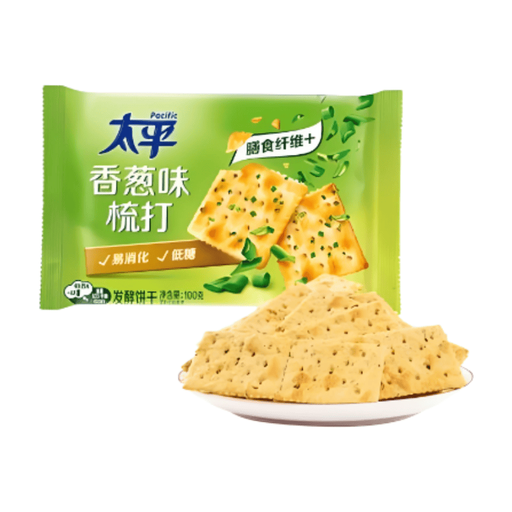
Pacific Soda Biscuits Spring Onion Flavour 100g, 4 small packs
A savoury, portioned option for an office that does not need every snack to be a sweet biscuit. It is not a custard cream, and its product name makes no sugar-free claim. The product information lists wheat and barley.
View on Joybuy
Common questions
Are the custard creams discussed here sugar-free?
No. The Tesco, Sainsbury's, ASDA, Crawford's and M&S listings discussed here include sugar ingredients, including in the free-from products. That does not establish whether a different custard cream elsewhere has a sugar-free claim; check the exact pack you intend to buy.
Does gluten-free or milk-free mean lower in sugar?
No conclusion about lower sugar follows from either label. ASDA Groceries lists 2.8g sugars per biscuit for Schär's gluten-free custard creams and 3.5g for its milk-free Free From custard creams. Compare the sugars figures on the exact packs rather than using a free-from claim as a sugar comparison.
Does “no added sugar” mean the biscuit is sugar-free?
No. “No added sugar” and “sugar-free” are different claims. If the office requirement specifically says sugar-free, check that claim and the nutrition panel on the exact product instead of relying on “no added sugar” in its name.
What should stay available when biscuits go into a shared tin?
Keep the exact product's ingredient and allergen information available, and keep a biscuit bought for a specific free-from need clearly identifiable rather than mixing it with conventional biscuits. The conventional custard creams discussed here include wheat and milk ingredients, while free-from claims differ by product.
How should opened custard creams be stored at work?
Follow the instructions on the pack being used. Tesco Groceries and its Crawford's listing instruct buyers to keep opened biscuits in an airtight container; check the current pack before decanting biscuits into the office tin.


