Take custard creams if guests want a vanilla-filled sandwich biscuit, plain digestives if they prefer an unfilled biscuit, or cream-filled digestives if you want that separate filled style. For an outdoor table, check the pack format, ingredients and storage instructions; if you plan to sell biscuits, check which food-business and allergen requirements apply to your activity rather than assuming the venue makes it exempt.
Who is choosing the biscuits?
Refreshment-table organisers
Choose a biscuit style your guests are likely to want, then consider how much you will open at once. Smaller inner packs can make staged opening easier; follow the chosen pack’s instructions for keeping opened biscuits dry.
Hosts catering for dietary needs
Ordinary custard creams and separately labelled free-from biscuits are different products. Keep the packaging available so guests can check the ingredients and any precautionary allergen statements on the biscuits you serve.
Car boot sellers
If you intend to sell biscuits rather than share them informally, check how the nature and frequency of your food activity affect registration and allergen-information requirements. The Food Standards Agency advises asking the relevant local authority about activity that is very limited and infrequent.
What matters when choosing?
Choose the biscuit style first, then check the particular pack you intend to serve: fillings, dietary labels and packaging can differ even within a familiar category.
| Priority |
What to check |
Your needs |
| Biscuit style |
Check whether the biscuit is an unfilled digestive, a custard cream or a cream-filled digestive. Compare the ingredients and serving figures for the actual product rather than treating the styles as interchangeable. |
I’d choose a plain digestive for guests who prefer no filling, or a vanilla-filled biscuit when that is the style they want. |
| Ingredients |
Read the ingredient list and precautionary allergen statements. Tesco’s cited standard custard creams contain wheat and milk ingredients; its Free From custard creams are labelled gluten- and milk-free. Check each supplied pack before serving. |
When a guest needs to avoid particular ingredients, I want a separately labelled option they can check for themselves. |
| Pack format |
Check the net weight and whether the biscuits come in one pack or separate portions. Tesco lists a 750g custard-cream format as five 150g inner packs; Morrisons lists Schär custard creams as five 25g portion packs. |
For a table with uncertain footfall, smaller packs let me open biscuits in stages instead of opening everything at once. |
| Outdoor storage |
Follow the chosen pack’s storage directions. Tesco instructs buyers to keep its cited custard creams in a cool, dry place and put them in an airtight container once opened. |
I need somewhere dry to keep the biscuits and a way to cover any opened pack during the event. |
| Serving quantity |
Compare pack weights and stated biscuit counts on the same basis. A filled biscuit and an unfilled digestive may have different serving sizes, so use each pack’s own figures when planning quantities. |
I’d estimate how many people I expect to serve before deciding how many packs to open. |
| Selling |
Check with the relevant local authority whether your activity requires food-business registration. If you sell biscuits, establish how the applicable allergen rules relate to biscuits left in their original packs or offered loose. |
If I’m selling refreshments, I need to settle those requirements before deciding how to present the biscuits. |
What should you avoid overlooking?
-
Treating all digestives and custard creams as the same biscuit
A plain digestive is unfilled, while a custard cream and a cream-filled digestive have fillings and their own ingredient lists. The word ‘digestive’ does not establish a digestive benefit.
Settle on the style guests want, then compare the actual packs’ ingredients and serving information.
-
Choosing a large pack without checking its format
A large outer pack does not tell you how many inner packs you must open. Tesco lists its 750g custard creams as five 150g packs, while its storage directions for opened custard creams call for an airtight container.
Check the current pack format and plan how you will store any biscuits left after opening.
An opened pack needs a suitable container if its instructions call for one.
-
Assuming a car boot sale removes food-seller obligations
Food Standards Agency guidance says a local authority may decide registration is unnecessary where food activity is very limited and infrequent; that is not an automatic exemption for every seller. Registered food businesses must follow the allergen rules that apply to their food.
Ask the relevant local authority about your activity, and establish the applicable requirements before selling or repacking biscuits.
Which product lines are relevant?
These brand examples show why the label on a particular biscuit matters more than an assumption about everything sold under the same name.
Tesco
Tesco lists standard custard creams, plain digestives and a separate Free From custard-cream product.
- The cited 400g custard creams are vanilla-filled; the cited 400g digestives are unfilled and labelled suitable for vegans.
- The standard custard creams contain wheat and milk ingredients. Tesco’s cited Free From custard creams carry different, gluten- and milk-free labelling; check the individual pack.
McVitie’s
The cited listings cover Tasties Custard Creams and Digestives Creams Vanilla: two different filled-biscuit styles.
- Morrisons lists Tasties Custard Creams in a 300g pack; Ocado lists Digestives Creams Vanilla in a 168g pack.
- Check the ingredients on the particular product and supplied packaging rather than assuming the two styles have the same formulation.
Crawford’s
Tesco’s cited listing is for a 300g pack of vanilla-filled custard creams.
- The listing states a typical count of approximately 26 biscuits per pack, which can help with serving plans.
- The cited product has wheat and milk ingredients and a possible sesame warning; check the supplied label.
M&S
Ocado lists Extra Cream Custard Creams as 12 sandwich biscuits in a 165g pack.
- The listing states that vanilla-flavoured filling makes up 33% of this specific product.
- Ocado lists milk, soya and wheat among its allergens; the product is not a substitute for a separately labelled free-from biscuit.
Schär
Morrisons lists Schär custard creams in five 25g portion packs.
- That specific product is labelled gluten-free, wheat-free, lactose-free and vegan.
- Lactose-free does not mean milk-free. Check the supplied ingredients and allergen information against each guest’s requirements.
Joybuy biscuit options
These Joybuy options cover custard creams and unfilled digestives, including products described as gluten-free. They do not represent the cream-filled digestive style, so compare their individual labels and pack sizes against the biscuits you plan to serve.
 No image available
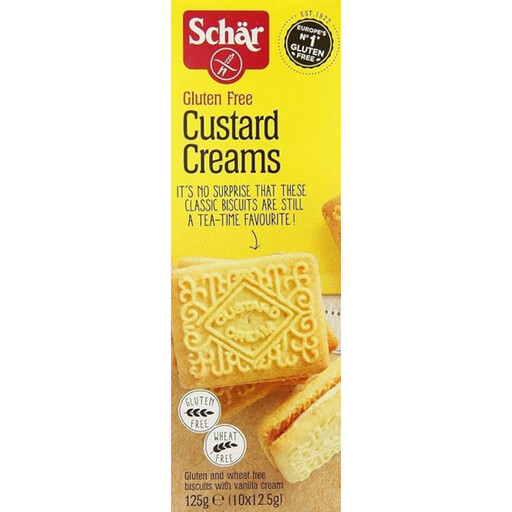
Schär Gluten Free Custard Creams 125g
A custard-cream option for a table where you want smaller, separate portions. The cited product is presented as five 25g packs and labelled gluten-free, wheat-free and lactose-free; check the supplied packaging for all other ingredients and allergens.
View on Joybuy
 No image available
Gullon Zero Sugar Free Original Digestives 400g
An unfilled digestive option in a 400g pack. If guests need to avoid particular ingredients, check this pack’s full ingredient and allergen statements rather than relying on the product name.
View on Joybuy
 No image available
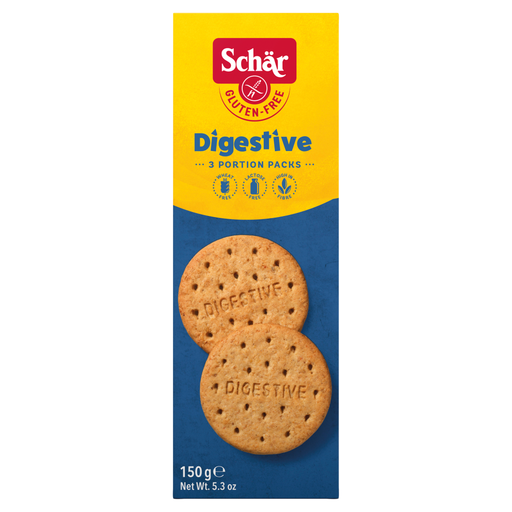
Schär Gluten Free Digestive Biscuits 150g
A 150g digestive-biscuit option described as gluten-free. Check the supplied packaging for its full ingredients, allergen statements and serving information before putting it out for guests.
View on Joybuy
Questions about serving and selling
Do I need equipment to serve packaged biscuits?
The cited ready-to-eat biscuits do not call for preparation equipment. Follow the instructions on the pack you use: Tesco, for example, says to keep its cited standard biscuits in a cool, dry place and use an airtight container after opening.
How can guests check what is in the biscuits?
Keep the original packaging with the biscuits so guests can read its ingredient and allergen information. The Food Standards Agency recommends retaining packaging when providing prepacked food at community events; check the supplied pack rather than relying on an older product listing.
Does selling biscuits at an occasional car boot sale require registration?
The venue alone does not settle whether your food activity requires registration. Food Standards Agency guidance says a local authority may decide registration is unnecessary for very limited and infrequent activity; Food Standards Scotland distinguishes occasional provision from regular, organised activity. Ask the relevant local authority about what you plan to do.
Can I put loose biscuits into my own bags to sell?
Check the applicable food and allergen-information requirements before doing so; your own bags should not be assumed to carry over the manufacturer’s labelling. Food Standards Agency guidance distinguishes food left in its original pack from other ways of presenting it and says registered food businesses must follow the applicable allergen rules.


