Choose custard creams when you want a biscuit treat in your gym bag, but check the portion and do not assume a custard flavour means reduced sugar. The cited Tesco, Joybuy and M&S listings put the three standard custard creams discussed here at 30.6g to 40.2g sugars per 100g. Ambrosia offers a mini custard pot labelled 30% less sugar than its standard mini pots, though it is not a biscuit; if you are choosing a snack for around training, University College London Hospitals NHS Foundation Trust advises considering carbohydrate and protein together.
Who is this choice for?
Gym-goers who want a less sugary sweet treat
If custard creams are the attraction, compare the sugars per 100g and per portion before packing a few biscuits. A smaller portion changes how much you eat; it does not make the biscuit itself a reduced-sugar product.
People planning a snack around training
If the snack has a purpose beyond being a treat, its timing and contents matter. University College London Hospitals NHS Foundation Trust advises including carbohydrate and protein, with minimal fat, in snacks chosen for 60–90 minutes before exercise.
People buying food for schools in England
School-provided food is a different setting from a personal gym bag. The Department for Education says England’s updated School Food Standards cover food served across the school day and become mandatory from September 2027.
What should you check before buying?
Start with the kind of snack you want, then compare the label and portion within that choice. A reduced-sugar custard pot, a custard-cream biscuit and a protein bar are different foods, even if each could fit in a gym bag.
Standard custard creams
Choose when: You want a dry biscuit treat and can decide how many to pack using the portion information.
Bear in mind: The cited McVitie’s, Crawford’s and M&S product listings do not establish these biscuits as reduced-sugar choices.
Reduced-sugar mini custard
Choose when: A spoonable custard is acceptable and you want the specific reduction stated on the Ambrosia My Mini Custard pack.
Bear in mind: Ambrosia’s 30% less sugar claim compares its mini custard with its standard mini custard pots, not with custard-cream biscuits.
Carbohydrate-and-protein snack
Choose when: You are selecting food for around exercise and want to follow University College London Hospitals NHS Foundation Trust’s guidance on carbohydrate and protein.
Bear in mind: A bar or other training snack will not provide the same biscuit format or custard-cream flavour.
| Priority |
What to check |
Your needs |
| Sugar claim |
Read the exact wording and named comparison product. Check sugars per 100g as well as per serving; a small serving and a reduced-sugar recipe are not the same thing. |
I want to know whether the product actually makes a reduced-sugar claim, rather than relying on its custard flavour or snack packaging. |
| Portion |
Check the serving weight and the number of biscuits or pots you intend to pack. Tesco lists Crawford’s Custard Creams at 3.6g sugars and 59kcal per 11.9g biscuit. |
A few biscuits fit my plans better than an open-ended pack, so I want the per-biscuit figures alongside the per-100g label. |
| Exercise timing |
Decide whether this is simply a treat or a snack selected for training. For 60–90 minutes before exercise, University College London Hospitals NHS Foundation Trust advises carbohydrate, protein and minimal fat, alongside vitamins and minerals. |
If I am packing food specifically for training, I want to check more than its sweetness or portability. |
| Allergens and format |
Read the current pack’s ingredients and allergen statement. The cited Crawford’s, McVitie’s and M&S custard-cream listings include wheat and milk; Crawford’s may contain sesame, while the M&S product also lists soya. |
I need a snack I can pack and share appropriately, with allergen information checked for the exact product. |
Common buying mistakes
-
Reading “custard” as “reduced sugar”
A custard-flavoured biscuit and a reduced-sugar custard pot make different claims. Ambrosia specifies that its mini custard has 30% less sugar than its standard mini custard pots; that figure is not a comparison with biscuits.
Check what the reduction is measured against, then compare the nutrition labels using the same weight basis where possible.
-
Treating a biscuit as the default training snack
A sweet biscuit may be what you want to eat, but that is a different decision from choosing food for a particular exercise session. University College London Hospitals NHS Foundation Trust’s guidance for snacks 60–90 minutes before exercise includes carbohydrate and protein with minimal fat.
Decide when and why you plan to eat before choosing between custard creams and a carbohydrate-and-protein snack.
-
Applying school-food rules to a personal gym bag
The Department for Education describes England’s updated School Food Standards in terms of food served by schools during the school day. The updated standards become mandatory from September 2027.
If you are buying for school catering, check the rules for that setting and date. Do not use a rule about school-provided food as a substitute for checking a personal snack’s label.
-
Skipping the allergen statement
The cited custard-cream listings include milk and wheat; Crawford’s may contain sesame, and M&S Extra Cream Custard Creams also list soya. A familiar biscuit name is not enough to identify every ingredient.
Read the exact pack when buying, particularly if someone else will eat the biscuits.
Brand and product-line references
These figures describe the named custard-cream products, not every biscuit made by each brand. Compare the exact pack when choosing between them.
McVitie’s
McVitie’s Tasties Custard Creams Biscuits 300g are cream-filled biscuits.
- The Joybuy product listing gives 30.6g sugars, 5.4g protein and 492kcal per 100g for this product.
- The same listing identifies milk and wheat allergens, with possible sesame. Its figures do not establish a reduced-sugar claim.
Crawford’s
Crawford’s Custard Creams 300g are sandwich biscuits with a vanilla-flavour filling.
- Tesco lists 30.7g sugars per 100g and 3.6g sugars per 11.9g biscuit, making both comparison bases available for this product.
- Tesco lists wheat and milk ingredients and says the biscuits may contain sesame.
M&S
M&S Extra Cream Custard Creams have an extra vanilla-cream filling.
- M&S lists 40.2g sugars and 502kcal per 100g for this specific product, allowing a per-100g label comparison.
- Its listed ingredients include wheat, milk and soya; check the pack for the current details.
Joybuy snack options
These options are sandwich biscuits and bars to consider if you are open to something other than custard creams. The biscuit labels make different sugar claims, while the bars offer a different snack format; check each product’s nutrition and ingredients for your intended portion.
 No image available
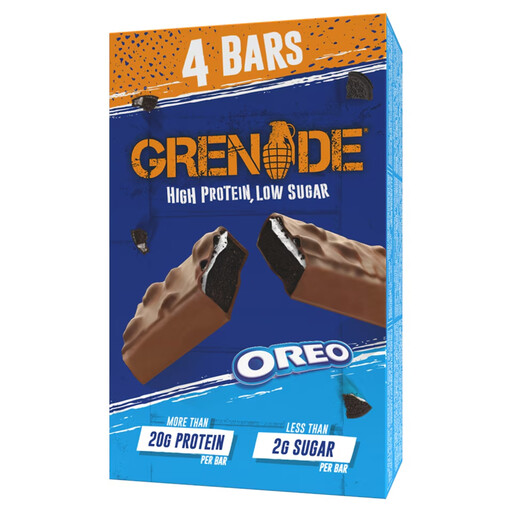
Grenade High Protein Low Sugar Protein Bar, Oreo Flavour, 4 x 60g
Consider this bar format if you want an alternative to biscuits for your gym bag. The pack contains four 60g Oreo-flavour bars; check the nutrition panel for the portion you intend to eat.
View on Joybuy
 No image available
Oreo Zero Sugar Sandwich Cookies, 97g
These are sandwich biscuits rather than custard creams. The 97g product is named Zero Sugar; read its nutrition and ingredient labels if that claim is central to your choice.
View on Joybuy
 No image available
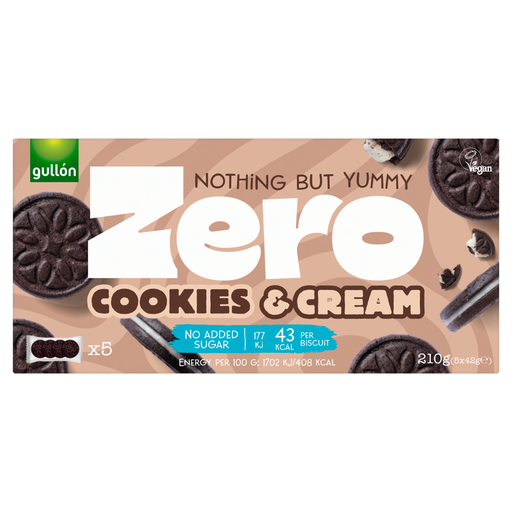
Gullon Zero No Added Sugar Cookies and Cream, 210g
This 210g cookies-and-cream biscuit pack is another non-custard-cream option. “No Added Sugar” is the product’s stated claim; check the sugars figure on the nutrition label rather than reading it as “zero sugar”.
View on Joybuy
 No image available
Nature Valley Protein Peanut & Chocolate Bars, 4 x 40g
These peanut-and-chocolate bars offer a different format from a custard-cream biscuit. The pack contains four 40g bars; compare the nutrition and ingredients per bar when choosing a snack for training.
View on Joybuy
Frequently asked questions
Does a custard-flavoured snack count as reduced sugar?
No: the flavour alone says nothing about a sugar reduction. Look for a specific claim on the exact product. Ambrosia says its My Mini Custard has 30% less sugar than its standard My Mini Custard Pots, but that comparison does not apply to custard-cream biscuits.
Can I pack custard creams as a gym snack?
You can pack them as a biscuit treat, using the serving information to decide on a portion and checking allergens. If you are selecting a snack for 60–90 minutes before exercise, University College London Hospitals NHS Foundation Trust advises considering carbohydrate and protein with minimal fat; do not choose solely because a biscuit is easy to carry.
Do England’s school-food standards cover a personal gym-bag snack?
The Department for Education describes the updated standards as covering food served by schools in England across the school day, with mandatory implementation from September 2027. That school-provision scope is different from choosing food for a personal gym bag; check the applicable rules separately if you are buying for a school.
Which label details matter when comparing these snacks?
Compare sugars per 100g and per portion, the portion weight, ingredients and allergens. If a product claims reduced sugar, check what it is compared with; then read the current pack rather than assuming an earlier retailer listing still reflects its ingredients.


