Shoppers comparing sugar claims
If you want a custard-cream-style biscuit with less sugar, check whether the claim applies to that specific recipe rather than judging it by the size of one biscuit.


A small per-biscuit sugar figure does not make a standard custard cream a reduced-sugar product. If reducing sugar matters to your breakfast choice, check the claim on the exact pack and compare sugars per 100g as well as the number of biscuits you plan to eat. The Joybuy options below include other biscuit styles, not reduced-sugar custard creams.
If you want a custard-cream-style biscuit with less sugar, check whether the claim applies to that specific recipe rather than judging it by the size of one biscuit.
A biscuit is easy to take along. Decide whether you want it as an addition to breakfast or are looking for a different food to serve as breakfast itself.
Read the current pack before making a biscuit part of your routine. The Tesco and Asda custard cream listings reviewed for this article identify wheat and milk allergens.
Start with the sugar claim and a like-for-like nutrition comparison, then check your portion and the exact pack you intend to carry.
| Priority | What to check | Your needs |
|---|---|---|
| Sugar claim | Read the claim on the exact pack. Compare sugars per 100g between similar biscuits; a smaller per-biscuit figure alone does not establish a reduced-sugar recipe. | I want a clear basis for choosing a biscuit with less sugar, not just a smaller biscuit. |
| Portion | Read both per-100g and per-biscuit values, then account for how many biscuits you expect to eat. Sainsbury’s lists 3.3g sugars per biscuit and 26.5g per 100g for its standard Custard Creams. | For a rushed morning, I need the figure for the amount I will actually take with me. |
| Breakfast role | Check the pack format and storage instructions. Kitwave Retail lists McVitie’s Custard Creams as an ambient product; that says nothing about whether they meet your wider breakfast needs. | Portability matters, but I may want the biscuit alongside another breakfast food rather than on its own. |
| Allergens | Read the current ingredients and allergen declaration, particularly after a substitution or packaging change. Asda’s listed Custard Creams contain wheat and milk. | I need to know whether this exact pack is suitable before putting it in my bag. |
A per-biscuit figure reflects the biscuit’s size as well as its recipe. Sainsbury’s labels the sugars in its standard Custard Creams as high in its quick nutrition guide.
Look for a claim on the specific pack and compare sugars per 100g with a similar custard cream.
A front-of-pack label, a per-biscuit figure and a per-100g table answer different questions. Using only one can obscure the amount in your planned portion.
Read the available label information together, then work from the number of biscuits you intend to eat.
Retailers warn that ingredients and allergen information can change. The reviewed Tesco and Asda standard custard cream listings identify wheat and milk.
Check the current pack each time, including when a retailer substitutes a product.
These named products provide points of comparison; a standard custard cream should not be treated as reduced sugar without a claim for that specific pack.
Tesco Custard Cream Biscuits are listed in a 400g pack.
Sainsbury’s lists its standard Custard Creams in a 200g pack.
Asda lists standard Custard Creams in a 400g pack.
McVitie’s Custard Creams are a vanilla-flavour cream sandwich biscuit listed in a 300g pack.
Crawford’s Custard Creams are listed as vanilla-flavour cream sandwich biscuits in a 300g pack.
M&S Extra Cream Custard Creams are a 165g variant described by M&S as having extra vanilla cream and custard powder.
These are portable biscuits in other styles, including cream-filled cookies and digestives. None is a traditional custard cream; check each exact pack’s sugar wording, nutrition and allergens against your needs.
 No image available
A cream-filled cookie to consider if you want a sandwich biscuit rather than a custard cream. Check the exact pack’s nutrition and ingredients; the product information flags wheat and soya, and notes maltitol as a sweetener.
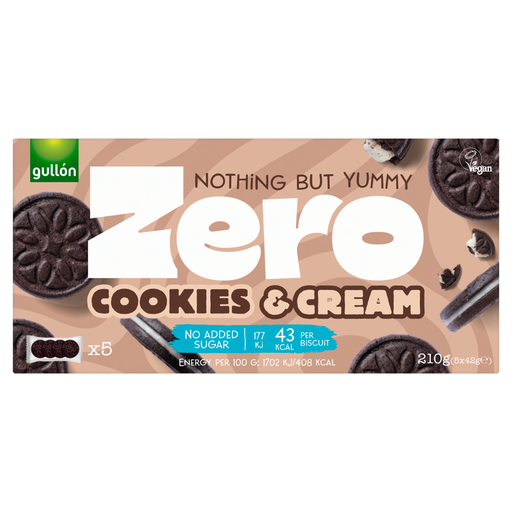 No image available
This cookies-and-cream biscuit offers a sandwich format, but not the flavour of a traditional custard cream. Check the pack’s sugar figures and allergen statement; the product information identifies wheat and soya and a possible presence of milk and mustard.
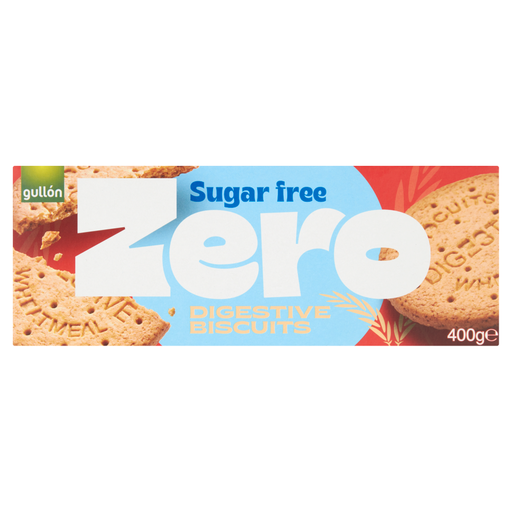 No image available
Choose this biscuit style only if a digestive, rather than a cream-filled biscuit, suits your plans. Read the current nutrition and ingredients; the product information identifies wheat and a possible presence of milk and soya.
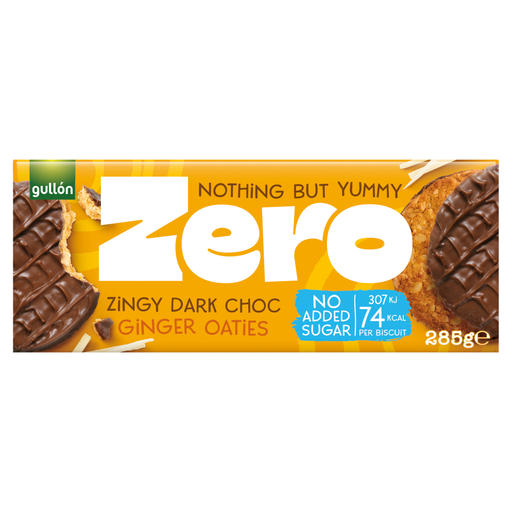 No image available
This ginger oat biscuit is a different choice from a vanilla-cream sandwich biscuit. Check the pack’s sugar figures rather than relying on the range name; the product information identifies oats, wheat, milk and soya.
No. A smaller biscuit can have a smaller per-biscuit figure without a different recipe. Compare similar products per 100g, check the claim on the exact pack and then consider how many biscuits you will eat.
You can carry an ambient biscuit, but convenience alone does not make it a reduced-sugar choice or answer what else you want from breakfast. Check the portion and consider whether the biscuit is an addition to another food or whether a different breakfast food would suit you better.
Check the current label of the exact product before buying it. The reviewed standard Tesco and Asda custard cream listings identify wheat and milk allergens, and retailer product information can change.
Check that the wording applies to the exact product, then read its comparison information, sugars per 100g, portion information and allergens. GOV.UK explains that nutrition claims are subject to rules; a lower-looking number for one biscuit is not itself a reduced-sugar claim.