Buyers checking sugars
If you want a custard cream but need a sugar-free product, compare the sugars declaration per 100 g. A free-from range name and a carbohydrate figure per biscuit answer different questions.


Choose an extra-filled custard cream for its style, not as a sugar-free option: M&S lists 40.2 g sugars per 100 g for Extra Cream Custard Creams. If sugar-free is essential, UK Trading Standards’ nutrition-claim guidance sets a limit of 0.5 g sugars per 100 g for biscuits; check the particular product rather than assuming that a free-from or no-added-sugar label meets it.
If you want a custard cream but need a sugar-free product, compare the sugars declaration per 100 g. A free-from range name and a carbohydrate figure per biscuit answer different questions.
An extra-filled biscuit may appeal for its stated recipe and presentation. Check its sugars declaration separately if that also affects your choice.
If you need a biscuit labelled gluten-free or milk-free, check the specific allergen information. That declaration does not tell you whether the biscuit is sugar-free.
Start with the requirement that matters most—sugars, an ingredient restriction or the biscuit style—then compare the relevant declarations on the same basis.
| Priority | What to check | Your needs |
|---|---|---|
| Sugar-free claim | UK Trading Standards’ nutrition-claim guidance sets a maximum of 0.5 g sugars per 100 g for a sugar-free biscuit. Compare the pack’s per-100 g sugars figure; do not substitute a free-from or no-added-sugar description for it. | I need the biscuit itself to meet a sugar-free requirement, not just to belong to a dietary range. |
| Carbohydrate and portion | Read total carbohydrate as well as sugars, and check the stated portion size. Asda’s listing for Schär Gluten-Free Custard Creams gives 9.2 g carbohydrate per 12.5 g biscuit. | For the number of biscuits I expect to eat, I want to understand what one biscuit contributes. |
| Biscuit style | Read the filling and flavour description alongside sugars per 100 g. M&S describes an extra vanilla-cream filling for Extra Cream Custard Creams and lists 40.2 g sugars per 100 g. | Extra filling matters to me, but I do not want its premium presentation to stand in for a sugars comparison. |
| Ingredients and allergens | Check the named gluten-free or milk-free declaration, ingredients and allergen information for the particular product. Review the pack received as well as the online listing. | I need a biscuit that meets my ingredient requirements; its sugars content is a separate check. |
The listed free-from custard creams from Tesco, Sainsbury’s and Asda declare between 19.9 g and 25 g sugars per 100 g. Their dietary declarations concern ingredients, not a sugar-free claim.
Choose for the ingredient restriction you need, then check sugars per 100 g separately.
M&S Extra Cream Custard Creams list 40.2 g sugars per 100 g. The filling description tells you about the intended biscuit style, not a nutritional advantage.
If sugars affect your choice, compare the declaration before deciding whether the extra-filled style appeals.
The Good Housekeeping Institute’s 2020 test named M&S Custard Creams; the M&S Extra Cream Custard Creams listing concerns a differently named product.
Do not treat the historical placing as a result for Extra Cream. Compare the product and recipe details of the pack you are considering.
These examples show why a brand name or range description cannot replace the nutrition and ingredient details of a particular biscuit.
M&S describes its Extra Cream Custard Creams as having an extra vanilla-cream filling and a custard-powder recipe.
Tesco lists both a standard custard cream and a gluten- and milk-free version.
Sainsbury’s lists standard and milk- and gluten-free custard creams.
Asda lists standard custard creams and a gluten- and milk-free version.
Schär Gluten-Free Custard Creams are listed in individual portions.
Tesco’s listing identifies Crawford’s Custard Creams as a conventional 300 g pack.
A Joybuy UK listing identifies McVitie’s Tasties Custard Creams as a 300 g pack.
These options include a gluten-free custard cream and other biscuits for shoppers comparing sandwich-cookie, no-added-sugar and custard-flavour descriptions. A custard-flavoured biscuit or sandwich cookie is not necessarily a traditional custard cream; check each pack against the requirement that brought you here.
 No image available
For a sandwich cookie rather than a custard cream, check the pack’s sugars and total carbohydrate per 100 g against your requirements.
 No image available
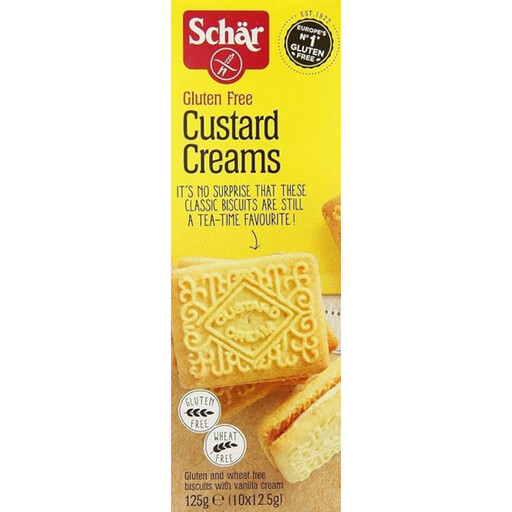
For a gluten-free custard cream, check the current pack’s ingredients against your requirements. Asda’s listing for this 125 g product gives 23 g sugars per 100 g, so it is not a sugar-free substitute.
 No image available
If the no-added-sugar description interests you, check the sugars figure per 100 g before deciding whether this biscuit meets a sugar-free requirement.
 No image available
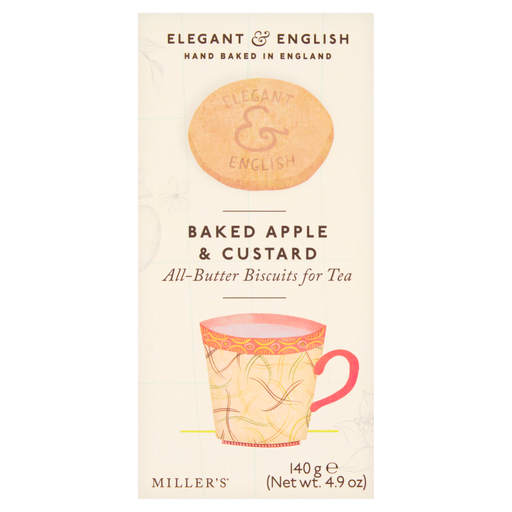
For a baked-apple-and-custard flavour rather than a custard-cream sandwich biscuit, compare the pack’s sugars declaration with the other biscuits you are considering.
No. Free-from wording identifies the stated ingredient exclusions, not a sugars level. Tesco Free From Custard Creams, for example, list 19.9 g sugars per 100 g.
UK Trading Standards’ nutrition-claim guidance sets a maximum of 0.5 g sugars per 100 g for a sugar-free biscuit. Check the per-100 g declaration on the particular pack rather than judging the claim from a per-biscuit figure alone.
No. Diabetes UK notes that polyols contain carbohydrate. If total carbohydrate matters to your choice, read that figure and the portion size separately from the sugars declaration.
Check the specific biscuit’s ingredients and allergen information before ordering, then check the pack you receive. A gluten-free or milk-free description addresses the named restriction; it does not establish the biscuit’s sugars content.
Follow the instructions on the pack you buy. Tesco’s listing for its standard custard creams says to keep them cool and dry and use an airtight container once opened; instructions for another product may differ.