Choose plain digestives for a recipe written around a digestive crumb base; choose custard creams when their vanilla-flavoured filling is meant to be part of the dessert. The filling affects how the crumbs bind, so follow a recipe developed for the biscuit you use rather than copying its butter quantity from the other type. Check the exact pack’s ingredients when baking for someone who needs to avoid an ingredient.
Who is choosing between them?
Biscuit-base bakers
If you are crushing biscuits for a cheesecake or similar base, choose the biscuit type before settling on the recipe’s butter quantity. Dr. Oetker’s digestive-base method and Jane’s Patisserie’s custard-cream method treat the two bases differently.
Bakers choosing a vanilla-filled biscuit
Custard creams bring a vanilla-flavoured sandwich filling into the crumb mixture. That makes them a different ingredient from an unfilled digestive when the biscuit’s flavour is part of the dessert.
Bakers checking ingredients
Check the particular pack before serving a bake to someone who needs to avoid an ingredient. The Tesco and Sainsbury’s custard-cream examples list wheat and milk ingredients; ASDA’s digestive listing contains wheat and says it may contain milk. Those examples do not establish the ingredients of every biscuit in either category.
What matters for the base?
Plain digestives
Choose when: The recipe calls for digestives and you want its other ingredients to lead the flavour.
Trade-off: An unfilled digestive will not contribute a custard cream’s vanilla-flavoured filling.
Custard creams
Choose when: The vanilla-flavoured filling is an intended part of the dessert.
Trade-off: Jane’s Patisserie explains that the filling affects a cheesecake base when mixed with melted butter, so a digestive-base method is not a direct substitute.
| Priority |
What to check |
Your needs |
| Base recipe |
Check which biscuit the method specifies and use its biscuit and butter quantities. Dr. Oetker’s particular digestive-base method calls for 250 g digestives and 125 g unsalted butter; that is not a universal ratio. |
I want the crumb mixture to match the method I am following, rather than swapping in a filled biscuit without adjusting the recipe. |
| Biscuit flavour |
Check whether the biscuit is unfilled or has a vanilla-flavoured sandwich filling. Tesco describes its custard creams as filled sandwich biscuits. |
If I want vanilla filling in the dessert, I would choose a recipe written for custard creams. Otherwise, I would look at the digestives specified by my base recipe. |
| Ingredients |
Read the exact pack’s ingredients and allergen statements. The Tesco custard-cream listing includes wheat and milk ingredients; the ASDA digestive listing contains wheat and says it may contain milk. |
Someone eating my bake needs to avoid an ingredient, so the particular biscuit pack matters more than assumptions about its category. |
| Pack quantity |
Compare the recipe’s required biscuit weight with the pack’s net weight. Decide whether a partly used pack suits another planned bake. |
I need enough biscuits for the base without choosing a pack size solely by its appearance. |
Mistakes to avoid
-
Replacing digestives with custard creams without changing the method
Jane’s Patisserie explains that custard-cream filling melts alongside the butter in a cheesecake base. A butter quantity from a digestive-base recipe therefore should not be assumed to give the intended custard-cream mixture.
Pick the biscuit first, then follow a base recipe developed for that biscuit type.
-
Judging a biscuit by the word “digestive” alone
A plain digestive and a filled digestive are not the same ingredient. Joybuy’s McVitie’s Digestives Creams Vanilla listing, for example, describes a vanilla cream layer between digestives.
Read the full product name and description before matching a pack to an unfilled-digestive recipe.
-
Relying on a listing for the final ingredient check
Ingredient and precautionary statements vary between products. ASDA’s digestive listing, for example, says the biscuits contain wheat and may contain milk.
When an ingredient must be avoided, read the label on the exact pack you will use before adding the biscuits to the bake.
Brand and product-line references
These examples help distinguish biscuit types and ingredient statements; a brand name alone does not tell you which recipe fits a particular pack.
McVitie’s
McVitie’s Original Digestives are an example to consider for a recipe calling for plain digestives.
- McVitie’s lists several pack sizes for its Original Digestives.
- The manufacturer’s allergen information says they may also contain milk; check the selected pack.
Tesco
Tesco Custard Cream Biscuits 400G are a vanilla-filled sandwich biscuit for a recipe written around custard creams.
- Tesco describes a biscuit with vanilla-flavoured filling.
- The listed ingredients include wheat and milk; the filling also makes this different from an unfilled digestive.
ASDA
ASDA Digestive Biscuits 400g are a plain-digestive example.
- The listed ingredients include wheat flour and wholemeal wheat flour.
- ASDA’s allergen advice says the biscuits contain wheat and may contain milk.
Sainsbury’s
Sainsbury’s Custard Creams 200g are another filled-biscuit example.
- The listing identifies a custard-cream pack that can be compared with the weight required by a recipe.
- Its listed ingredients include wheat flour and cows’ milk whey; check the pack used for the bake.
M&S
The M&S biscuit range includes digestives and custard creams, so select the particular type named by your recipe.
- M&S says its Digestive Biscuits are made with demerara sugar.
- That description applies to the named digestive product, not to every biscuit in the range.
Joybuy biscuit options
These Joybuy options cover one custard cream and one digestive. Match the biscuit and its stated variant to your recipe before choosing a pack.
 No image available
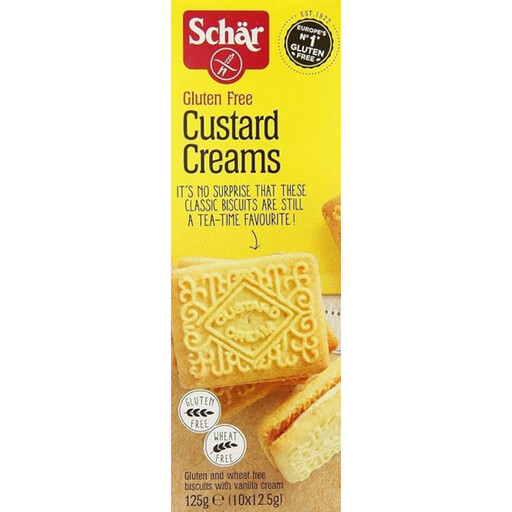
Schar Gluten Free Custard Creams 125g
Consider these when a recipe calls for custard creams rather than plain digestives. The product name identifies a 125g gluten-free custard-cream pack; follow the chosen recipe’s biscuit and butter quantities and check the pack’s full ingredient information for the people eating the bake.
View on Joybuy
 No image available
Gullon Zero Sugar Free Original Digestives 400g
Consider these for a recipe that calls for digestives, checking whether this named variant suits the intended bake. The product name identifies a 400g sugar-free digestive pack; check its ingredients and allergen statements on the pack before use.
View on Joybuy
Questions about biscuit bases
Can I use the same butter quantity when swapping digestives for custard creams?
Do not assume the quantities are interchangeable. Dr. Oetker’s specific digestive-base method uses 125 g unsalted butter with 250 g digestives, while Jane’s Patisserie explains that custard-cream filling also melts into a cheesecake crumb mixture. Follow a method written for the biscuit you use.
Does a digestive cheesecake base need a food processor?
Dr. Oetker’s digestive-base method uses a food processor to crush the biscuits finely before mixing them with melted butter and pressing them into a springform tin. That describes its particular method, not a requirement for every biscuit bake.
Can I judge allergens from the biscuit type alone?
No. Tesco’s listed custard creams include wheat and milk ingredients, while ASDA’s listed digestives contain wheat and may contain milk. Read the ingredients and precautionary statements on the exact pack you will use.
What does a best-before date mean for biscuits?
GOV.UK explains that a best-before date concerns quality, whereas a use-by date concerns safety; it gives stale biscuits as an example of a quality change. Follow the storage instructions on the pack as well.


