A custard cream can be a small sweet biscuit alongside other food; a plain digestive is worth considering if sugar and fibre are your deciding factors. For the specific products compared here, McVitie's lists 15.1 g sugars and 3.7 g fibre per 100 g for The Original, while Tesco lists 28.3 g sugars and 1.1 g fibre per 100 g for its custard creams. If the post-gym snack needs to contribute protein, include a protein-containing food rather than relying on either biscuit alone, in line with guidance from the NHS North East and North Cumbria Prehab Hub.
Who is choosing?
Post-gym biscuit snackers
If you want a familiar sweet biscuit after exercise, consider whether it is an extra alongside other food or the whole snack. Tesco lists 0.7 g protein per custard cream; NHS North East and North Cumbria Prehab Hub guidance discusses adding protein to a post-exercise snack.
Digestive-versus-cream shoppers
If you are deciding between the two biscuit styles, compare sugars and fibre per 100 g, then check the figures for the number of biscuits you intend to eat. The word 'digestive' does not establish a digestive-health effect.
Allergen-conscious biscuit buyers
Check the exact pack's ingredients and precautionary statements. A separately formulated gluten-free custard cream is not interchangeable with a standard recipe containing wheat and milk.
What should you compare?
Decide what the whole post-gym snack needs to provide before choosing a biscuit; use per-100 g figures to compare products and per-biscuit figures to plan your portion.
| Priority | What to check | Your needs |
|---|
| Protein in the snack |
Check protein per biscuit and what else you will eat. Tesco lists 0.7 g per custard cream and McVitie's lists 1.0 g per Original digestive; the NHS North East and North Cumbria Prehab Hub gives yoghurt as an example of a protein-containing post-exercise food. |
If this snack needs to contribute protein, I'll choose an accompanying food rather than count on biscuits alone. |
| Sugars and portion |
Compare the exact products per 100 g, then check sugars and saturates for the number of biscuits you plan to eat. McVitie's lists 15.1 g sugars per 100 g for The Original; Tesco lists 28.3 g for its custard creams. |
I want to know what my intended portion contains, not assume two differently sized biscuits are equivalent. |
| Fibre |
Compare fibre on the same per-100 g basis. McVitie's lists 3.7 g for The Original and Tesco lists 1.1 g for its custard creams; neither figure establishes a digestive-health effect. |
If fibre matters to my choice, I'll use the nutrition panel rather than the biscuit's name. |
| Ingredients and allergens |
Read the current pack's ingredients and precautionary statements. Tesco's standard custard creams contain wheat and milk; ASDA's separately formulated Free From custard creams are labelled free from gluten and milk. |
I need a recipe that meets my ingredient requirements, so I'll check the specific pack I buy. |
Common buying mistakes
-
Reading 'digestive' as a health promise
McVitie's lists 1.0 g protein per Original digestive. Its name and nutrition panel do not establish a digestive-health or post-workout recovery effect.
Choose by the listed nutrients and what else is in your snack, not by the biscuit name.
-
Comparing only one biscuit at a time
Per-biscuit figures describe a stated portion, which may differ from the amount you eat. The NHS explains that labels also provide nutrition per 100 g.
Use per 100 g to compare the products, then use per-biscuit figures for your intended portion.
-
Assuming free-from means less sugar
ASDA lists 3.5 g sugars per biscuit for its Free From custard creams and 3.4 g for its standard version. They are different recipes serving different ingredient needs.
Check the free-from declaration for the ingredients you need to avoid, and assess its nutrition separately.
Brand and product references
McVitie's
The Original digestive provides a named plain-biscuit reference for comparison with custard creams.
- McVitie's lists sugars and fibre both per 100 g and per biscuit for The Original.
- Its digestive name does not establish a digestive-health or recovery effect.
Tesco
Tesco's standard custard cream provides a cream-filled comparison with per-biscuit nutrition.
- Tesco lists 3.4 g sugars and 0.7 g protein per biscuit.
- The listed recipe contains wheat and milk; check the current pack before eating.
ASDA
ASDA lists both standard custard creams and a separately formulated Free From version.
- The Free From custard creams are labelled free from gluten and milk.
- ASDA lists 3.5 g sugars per biscuit for that Free From recipe; its ingredient declaration does not describe its sugar content.
Sainsbury's
Its own-label custard creams provide another standard-recipe reference in a listed 200 g pack.
- Sainsbury's lists 3.3 g sugars and 0.7 g protein per biscuit.
- The retailer's ingredient advice includes a warning for people with a barley allergy.
M&S
Extra Cream Custard Creams are a specific 165 g variant, not a description of every M&S custard cream.
- M&S provides a nutrition panel for this named variant.
- Check the exact pack when comparing it with a standard custard cream.
Crawford's
Crawford's custard creams are a vanilla-cream sandwich biscuit identified in an Iceland Foods listing.
- The listing identifies the product as a 300 g pack.
- Iceland Foods identifies wheat and milk as allergens for this product.
Joybuy biscuit options
These options include plain and flavoured digestives, plus a gluten-free custard cream. Compare each exact pack with your intended portion and ingredient requirements; a biscuit alone need not serve the same purpose as a protein-containing post-gym snack.
 No image available
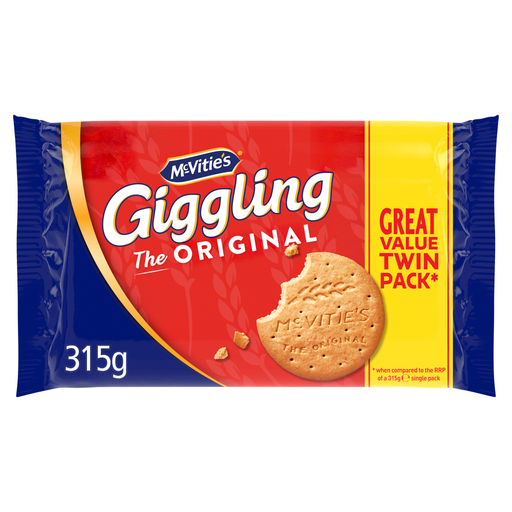
McVitie's The Original Digestives, 2 × 315 g
A plain digestive for the custard-cream comparison. McVitie's lists 15.1 g sugars and 3.7 g fibre per 100 g for The Original; check the pack for your intended portion.
 No image available
Gullon Zero Sugar Free Original Digestives, 400 g
A differently formulated digestive for shoppers comparing sugar declarations. Read its nutrition panel and ingredients rather than assuming it matches a standard digestive in other respects.
 No image available
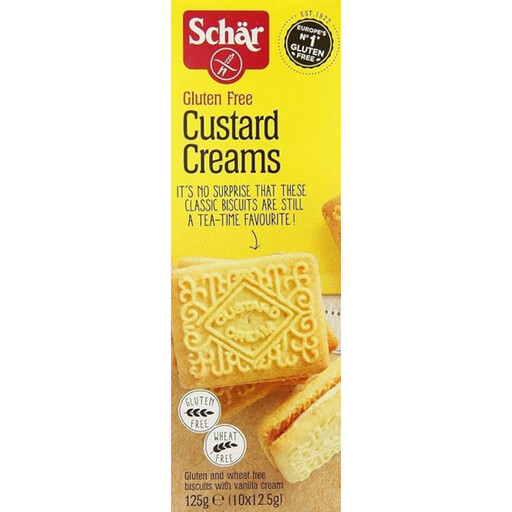
Schar Gluten Free Custard Creams, 125 g
A gluten-free custard-cream option rather than a plain digestive. Check the exact pack's full ingredient and allergen statements, as well as its per-100 g nutrition, against your needs.
 No image available
McVitie's Digestives Dark Chocolate, 2 × 266 g
A dark-chocolate digestive variant, not a plain digestive. If sugar or saturates influence your choice, compare this pack's per-100 g figures with those of the plain biscuit you are considering.
 No image available
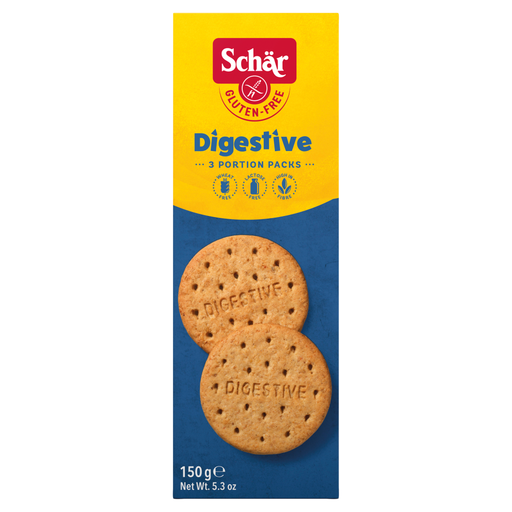
Schar Gluten Free Digestive Biscuits, 150 g
A gluten-free digestive option for comparing biscuit styles. Check the purchased pack's complete allergen statement and nutrition panel; gluten-free describes a recipe requirement, not its overall nutrient profile.
Questions about these snacks
Is a custard cream enough on its own after the gym?
Do not rely on a custard cream alone if you need this snack to contribute protein: Tesco lists 0.7 g protein per biscuit. The NHS North East and North Cumbria Prehab Hub gives yoghurt as an example of a protein-containing food to add after exercise; what you need also depends on your activity and wider diet.
Does a free-from custard cream suit everyone with an allergy?
No. ASDA labels its specified Free From custard creams free from gluten and milk, while its standard custard creams contain wheat and milk. Check the exact purchased pack's ingredients and precautionary statements for the allergens relevant to you.
Do English school-food rules ban a private post-gym biscuit?
No. England's Requirements for School Food Regulations 2014 address food provided at school, not a biscuit bought privately after a gym session. Within those regulations' scope and exceptions, cakes and biscuits must not be provided as food other than part of a school lunch. The Department for Education said on 14 September 2026 that updated standards proposed for September 2027 remained subject to Parliamentary approval; the school-food rule does not establish an HFSS classification for a particular biscuit.
How should I store an opened pack?
Follow the directions on the pack you buy. Tesco and ASDA advise storing their listed custard creams in a cool, dry place and using an airtight container after opening.


