What should you check?
Start with the biscuit the person would enjoy, then compare like-for-like label values and check ingredients and texture before serving it.
| Priority | What to check | Your needs |
|---|
| Biscuit style and portion |
Check whether the pack contains plain digestives, chocolate-coated digestives or filled custard creams. Use the per-biscuit values, where given, for the number being served. |
I’m choosing a familiar biscuit for tea, but the portion on the table matters more than the pack size. |
| Sugar and fibre |
Compare values per 100g for the exact variants. Marks & Spencer lists 18.2g sugars and 3.2g fibre for its Digestives, versus 40.2g sugars and 1.2g fibre for its Extra Cream Custard Creams. |
If I want to compare sugar and fibre, I need the labels for the biscuits I’m actually choosing—not an assumption based on the word ‘digestive’. |
| Ingredients and allergens |
Read the current ingredients and precautionary statements for each relevant allergen. The Sainsbury’s and Marks & Spencer custard creams described here contain wheat and milk ingredients; Marks & Spencer’s also lists soya lecithin. |
Someone I’m serving needs an ingredient check before a biscuit goes on their plate. A gluten-free or vegan description does not answer every allergy question. |
| Chewing and swallowing |
Check whether regular crisp foods are appropriate for the person. The International Dysphagia Diet Standardisation Initiative says regular food is for people without chewing or swallowing problems that increase choking risk; follow any individual texture plan. |
If an ordinary crunchy biscuit is difficult to manage, flavour and nutrition comparisons cannot decide what is safe to serve. |
Relevant brand and retailer ranges
These examples show why the exact biscuit and variant matter; a brand name alone does not describe every product in its range.
McVitie’s
The Original Digestives are a plain digestive option for someone who prefers that style with tea.
- McVitie’s lists 3.7g fibre and 15.1g sugars per 100g; its per-biscuit figures are 0.5g fibre and 2.2g sugars.
- The product contains wheat ingredients and may contain milk. Its crisp texture also needs checking against the person’s chewing and swallowing needs.
Crawford’s
A traditional sandwich-biscuit option when the vanilla-flavoured cream filling is the preference.
- Iceland Foods describes Crawford’s Custard Creams as filled with vanilla-flavoured cream and suitable for vegetarians.
- Check the physical pack’s ingredients, nutrition and allergy information before serving, as the retailer notes these details can change.
Sainsbury’s
An own-label custard cream with per-biscuit figures for planning a serving.
- Sainsbury’s lists 59kcal, 3.3g sugars and 1.2g saturates per biscuit, and 3.0g fibre per 100g.
- Its ingredients include wheat and whey powder from cows’ milk. The product listing also warns that it is unsuitable for people allergic to barley because of manufacturing methods.
Tesco
Tesco Free From Custard Creams are a separate option to examine when a standard wheat-and-milk custard cream does not fit the shopper’s requirements.
- Tesco lists the product as suitable for vegans, with 25.2g sugars and 0.1g fibre per 100g.
- Check the current pack for the particular allergens and dietary requirements that matter to the person eating it.
M&S
Marks & Spencer lists both plain Digestives and Extra Cream Custard Creams, allowing a comparison between two distinct biscuit styles.
- Per 100g, Marks & Spencer lists 3.2g fibre and 18.2g sugars for its Digestives, compared with 1.2g fibre and 40.2g sugars for its Extra Cream Custard Creams.
- Both listed products contain wheat ingredients; the custard creams also contain milk and soya ingredients. Check the exact pack before serving.
Joybuy biscuit options
These options include a plain digestive, a gluten-free custard-cream-style biscuit and other digestive variants. Check each variant separately: a chocolate-coated or sugar-free digestive does not have the same description or label as McVitie’s plain Original Digestives.
 No image available
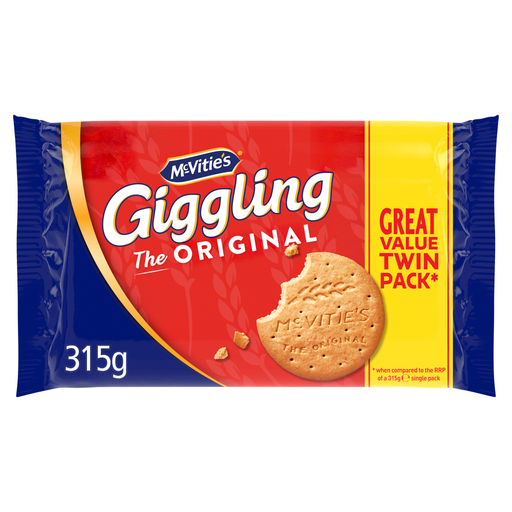
McVitie’s Digestives the Original, 2 x 315g
A plain digestive to consider when that biscuit style is preferred for tea. McVitie’s lists 15.1g sugars and 3.7g fibre per 100g for The Original. Check the current pack for wheat ingredients and its precautionary milk statement; confirm that a crisp biscuit suits the person’s texture needs.
View on Joybuy
 No image available
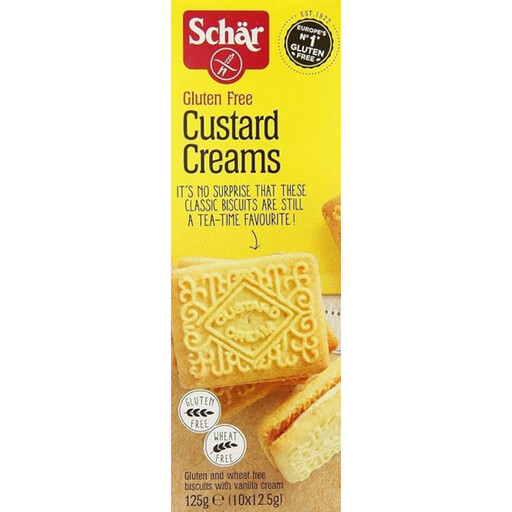
Schar Gluten Free Custard Creams, 125g
A custard-cream-style option where a gluten-free, wheat-free product is required. Sainsbury’s lists this Schär product as gluten free, wheat free, lactose free and suitable for vegans, with 23g sugars and 0.9g fibre per 100g. Check the current pack against individual dietary requirements and confirm that its crisp texture is appropriate.
View on Joybuy
 No image available
Gullon Zero Sugar Free Original Digestives, 400g
A sugar-free-labelled digestive variant rather than a standard plain digestive. Compare the current nutrition panel and ingredient list with the other biscuits you are considering, and check whether a crisp biscuit is suitable for the person eating it.
View on Joybuy
 No image available
McVitie’s Digestives Milk Chocolate, 400g
A milk-chocolate digestive for someone who prefers a coated biscuit with tea. It is a different variant from The Original, so use this pack’s own nutrition and allergen information rather than the plain digestive’s figures. Check that its crisp texture is appropriate before serving.
View on Joybuy
 No image available
McVitie’s Digestives Dark Chocolate Twin Pack, 2 x 266g
A dark-chocolate digestive twin pack, not the plain Original variant. Check its own per-100g and per-biscuit values when comparing portions, alongside the current ingredients and any relevant allergen statements. Confirm that a regular crisp biscuit suits the person being served.
View on Joybuy
Questions about serving biscuits
Does ‘digestive’ mean the biscuit helps digestion?
No: ‘digestive’ identifies the biscuit style, not a treatment for symptoms. Some plain examples contain more fibre than the custard creams compared here, but the amounts depend on the exact product; compare labels rather than relying on the name.
Which has less sugar: a custard cream or a plain digestive?
In Marks & Spencer’s listed products, the plain Digestives have 18.2g sugars per 100g and the Extra Cream Custard Creams have 40.2g per 100g. McVitie’s lists 15.1g per 100g for its plain Original Digestives. Check the exact variants and compare equal weights; chocolate-coated digestives need their own comparison.
What if the person has a wheat or milk allergy?
Check the current pack against that person’s allergy requirements before serving it. Sainsbury’s standard Custard Creams contain wheat and whey powder from cows’ milk, while Marks & Spencer’s Extra Cream Custard Creams contain wheat and milk ingredients. A different biscuit or dietary label still needs its own ingredient check.
Is a gluten-free custard cream also lower in sugar?
Not necessarily. Sainsbury’s lists 23g sugars and 0.9g fibre per 100g for Schär Gluten Free Custard Creams. Choose a gluten-free product for the relevant dietary requirement, then compare its nutrition panel separately if sugar or fibre matters.
Can someone with swallowing difficulties have a crunchy biscuit?
Do not assume a regular crunchy biscuit is suitable. The International Dysphagia Diet Standardisation Initiative says regular food is for people without chewing or swallowing problems that increase choking risk. Follow the person’s prescribed texture plan and individual clinical advice before offering a custard cream or digestive.


