Afternoon-tea hosts choosing a biscuit style
A custard cream offers a vanilla-flavoured centre, while an original digestive is an unfilled wheatmeal biscuit. Decide which style your guests would prefer before comparing packs.


Choose custard creams for a vanilla-flavoured filling between two biscuits, or original digestives for an unfilled wheatmeal biscuit with the salty-sweet flavour McVitie’s describes. For guests with dietary requirements, check the ingredients and allergen information on the pack you will serve; also compare pack quantities with how much your gathering is likely to use.
A custard cream offers a vanilla-flavoured centre, while an original digestive is an unfilled wheatmeal biscuit. Decide which style your guests would prefer before comparing packs.
Standard custard creams and specifically labelled free-from versions have different ingredients. Check the pack supplied against each guest’s requirements rather than relying on the biscuit’s name.
Pack quantity matters if some biscuits will be left after tea. Follow the pack’s storage directions once it is open.
Start with the biscuit style your guests want, then check dietary labels, pack quantity and nutrition figures on a comparable basis.
| Priority | What to check | Your needs |
|---|---|---|
| Biscuit style | Look for a vanilla-flavoured sandwich filling if you want a custard cream. McVitie’s describes its original digestive as a salty-sweet wheatmeal biscuit without a cream centre. | I’m choosing between a filled biscuit and an unfilled one, not between two names for the same style. |
| Ingredients | Read the supplied pack’s ingredients and allergen warnings. The listed standard Tesco custard creams contain wheat and milk; Tesco Free From Custard Creams are labelled gluten free and milk free. The listed McVitie’s original digestives carry a ‘may also contain Milk’ warning. | If a guest avoids a particular ingredient, I need to check the specific recipe and its warnings before serving it. |
| Pack quantity | Compare the stated pack weights with the number of biscuits you expect to serve. Documented custard-cream formats include 125 g, 300 g and 400 g packs. Follow the pack’s directions for storing leftovers. | A smaller pack may suit a short gathering; for a larger tea, I want enough without leaving an opened pack unused. |
| Nutrition basis | Compare labelled values per 100 g when looking at different biscuit sizes. Per-biscuit figures describe each product’s own biscuit, not equal-weight portions. | I want to compare the labels without assuming that one custard cream and one digestive are the same serving size. |
An original digestive is an unfilled wheatmeal biscuit; a custard cream is a filled sandwich biscuit. Substituting one for the other changes what you serve.
Choose the style first, then compare packs within it.
The listed McVitie’s original digestives say ‘may also contain Milk’, while the checked standard custard-cream recipes include milk ingredients. An unfilled biscuit is not necessarily suitable for someone avoiding milk.
Read the ingredients and precautionary wording on the actual pack for the guest’s particular requirement.
Custard-cream packs in the documented ranges vary from 125 g to 400 g, so the quantity left after afternoon tea may differ considerably.
Choose an amount you expect to use and follow the pack’s storage instructions after opening.
Its documented range includes original Digestives and Tasties Custard Creams, allowing a choice between an unfilled wheatmeal biscuit and a filled one.
Its documented 300 g custard creams are sandwich biscuits with a vanilla-flavoured filling.
Its documented custard-cream products include a standard 400 g pack and a separate 125 g Free From pack.
Its documented own-label custard creams come in a 200 g pack.
Its documented own-label custard creams come in a 400 g pack with a vanilla-flavoured filling.
Its documented 165 g Extra Cream Custard Creams are a filling-focused variation.
These options include a gluten-free custard cream and two differently flavoured biscuits for tea. The apple-and-custard biscuit and chocolate wafer are alternatives to consider, not traditional custard creams or original digestives.
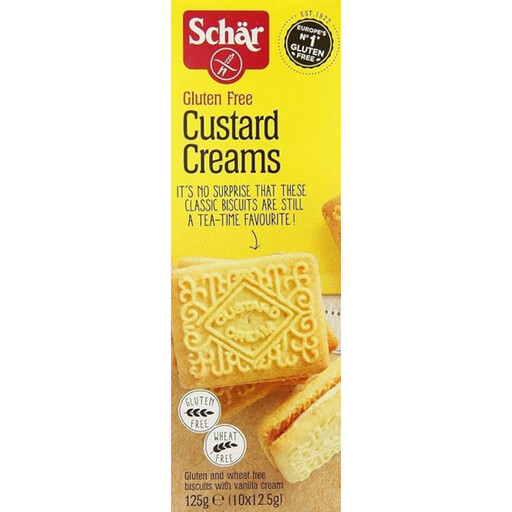 No image available
A gluten-free custard-cream option for guests who need to avoid gluten. The pack is 125 g; check its full ingredients and allergen information against any other dietary requirements.
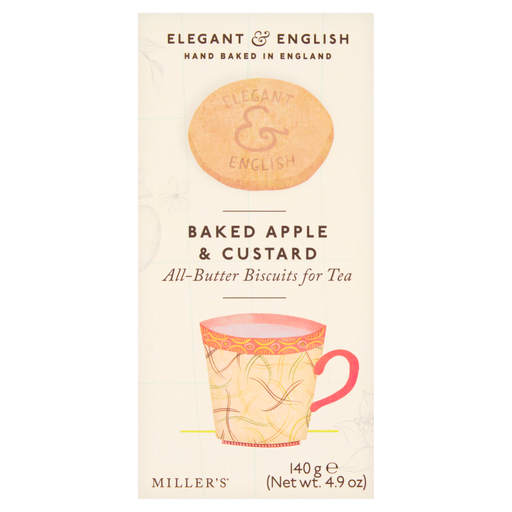 No image available
Consider this apple-and-custard-flavoured biscuit if you want a variation alongside tea rather than a traditional custard-cream sandwich biscuit. The pack is 140 g; check its ingredients before serving guests with dietary requirements.
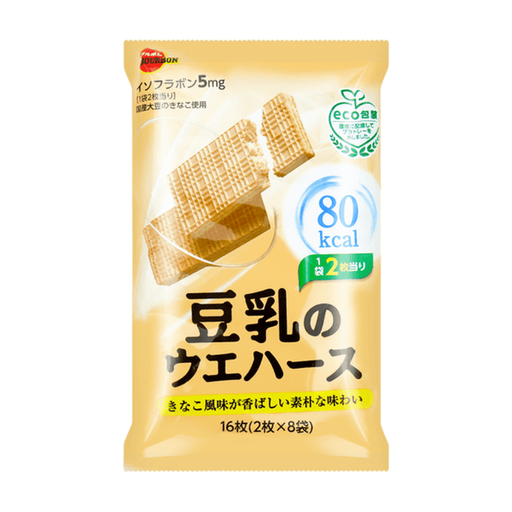 No image available
These wafers offer a different biscuit style for a tea break; they are neither custard creams nor wheatmeal digestives. The stated pack weight is 112.8 g. Check the ingredients and allergen information before serving.
No preparation is needed for the documented packaged custard creams; serve them as biscuits and follow the particular pack’s date and storage instructions.
The documented Tesco, Crawford’s and Asda standard packs direct cool, dry storage and an airtight container after opening. Follow the instructions on the pack you buy.
Do not assume so: the documented standard Tesco, Crawford’s and Asda recipes contain milk ingredients. Tesco’s separate Free From Custard Creams are labelled milk free, but check the supplied pack against the guest’s full requirements.
For prepacked food, GOV.UK’s consumer guidance says that any of the 14 regulated allergens present as ingredients must be clearly identified in the ingredients list. Read the pack you will serve, including any precautionary warnings relevant to your guest.