Large-batch cake bakers
If the cake or several dessert portions need a substantial amount of custard, a larger ready-to-serve pack may avoid opening multiple smaller tins. Tesco and Sainsbury’s list 1kg prepared options.


Choose a 1kg ready-to-serve carton when a family cake needs plenty of prepared custard with little preparation; choose a 400g tin for a smaller quantity or if canned packaging matters. Custard powder takes cooking but lets you vary the milk quantity and sugar for the recipe. Before buying, check how much custard the cake needs, the exact pack’s allergen and storage instructions, and whether its flavour suits the intended layer or topping.
If the cake or several dessert portions need a substantial amount of custard, a larger ready-to-serve pack may avoid opening multiple smaller tins. Tesco and Sainsbury’s list 1kg prepared options.
For a test bake or custard served alongside a smaller cake, a 400g unit may be easier to use within its labelled period after opening. Check that period on the particular pack.
If you want to vary the prepared custard’s consistency or sweetness, Bird’s says its powder can be made with different quantities of milk and sugar. It requires preparation rather than simply opening a pack.
For a family cake, establish the quantity the recipe calls for before choosing between ready-made custard and powder. The concerns below distinguish consumers by the need they put first.
| Concern | What to check | Who this matters to |
|---|---|---|
| Quantity and format | Compare the recipe quantity with the pack’s net weight, and check whether it is a tin or a ready-to-serve carton. | If I need custard for a large cake or several portions, I want enough prepared custard without opening several small packs; about 40% of consumers put finished quantity and format first. |
| Consistency control | Decide whether the recipe calls for ready-made custard or preparation from powder with adjustable milk quantity and sugar. | When custard is going into a cake layer, I may want to adjust how it is made rather than use a fixed recipe. About 30% of consumers make that recipe control their primary concern. |
| Opened-pack storage | Read the exact pack’s refrigeration and use-after-opening instructions; plan how to use any remainder. | For a one-off bake, I do not want a larger opened pack left over beyond its labelled period; avoiding that waste comes first for about 20% of consumers. |
| Ingredients and allergens | Check the current pack’s ingredients and allergen declaration, including any precautionary milk statement. | If I am serving people with ingredient restrictions, I need to check the particular product before using it. Ingredient and allergen fit is the leading concern for about 10% of consumers. |
The cited 1kg ready-to-serve options are cartons, while the cited canned options are 400g. Sticking to tins may therefore mean opening more than one for a large bake.
Decide whether canned packaging is essential, then compare net weights among formats that meet that requirement.
Instructions differ between products: Tesco states three days after opening for its cited 400g and 1kg custards, M&S states two days for its 400g product, and Stamford Street Co. states one day for its 400g can.
Choose a pack size with the cake and any planned second use in mind. Refrigerate and use the remainder according to that pack’s label.
An unused remainder may become food waste if it cannot be used within the labelled period.
Ready-made custard has a fixed formulation. Bird’s powder takes preparation but allows the milk quantity and sugar to be varied.
Check whether the cake needs custard poured alongside it or prepared for a particular layer, and choose the format that fits the recipe instructions.
The cited ready-made products contain milk ingredients, while Bird’s Original Custard Powder carries a may-contain-milk statement.
Read the current physical pack’s ingredients and allergen declaration before using custard for anyone who needs to avoid milk.
Ready-to-serve Devon custard appears in smaller formats and larger cartons. Ambrosia describes its 500g carton as serving four, while Sainsbury’s lists a 1kg Devon custard carton.
A powder alternative for bakers who would rather prepare custard than buy it ready to serve.
Own-label ready-to-serve custard is listed in a 400g can and a 1kg format.
Sainsbury’s lists a 1kg ready-to-eat own-label custard alongside a 400g Stamford Street Co. can.
M&S lists a 400g canned custard containing whole milk and cream.
These selections cover a larger ready-made quantity, smaller ready-made custards and powder for bakers who want to prepare their own. Match the pack and flavour to the cake rather than assuming every custard suits the same filling.
 No image available
Consider this 1kg ready-made option when a larger cake needs more prepared custard. If you specifically need a tin, check this variant’s container before ordering; plan to refrigerate and use it within the pack’s stated period after opening.
 No image available
This smaller ready-to-serve quantity is worth considering for a modest bake or for custard served alongside cake. Check the recipe quantity before relying on one 400g pack, and follow its own storage and allergen instructions.
 No image available
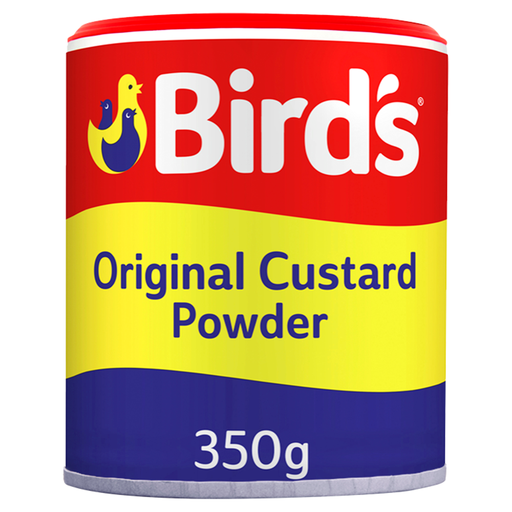
Choose powder if the recipe calls for custard you can prepare with a varied milk quantity or amount of sugar. This 350g pack is not ready to serve: making it requires milk, sugar and cooking. Check its may-contain-milk declaration on the current pack.
 No image available
This 400g ready-made option makes sense only if strawberry flavour fits the cake you are making. Check the recipe before using it as a filling, and read the current pack’s milk-allergen and opened-storage instructions.
That depends on the quantity in your recipe and whether the custard must come in a tin. The cited canned options are 400g, while Sainsbury’s and Tesco list larger ready-to-serve options in other formats. Check net weight and packaging before deciding how many packs to buy.
Follow the particular pack’s refrigeration and use-after-opening directions. Tesco states three days for its cited 400g and 1kg products, M&S states two days for its 400g custard, and Stamford Street Co. states one day for its 400g can; one product’s instruction does not apply to another.
The cited Tesco and Ambrosia ready-to-serve products give heating directions. Follow the exact pack’s method and transfer custard to a suitable container for microwave heating; do not heat it in a metal can.
Read the current physical pack’s ingredients and allergen declaration before choosing or serving it. The cited ready-made custards contain milk ingredients, and Bird’s Original Custard Powder carries a may-contain-milk statement.