Hosts who want custard ready to serve
If you are offering dessert to a group without making custard from scratch, Ambrosia states that its standard 1kg Devon Custard carton provides eight portions and can be served hot or cold.


For custard served as an optional dessert after a full Scottish breakfast, Ambrosia’s standard and light 1kg ready-to-serve cartons each state eight 125g portions. The light recipe is the option to compare if lower stated sugar and fat matter to you; Bird’s powder allows you to adjust the mixture but requires preparation. A smaller Deluxe carton may suit a group that wants fewer portions and a cream-and-vanilla recipe.
If you are offering dessert to a group without making custard from scratch, Ambrosia states that its standard 1kg Devon Custard carton provides eight portions and can be served hot or cold.
Ambrosia’s Light Devon Custard is also a 1kg carton. Ambrosia states that it contains 30% less sugar and fat than its standard Devon Custard, a comparison with that specific recipe rather than with every custard.
Bird’s Original Custard Powder offers a preparation-required alternative. Its instructions allow you to vary the milk quantity and sugar when making a batch.
Decide how many portions you need, then compare the recipe and preparation involved. The shares below describe consumers by their primary concern when choosing custard for a group dessert.
| Concern | What to check | Who this matters to |
|---|---|---|
| Enough portions | Check the stated serving size and count as well as pack weight. Ambrosia states eight 125g portions for its standard and light 1kg cartons, and six for its 750g Deluxe carton. | If I am serving dessert to several people, I want to know whether one pack covers the planned portions. About 40% of consumers put serving capacity first. |
| Sugar and fat on the label | Compare figures per 100g for the exact recipes. Ambrosia states 7.4g sugars and 2.0g fat for Light Devon Custard, against 10.6g and 2.9g for its standard custard. | When choosing a ready-to-serve carton, I may prefer the recipe with lower stated sugar and fat. For about 20% of consumers, that comparison is the primary concern. |
| Milk and other allergens | Read the current ingredients and allergen statement, including any ‘may contain’ wording. Ambrosia’s light custard contains milk, while its plant-based custard says it may contain milk. | If someone I am serving must avoid milk, the wording on the exact pack matters more to me than a ‘light’ or ‘vegan recipe’ description. Allergen fit comes first for about 20% of consumers. |
| Control over preparation | Decide whether you want custard ready to serve or are willing to cook powder. Bird’s instructions allow changes to milk quantity and sugar; made-up custard needs refrigeration. | I might want to adjust the mixture for a larger batch, even though that means making it before serving. About 20% of consumers prioritise that preparation control. |
Pack weight alone does not tell you the stated serving count: Ambrosia’s 1kg standard and light cartons state eight portions, while its 750g Deluxe carton states six.
Plan using both portion size and count, especially if custard will be a substantial part of dessert.
Ambrosia Light Devon Custard contains milk ingredients. Ambrosia’s plant-based custard is made to a vegan recipe but carries a ‘may contain milk’ statement.
For anyone who needs to avoid milk, check the current pack’s ingredients and allergen statement rather than relying on the recipe name.
Ambrosia’s instructions for its standard and light custards specify decanting into a microwaveable container before microwave heating.
Follow the pack’s heating instructions, stir as directed and handle hot custard carefully. For hob heating, Ambrosia says to stir frequently and not boil.
Its ready-to-serve range includes standard and light 1kg Devon Custard cartons and a 750g Deluxe carton.
Bird’s Original Custard Powder is a make-it-yourself option rather than a ready-to-serve carton.
Tesco lists its own-label Ready To Serve Custard in a 1kg pack, alongside a Reduced Fat Custard 1kg option.
Sainsbury’s lists Ambrosia Devon Custard in a 1kg carton.
M&S Silky Smooth Custard comes in a 400g pack, a smaller format than the 1kg cartons discussed here.
These selections cover a light, ready-to-serve 1kg carton and a custard powder for people willing to make a batch. Choose between them on preparation time, recipe preference and the portions you plan to serve.
 Image unavailable
For a group dessert when you want custard ready to serve and prefer Ambrosia’s lighter recipe. Ambrosia states eight 125g portions and 30% less sugar and fat than its standard Devon Custard. It contains milk; after opening, refrigerate and use within three days.
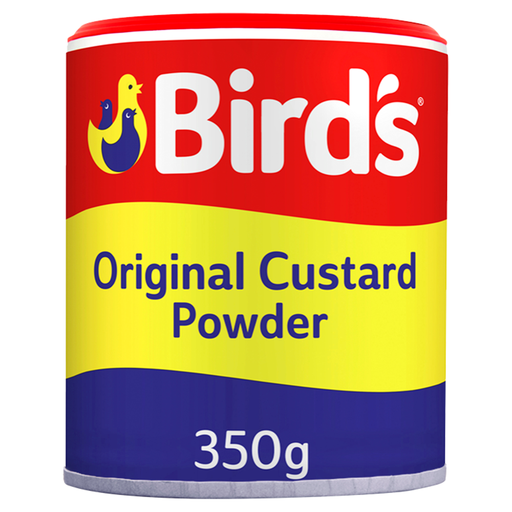 Image unavailable
For a group dessert when you are willing to make custard and want to adjust the milk quantity or sugar. Bird’s labels the 350g pack for 40 portions. Preparation is required; the powder may contain milk, and made-up custard should be refrigerated.
Use the pack’s portion guidance as your starting point: Ambrosia states eight 125g portions for its standard and light 1kg cartons, and six for its 750g Deluxe carton. Allow for larger servings if custard will make up more of the dessert.
Follow the exact pack’s instructions rather than heating it in its original container. Ambrosia instructs you to empty its standard and light custards into a microwaveable container, cover, heat and stir.
Follow the open-life stated on your pack. Ambrosia says to refrigerate its standard, light and Deluxe cartons after opening and consume them within three days; do not apply that instruction to a different product without checking its label.
A best-before date concerns quality, while a use-by date concerns safety, according to GOV.UK. Check which date appears on the pack, store it as directed and follow its separate instructions after opening.
Do not rely on ‘vegan recipe’ wording to establish milk-allergen suitability. Ambrosia Plant Based Custard says it may contain milk, so check the current pack’s allergen statement against the person’s avoidance requirements.