At-home lunch sharers
If several people will have dessert together, a ready-to-serve can lets you serve portions at home. Plan how you will refrigerate and use any custard left after opening.


Choose a ready-to-serve 400g can for a dessert shared at home if you can refrigerate any remainder promptly and follow its storage instructions. Individual pots or pouches make more sense when each child needs a separate portion; consider a larger ready-to-serve container for repeated shared servings, or powder if you have time to prepare it. Check the exact pack for ingredients, allergens and post-opening directions.
If several people will have dessert together, a ready-to-serve can lets you serve portions at home. Plan how you will refrigerate and use any custard left after opening.
For separate lunches or outings, pots and pouches avoid decanting a shared can into individual portions. Check the storage directions for the format you choose.
If milk ingredients or nutritional differences affect your choice, compare the current labels of the exact products. A low-fat name does not mean a custard is milk-free.
For a school holiday lunch, start with where and how the custard will be served: a shared can at home, separate portions for an outing, a larger container for repeat servings, or powder that you can prepare beforehand.
| Concern | What to check | Who this matters to |
|---|---|---|
| Sharing at home | Check the net weight, whether it is ready to serve and the pack’s post-opening storage directions. | If I am serving dessert to several people at home, I want custard I can portion out without preparing it. About 42% of consumers would put at-home sharing first. |
| Separate portions | Compare cans with individual pots or pouches, and check storage directions for lunches away from home. | For an outing, I want a separate dessert for each child instead of decanting a can. About 33% of consumers would make individual portions their main concern. |
| Ingredients and nutrition | Read the exact pack’s ingredients and allergen declaration; compare nutrition per 100g where relevant. | When milk ingredients or nutritional differences affect my choice, I need to compare current labels rather than rely on a format name. About 25% of consumers would put those label checks first. |
A 400g can needs portioning after opening, whereas individual pots and pouches already provide separate servings.
Use a can for a dessert shared at home; consider individual formats when decanting for each child would be impractical.
Sainsbury’s directions for its Stamford Street Co. 400g custard call for transferring it to a microwaveable dish and say not to reheat it once cooled.
Heat only the serving you need in a suitable dish, following the directions on the exact product.
Ambrosia describes its Low Fat Custard Can as made with fresh milk, while the M&S custard ingredient information includes milk-derived ingredients.
For a milk allergy, intolerance or other ingredient restriction, check the current ingredients and allergen declaration on the exact pack.
Ready-to-serve custard appears in 400g cans as well as larger and individual formats in the cited supermarket listings.
An own-brand ready-to-serve route with 400g and 1kg formats in Tesco’s custard listings.
An own-brand route with a 400g custard and larger ready-to-eat formats in its category listings.
Silky Smooth Custard is a 400g option made with whole milk.
Custard powder and instant sachets offer a preparation-first alternative to ready-to-serve formats.
These options cover 400g cans for sharing at home, a larger 1kg custard and powder for shoppers who can prepare it before lunch.
 Image unavailable
Consider this 400g can for a dessert shared at home. If you expect leftovers, check the current pack’s instructions for transferring, refrigerating and using the remainder; also check its milk allergen information.
 Image unavailable
This 400g can is an option for sharing at home if you are comparing low-fat-labelled custards. It contains milk, so the label does not make it suitable for a milk-free requirement; check the current pack for allergens and leftover-storage directions.
 Image unavailable
Consider the 1kg format when several people will share custard or you expect to serve it at more than one holiday lunch. Plan around the exact pack’s post-opening directions, and check its milk allergen information.
 Image unavailable
This strawberry-flavour 400g option fits a dessert shared at home rather than separate lunch portions. Check the pack’s milk allergen information and post-opening storage directions before planning to keep any remainder.
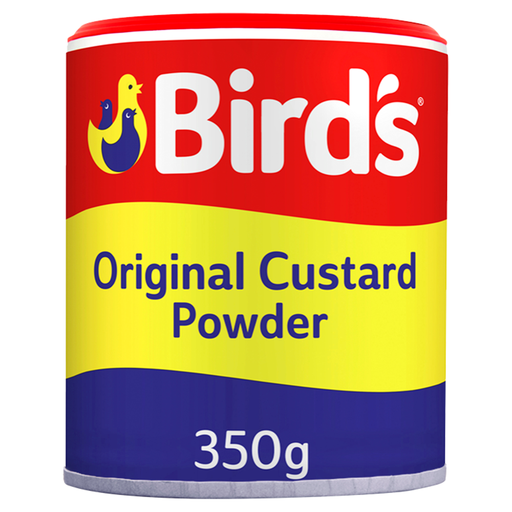 Image unavailable
Choose this 350g powder only if you have time to make custard before serving; it is not ready-to-serve tinned custard. Check the pack’s preparation directions when planning portions, and read its current allergen information.
Yes, if you store and use the custard as directed on that exact pack. M&S instructs shoppers to refrigerate its Silky Smooth Custard after opening and eat it within 2 days; do not apply that product-specific period to every can. NHS guidance for children’s food advises cooling food quickly before refrigeration.
Sainsbury’s describes the Ambrosia Devon 400g can as suitable for serving hot or cold. For heating, follow the exact pack: Sainsbury’s Stamford Street Co. 400g instructions call for transferring custard to a microwaveable dish and say not to reheat it once cooled.
Not necessarily: Sainsbury’s describes Ambrosia Low Fat Custard Can as made with fresh milk. Check the current ingredients and allergen declaration on the exact product if milk affects your choice.
Read the ingredients and allergen information on the current pack of the exact variant you intend to serve. A familiar brand name or a previous purchase is not a substitute for checking that product’s label.