Choose a ready-to-serve tin when a small dessert batch will use it promptly; an unopened cupboard pack needs refrigerated storage once opened, according to its label. A larger carton suits a batch that will use more portions soon, while custard powder suits cooks willing to prepare only the amount they need. Check the exact pack for opened-life, allergen and freezing instructions before planning leftovers.
Who each format suits
The useful distinction is how much custard you will serve before an opened pack’s storage window ends.
Family-size dessert batch cooks
If several portions are planned together, compare pack size with the meals you will serve after opening. Ambrosia labels its standard 1kg carton as eight portions and its standard 400g tin as three; its instructions call for refrigeration after opening and use within three days.
Shoppers comparing labelled sugar and fat
For a ready-to-serve option, compare the exact products rather than assuming every lighter-sounding custard has the same recipe. Ambrosia says its Light 400g tin has 30% less sugar and 30% less fat than its standard Devon Custard.
Cooks making occasional small portions
When the number of servings changes from one dessert to the next, powder lets you make custard when needed without opening a ready-to-serve pack. Bird’s Original Custard Powder requires preparation, so it does not offer the same immediate serving convenience.
What to check before buying
For batch-cooked desserts, start with the servings you can use after opening, then consider preparation, the nutrition label and allergens.
| Concern | What to check | Who this matters to |
|---|
| Pack size and opened life |
Match labelled portions to planned desserts and read the opened-pack storage instruction. Ambrosia’s standard 400g tin serves three; its standard 1kg carton serves eight. |
If I cook several desserts at once, I need the opened pack to fit the meals I will actually serve. About 36% of consumers put portion planning and opened life first. |
| Ready-to-serve or powder |
Decide whether custard must be ready to serve or whether you can prepare powder when needed; check the chosen pack’s storage directions. |
When dessert needs serving straight away, preparation matters more to me than keeping a dry ingredient for later. For about 29% of consumers, serving convenience or make-to-quantity flexibility is the primary concern. |
| Labelled sugar and fat |
Compare sugar and fat per 100g on like-for-like ready-to-serve products. Ambrosia’s 30% lower claim for its Light 400g tin is relative to its own standard Devon Custard. |
If I regularly plan desserts with custard, I want to compare the labels of the specific tins I might use. Roughly 21% of consumers prioritise labelled sugar and fat. |
| Milk and other allergens |
Read the current ingredients and allergen wording on the exact pack, including precautionary statements. |
For a dessert that must avoid a particular ingredient, the precise pack declaration matters more to me than whether custard comes in a tin or as powder. About 14% of consumers make allergen-label checks their primary concern. |
Batch-prep mistakes to avoid
-
Choosing a larger pack without a plan for the remainder
Ambrosia labels its standard 1kg carton as eight portions, but its opened-pack instruction still calls for refrigeration and use within three days.
Choose that size when the batch and other planned desserts can use it within the labelled window.
Otherwise, unused custard may need to be discarded.
-
Expecting powder to work like a ready-to-serve tin
Custard powder can remain dry until needed, but it requires preparation before serving.
Choose powder when making a smaller quantity matters more than serving custard immediately.
-
Assuming a Light label or dry format means milk-free
Ambrosia’s standard and Light tins list milk ingredients, while Bird’s Original Custard Powder carries a may-contain-milk statement.
For a milk-avoidance requirement, read the ingredients and allergen declaration on the exact current pack rather than relying on its format or product name.
-
Freezing custard without checking the pack
Tesco describes its 400g ready-to-eat UHT custard as unsuitable for home freezing; that instruction should not be assumed to apply to every custard.
Check the exact product’s freezing directions before including it in a freezer dessert. If home freezing is ruled out, keep that custard separate until after defrosting.
Brands and product lines to consider
Ambrosia
Its documented range includes ready-to-serve 400g tins and a standard 1kg carton, offering different pack sizes for planned desserts.
- Ambrosia labels the standard tin as three portions and the standard carton as eight. It says its Light 400g tin has 30% less sugar and fat than its standard Devon Custard.
- The standard tins and carton call for refrigeration after opening and use within three days. The researched tins list milk ingredients.
Bird’s
Original Custard Powder is a dry cupboard option for cooks who prefer to prepare custard when needed.
- Bird’s describes its 350g Original Custard Powder as containing 40 portions and directs cool, dry storage.
- It requires preparation rather than being ready to pour, and its allergen wording says it may contain milk.
Tesco
Tesco lists a 400g ready-to-eat UHT custard for shoppers considering another ready-to-serve option.
- The documented product can be considered alongside other ready-to-serve packs of a similar size.
- Tesco says this product is not suitable for home freezing, which matters when assembling freezer desserts.
M&S
M&S describes its 400g Silky Smooth Custard as made with whole milk for serving over desserts.
- It offers another named 400g ready-to-serve product to assess against a planned dessert batch.
- Check its current pack for opened-life and freezing instructions before allocating portions across several meals.
Joybuy products for different batch sizes
These selections cover ready-to-serve custard in several pack sizes and a powder option for making custard when needed. Match the format to your dessert plan, then check the exact pack instructions.
 No image available
Ambrosia Light Devon Custard 1kg
Consider this larger ready-to-serve pack when a batch will use much of the custard promptly. Check its labelled servings and opened-pack storage directions before planning leftovers; the Light 1kg variant should not be assumed to have the same nutrition values as a different pack.
View on Joybuy
 No image available
Ambrosia Devon Custard 400g
This ready-to-serve tin fits a dessert plan close to its three labelled portions. Ambrosia instructs you to remove any remainder from the can, refrigerate it and use it within three days after opening; the product lists milk ingredients.
View on Joybuy
 No image available
Ambrosia Low Fat Custard 400g
This 400g ready-to-serve tin is another size option for a smaller dessert batch. If sugar or fat content drives the choice, compare its current per-100g label with the particular standard custard you intend to buy; do not apply claims for a differently named Light product to this tin.
View on Joybuy
 No image available
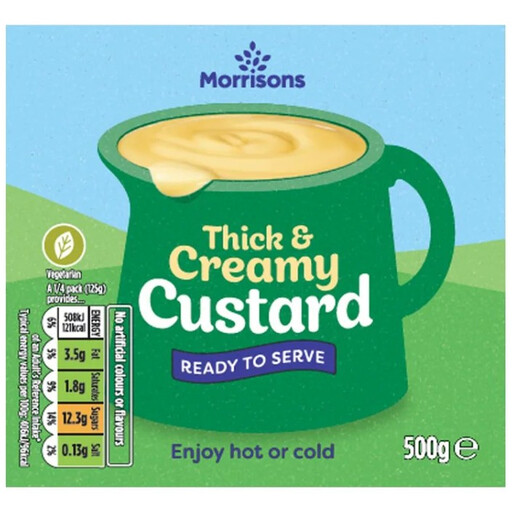
Morrisons Ready To Serve Custard 500g
This 500g ready-to-serve custard gives batch cooks another pack size to compare with their planned servings. Check its serving guidance and opened-pack storage instruction before deciding how to divide it between desserts.
View on Joybuy
 No image available
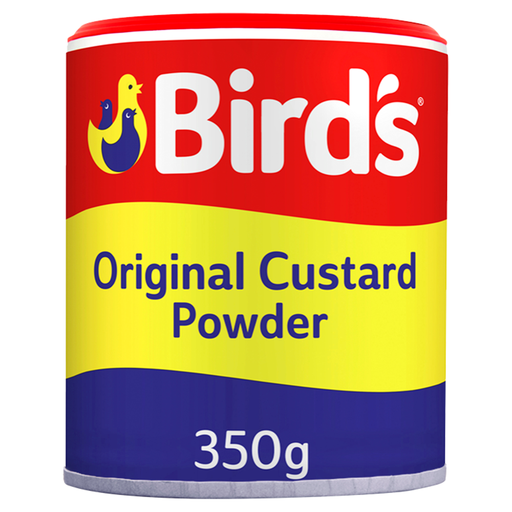
Bird’s Custard Powder 350g
Choose this powder when you would rather prepare custard as needed than open a ready-to-serve pack. Bird’s describes the 350g product as containing 40 portions and directs cool, dry storage; it requires preparation and carries a may-contain-milk statement. Follow the pack’s storage directions once made.
View on Joybuy
Common questions
Can opened tinned custard go back in the cupboard?
Not for Ambrosia’s standard 400g tin: the brand instructs you to remove the remaining custard from the can, refrigerate it and consume it within three days of opening. Follow the instruction on the exact pack for another product.
Is a best-before date the same as a use-by date?
No. UK government food-labelling guidance distinguishes use-by dates, which relate to safety, from best-before dates, which relate to quality. Check the date and storage directions on the custard you buy.
Can ready-to-serve custard be frozen with a batch dessert?
Check the specific product before freezing it. Tesco states that its 400g ready-to-eat UHT custard is not suitable for home freezing; that does not establish the instruction for other custards.
Does custard powder avoid milk allergens?
Do not assume so. Bird’s Original Custard Powder says it may contain milk, while the researched Ambrosia tins list milk ingredients. Read the ingredients and allergen wording on the exact current pack when planning a dessert for someone who needs to avoid milk.


