One-person, no-fuss breakfasts
An individual ready-to-eat pot avoids dividing a larger pack. Sainsbury's describes the Ambrosia 150g pot as single-serve and says it does not need chilling before opening.


Choose a single-serve pot if you want custard for one breakfast without opening a larger pack; choose a ready-to-serve tin when several portions will be used and you can refrigerate the remainder. A lighter ready-to-eat variant suits a specific label preference, while custard powder requires preparation rather than offering an immediate serving. Check the exact pack for portion size, allergens, heating directions and storage after opening.
The useful distinction is whether breakfast calls for one sealed serving, custard to share, or something you are willing to prepare.
An individual ready-to-eat pot avoids dividing a larger pack. Sainsbury's describes the Ambrosia 150g pot as single-serve and says it does not need chilling before opening.
A ready-to-serve tin offers custard for more than one bowl or accompaniment. It makes more sense when the remaining contents can be refrigerated and used within the pack's stated period.
Individual Light pots offer a stated comparison with standard Ambrosia Devon Custard. Bird's powder takes a different approach: it must be prepared, so it suits someone who wants to make custard rather than open a ready-to-eat pack.
Start with the serving format, then check the exact product label for nutrition, preparation and storage details that affect your choice.
| Concern | What to check | Who this matters to |
|---|---|---|
| Individual servings | Check the pot size, storage before opening and any heating instructions. Ambrosia has a 150g single-serve pot and individually portioned 4 × 120g Light pots. | If breakfast is for one, I want a sealed serving without putting part of a tin in the fridge. About 36% of consumers put that individual-serving convenience first. |
| Custard to share | Check the stated portions and whether you can refrigerate and use what remains within the labelled period. | When several people want custard, I would rather open one larger pack, provided we can use the leftovers. Sharing is the primary concern for about 29% of consumers. |
| Lighter labelled options | Compare the exact variant's per-serving and per-100g nutrition, the claim's named comparator and its allergen statement. | I still want ready-to-eat custard, but I am choosing by the fat and sugar information on the pack rather than by portion format alone. About 21% of consumers make that their main priority. |
| Made-to-order custard | Check what the powder must be mixed with, the basis of its nutrition figures and storage directions once prepared. | If I am happy to make custard before breakfast, I want control over how much I prepare. That is the leading need for about 14% of consumers. |
Ambrosia describes its 400g can as containing three 130g portions. Opening it for one breakfast leaves custard that needs storing, unlike choosing a sealed single-serve pot.
Use the pack's portion information to choose between formats. For the Ambrosia can, remove remaining custard from the can, refrigerate it and consume it within three days.
More custard in one container is useful only if the intended servings will actually be eaten. A partly used tin also needs fridge space and attention to its opened-pack instructions.
Count the portions your breakfast table needs, then check how you will store and use any remainder.
The stated reduction on Ambrosia Light pots compares their sugar and fat with standard Ambrosia Devon Custard; it does not establish suitability for someone avoiding milk.
Read the nutrition panel, ingredients and allergen declaration on the exact variant rather than relying on the word Light.
GOV.UK distinguishes use-by dates, which relate to food safety, from best-before dates, which relate to quality. The date marking does not replace the product's storage directions.
Check which date appears on your pack and follow its instructions for storage and use after opening.
These brands illustrate different custard formats; a brand's appearance here does not mean every variant is an individual portion.
The range includes ready-to-serve cans and individual pots, including a Light pot variant.
Tesco Ready To Serve Custard 400G is a ready-to-serve tin for portions taken from one larger container.
Its Ready To Eat Lighter Custard 500g is a larger ready-to-eat alternative, rather than an individual pot.
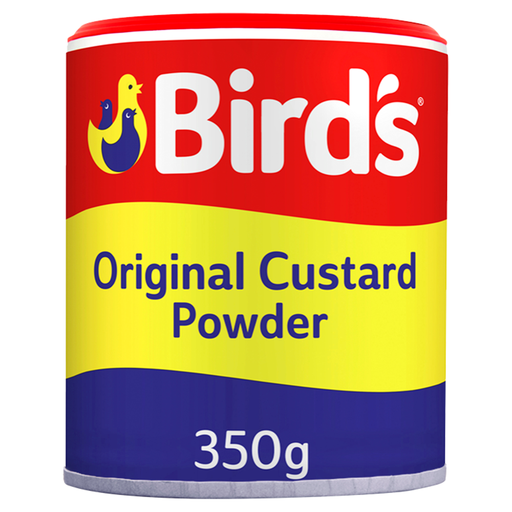
Bird's Original Custard Powder 350g is an option for making custard, not a ready-to-eat tin or pot.
M&S Collection Madagascan Vanilla Luxury Custard is a chilled custard alternative rather than an ambient tin or individual pot.
These selections cover larger ready-to-serve custard packs for several portions and a powder for making custard. If a sealed serving for one is your deciding requirement, choose by that format rather than treating a larger pack as an individual pot.
 No image available
For a breakfast needing several ready-to-serve portions rather than one sealed pot. This 400g custard can be served hot or cold; Ambrosia states three 130g portions. Remove any remainder from the can, refrigerate it and consume it within three days. It contains milk.
 No image available
For a shared breakfast where strawberry-flavoured, ready-to-serve custard is wanted. The 400g can can be served hot or cold and gives a 130g portion as its serving reference. It is not an individually sealed serving; refrigerate opened contents and consume them within three days. It contains milk.
 No image available
For several servings when the stated Light comparison matters more than having sealed individual pots. Ambrosia's listing describes this 1kg ready-to-serve pack as having 30% less sugar and fat than standard Ambrosia Devon Custard and approximately eight servings. Refrigerate after opening and consume within three days. It contains milk.
 No image available
For someone willing to make custard before breakfast instead of opening a ready-to-eat pack. This is a 350g powder that requires preparation. Once made, refrigerate the custard and treat it as fresh food. The listing says the powder may contain milk; check the pack's nutrition basis before comparing it with ready-to-eat custard.
No. Ambrosia describes its 400g can as three 130g portions, while its 150g snack pot is sold as a single serving. The pot avoids opening a multi-serving pack; the can calls for appropriate storage of anything left over.
Yes, where the exact product provides heating instructions. The Ambrosia 150g pot can be microwaved after its entire foil lid is removed; Tesco says to empty its 400g custard can into a non-metallic container before microwaving. Follow the directions on the pack you buy.
Follow that tin's label. Ambrosia says to remove remaining custard from its 400g can, refrigerate it and consume it within three days. Tesco specifies transferring unused custard to a non-metallic container, covering and refrigerating it, and consuming it within three days.
No. GOV.UK explains that a use-by date relates to food safety, while a best-before date relates to quality. Check the marking on your particular custard pack alongside its storage and opened-pack instructions.
Check the ingredients and allergen declaration on the exact pack before choosing a custard. The Ambrosia can lists milk ingredients and says it is not suitable for people with milk allergies; the Bird's powder listing says it may contain milk. A Light label does not change the need to check allergens.