Hosts keeping dessert simple
If you need custard alongside cake, crumble or fruit with little preparation, look for an ambient product explicitly labelled ready to serve. Check the pack if you plan to serve it cold or heat it.


Choose ready-to-serve tinned custard when you want a small, no-mixing dessert accompaniment; consider a larger ambient carton when you expect to use several servings, or custard powder when you can prepare it and want to vary the quantity. Before buying for a festival gathering, check the exact pack’s serving guidance, milk-allergen information and storage instructions, particularly what to do after opening.
If you need custard alongside cake, crumble or fruit with little preparation, look for an ambient product explicitly labelled ready to serve. Check the pack if you plan to serve it cold or heat it.
Match the stated servings to the number of desserts you expect to serve. A larger pack is less useful if you cannot refrigerate and use what remains within its own opened-pack period.
Read the current pack’s milk-allergen statement, and compare sugars, fat and saturates per 100g across the products you are considering. A formulation claim about one product does not describe every custard in that brand’s range.
Start with how you will serve the custard, then choose a pack size you can use within its stated storage period. Powder adds preparation; a ready-to-serve tin or carton does not.
| Concern | What to check | Who this matters to |
|---|---|---|
| Serving without mixing | Look for ready-to-serve wording and check whether the exact product can be served cold. | If dessert needs to be served with little equipment, I want to open the custard and use it straight away. About 36% of consumers put this immediate-serving need first. |
| Servings and leftovers | Compare the pack’s stated servings with your plans, then read its instructions for opened custard. | When the size of the gathering is uncertain, I need enough custard without opening far more than I can use. For about 29% of consumers, managing portions and leftovers is the primary concern. |
| Ingredients and nutrition | Read the current milk-allergen statement; compare sugars, fat and saturates per 100g. | If ingredients affect what I can serve, I need to check the actual pack rather than assume custards have the same recipe. This is the main consideration for about 21% of consumers. |
| Batch flexibility | Check prepared portions, required ingredients and whether you will have the means to make the powder. | For a dessert assembled in batches, I may want to prepare only the custard I need, provided I can make it at the venue or beforehand. Roughly 14% of consumers prioritise that flexibility. |
Instructions differ even among ambient products. Ambrosia says to refrigerate its Light Devon Custard 400g and use it within three days; Sainsbury's gives the same period for its examined 500g and 1kg ambient cartons. Its Stamford Street Co. 400g tin instead says to transfer leftovers to a non-metallic container, refrigerate and use within one day.
If attendance is uncertain, choose a pack size you expect to use and plan how you will refrigerate any remainder. Follow the instructions on the particular pack you open.
Sainsbury's describes its Lighter Custard as having 50% less fat than its standard custard, while listing 11.8g sugars per 100g for the lighter product. The fat comparison does not establish that its sugar content is low.
Compare the sugars, fat and saturates figures per 100g on the exact packs under consideration, rather than using the front-of-pack name as a substitute for the nutrition label.
The examined Bird's Original Custard Powder states that it may contain milk. The ready-to-serve dairy custards examined list milk ingredients.
Where milk must be avoided, check the current physical pack’s ingredients and allergen statement before buying or serving; do not treat the powder format as an allergen clearance.
Sainsbury's Fresh Custard must be kept refrigerated and has a use-by date. That differs from its examined ambient ready-to-eat cartons, which specify cool, dry storage before opening.
If you cannot keep the product chilled before serving, choose one explicitly labelled for ambient storage and check its on-pack instructions.
Its examined range includes ready-to-serve ambient custard in 400g cans and a 500g carton.
Its examined Original Custard Powder 350g is a dry cupboard option for preparing custard rather than pouring it straight from the pack.
The examined ambient range includes ready-to-eat 500g and 1kg cartons, plus a 400g Stamford Street Co. tin.
These selections cover ready-to-serve custard for a low-preparation dessert and custard powder for a gathering where preparation is possible. Check the individual pack before planning portions or storage after opening.
 No image available
A 400g ready-to-serve option for a small dessert spread when you want to avoid mixing powder. Joybuy describes this custard as ready to serve; check the current pack’s milk-allergen and opened-storage instructions before serving.
 No image available
The 1kg pack is worth considering when you expect to serve several desserts, rather than opening a larger quantity for only a small group. Refrigerate opened custard and use it within the stated three-day period; check the current pack’s milk-allergen statement. Do not apply nutrition claims for Ambrosia’s 400g Light can to this 1kg variant without comparing their labels.
 No image available
Consider this 400g custard if you want a smaller ready-to-serve pack and intend to compare fat and sugars figures with other options. Read the current nutrition and milk-allergen labels rather than assuming its name establishes the values you need. Refrigerate leftovers and use them within the stated three-day period.
 No image available
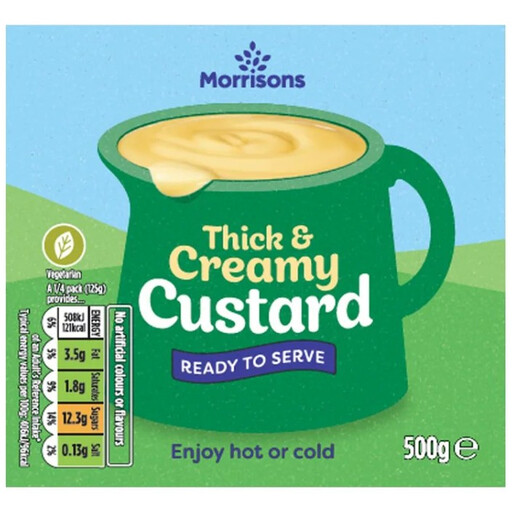
This 500g ready-to-serve option may suit a dessert plan that calls for more custard than a 400g pack. Check the pack’s serving guidance when deciding how many to buy, along with its milk-allergen statement. Refrigerate opened custard and use it within the stated three-day period.
 No image available
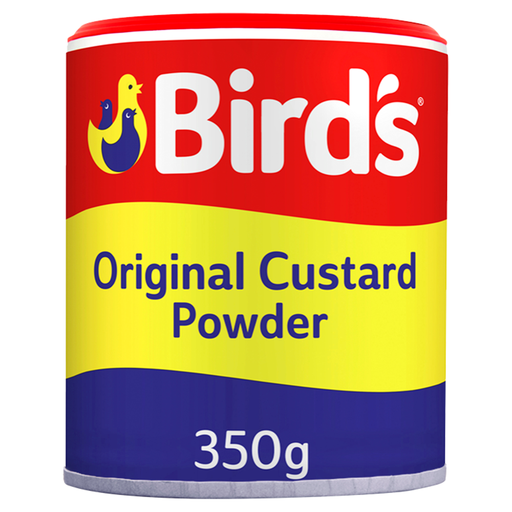
Choose powder when you can prepare custard and want a stated yield for a larger dessert plan, rather than an immediately ready-to-serve product. Sainsbury's lists 40 portions for the examined 350g Bird's Original Custard Powder. Check the preparation directions and current allergen statement: the examined product says it may contain milk.
Yes, if the particular product permits cold serving. The examined Ambrosia Devon Custard and Sainsbury's ready-to-eat custard are described as suitable hot or cold; follow the instructions on the pack you buy.
No. Transfer custard from a metal tin to a microwave-safe dish and follow the product’s heating instructions. Check the pack separately for how to store any leftovers.
Follow the period on the exact pack: it is not the same for every ambient custard. The examined Sainsbury's 500g and 1kg cartons and Ambrosia Light Devon Custard 400g can specify refrigeration and use within three days. The examined Stamford Street Co. 400g tin specifies transfer to a non-metallic container, refrigeration and use within one day.
An explicitly ambient carton can be stored as its pack directs before opening, making it an option when chilled storage is unavailable at that stage. The examined Sainsbury's ambient cartons specify cool, dry storage before opening; its Fresh Custard instead requires refrigeration and has a use-by date. Check the ambient carton’s instructions for storage after opening too.