Ready-to-serve shoppers comparing fat
You want custard for dessert after a takeaway without making it from scratch. Total fat and saturates per 100g matter more to you than preparation flexibility.


Choose ready-to-serve low-fat custard if you want dessert without a preparation step, but compare fat, saturates and sugars per 100g rather than relying on the front of the pack. Custard powder gives you a choice of milk and preparation method, so its prepared nutrition may differ from the values shown for a particular recipe. If you specifically need a metal tin, confirm the pack format before buying.
You want custard for dessert after a takeaway without making it from scratch. Total fat and saturates per 100g matter more to you than preparation flexibility.
You want to look beyond a low-fat description. Comparing sugars per 100g and the amount you plan to serve helps you assess the custard as a whole dessert choice.
You are willing to make custard from powder and want to choose the milk used. The prepared nutrition needs to be read in light of that choice.
For dessert after a Chinese takeaway, decide whether you need a ready-to-serve tin, can use another ready-to-serve pack, or have time to prepare powder; then compare nutrition on the appropriate basis.
| Concern | What to check | Who this matters to |
|---|---|---|
| Total fat and saturates | Compare both figures per 100g on ready-to-serve packs; check the stated portion separately. | I want lower-fat custard after a takeaway without making it myself. About 50% of consumers put total fat and saturates first. |
| Sugars and portion size | Check sugars per 100g and consider how much custard you will actually serve. | If my serving differs from the label portion, I want to account for that when comparing sugars. For about 33% of consumers, sugars and portion size are the primary concern. |
| Preparation | Choose between ready-to-serve custard and powder; for powder, read the directions and the nutrition basis for the prepared product. | I have time to make custard and want to choose the milk and preparation method. Preparation control comes first for about 17% of consumers. |
Low-fat and reduced-fat ready-to-serve custards can have different sugar figures. Tesco Groceries lists 7.4g sugars per 100g for Ambrosia Low Fat Custard 400g and 11.3g per 100g for Tesco Reduced Fat Custard 500g.
Compare fat, saturates, sugars and energy per 100g, then consider the portion you intend to serve.
Tesco Groceries gives the prepared nutrition for Bird’s Original Custard Powder 350g when made with semi-skimmed milk. Using a different milk or method can change the finished custard.
Read the powder’s directions and compare nutrition for the preparation you intend to make.
Ready-to-serve custard and custard powder do not necessarily come in the same physical format. That distinction matters if a metal tin is part of your storage or serving plan.
Confirm the pack format on the product listing and label before ordering.
The Tesco Groceries listings for Ambrosia Low Fat Custard 400g and Tesco Reduced Fat Custard 500g both say to refrigerate after opening and consume within three days.
Plan the amount you will open and follow the current pack’s storage instructions for any leftovers.
These examples show different ways to buy or prepare custard; the details apply to the named products, not to every product from each brand.
Ambrosia Low Fat Custard 400g is a ready-to-eat custard that can be served hot or cold, according to its Tesco Groceries listing.
Tesco Reduced Fat Custard 500g is another ready-to-serve option, although its physical pack format should be checked if you require a tin.
Bird’s Original Custard Powder 350g is an option for making custard rather than opening a ready-to-eat pack.
These selections include a ready-to-eat 400g can, a larger ready-to-serve custard and a banana custard preparation for shoppers willing to make dessert. Check the pack format if you specifically need a tin.
 Image unavailable
Choose this if you want ready-to-eat custard in a can after the takeaway. Tesco Groceries lists 2.0g fat, 1.0g saturates and 7.4g sugars per 100g for Ambrosia Low Fat Custard 400g; compare those figures with the amount you plan to serve.
The product contains milk. After opening, follow the pack’s refrigeration and use-by instructions.
 Image unavailable
Consider this larger ready-to-serve pack when several people will have custard with dessert. It is described for hot or cold serving; check the current nutrition label when comparing it with another custard.
If a metal tin is essential, confirm this pack’s physical format before buying. Check its milk allergen declaration and opened-pack storage instructions.
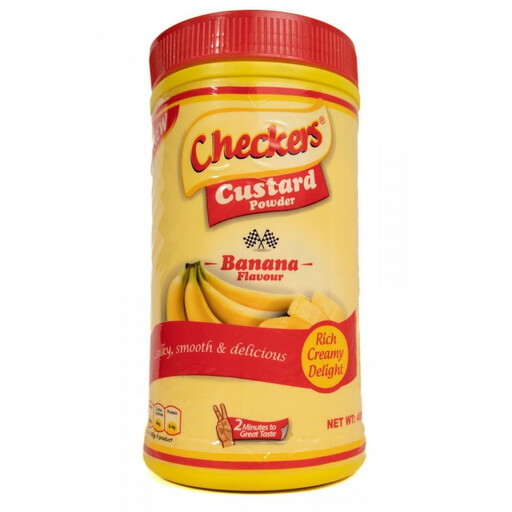 Image unavailable
This banana custard is a prepare-at-home choice rather than a ready-to-eat tin. Allow time to make it, and check the packet directions and ingredients before comparing the finished custard’s nutrition with ready-to-serve products.
Check the current pack’s allergen declaration and storage directions for the custard you prepare.
A low-fat description does not tell you the sugar content. Tesco Groceries lists 7.4g sugars per 100g for Ambrosia Low Fat Custard 400g and 11.3g per 100g for Tesco Reduced Fat Custard 500g, so compare the sugars line separately on the products you are considering.
NHS food-label guidance describes 3g of total fat or less per 100g as low for foods. Use the per-100g figure to compare custards, and read sugars and the portion information separately; the fat description alone does not cover them.
Do not assume they are. The Tesco Groceries listings for Ambrosia Low Fat Custard and Tesco Reduced Fat Custard identify milk ingredients, while its Bird’s Original Custard Powder listing says the powder may contain milk. Check the ingredients and allergen declaration on the specific current pack.
The Tesco Groceries listings for Ambrosia Low Fat Custard 400g and Tesco Reduced Fat Custard 500g say to refrigerate after opening and consume within three days. Follow the instructions on the pack you buy, particularly when planning leftovers.