Families sharing dessert at one campsite meal
Match the labelled servings to the people eating. Finishing an opened pack at the meal avoids needing chilled storage for the remainder.


Choose a 400g ready-to-serve tin if its labelled portions will be eaten at one campsite meal; the products considered here list either two or three servings. A larger ready-to-serve pack suits a group likely to finish it, while custard powder makes sense for repeated batches only if you can bring the ingredients and cooking equipment. Any custard left after opening or preparation needs refrigeration according to its label.
Match the labelled servings to the people eating. Finishing an opened pack at the meal avoids needing chilled storage for the remainder.
Ready-to-serve custard can be served cold. Powder needs ingredients, heating and stirring, so the equipment you can bring changes the choice.
Compare servings across the meals you have planned, not just pack size. A pack that cannot be finished also needs suitable storage for leftovers.
Start with how many people will eat dessert at one meal, then check what you can carry, prepare and refrigerate.
| Concern | What to check | Who this matters to |
|---|---|---|
| Portions and leftovers | Compare the exact pack's labelled servings with the number eating at one meal; check its after-opening storage instructions. | If dessert is for a small group, I want to finish the opened pack rather than find space to chill it. About 36% of consumers put portion fit and avoiding leftovers first. |
| Preparation | Decide whether cold serving will work or whether you can bring the milk, sugar and cooking equipment needed for powder. | With little cooking equipment at camp, I need dessert that is ready to serve. Minimal preparation is the primary concern for about 29% of consumers. |
| Carrying and pack format | Check pack weight and the number of containers you will carry; account for milk as well as powder if making custard. | If I am carrying food to the campsite, the whole load and the packaging left after the meal matter. About 21% of consumers prioritise carrying and pack waste. |
| Ingredients and nutrition | Read the current allergen declaration and compare nutrition on the same basis, such as per 100g. | When choosing for someone who needs to check ingredients, I cannot rely on a flavour or variant name alone. Ingredient and nutrition checks come first for about 14% of consumers. |
Ambrosia lists three 130g portions for its Devon Custard 400g can, while the examined Sainsbury's and ASDA 400g products list two servings. The same pack weight does not mean the same declared serving count.
Count diners and dessert meals against the label before deciding how many tins to pack.
A pack that stretches beyond one meal leaves custard to store. The examined ready-to-serve products instruct users to refrigerate their contents after opening.
If you cannot keep leftovers refrigerated, choose packs your group will finish at the meal. Otherwise, follow the storage time on the exact label.
Keeping a remainder means bringing a suitable cool box or using campsite refrigeration.
Bird's standard custard-powder method calls for milk, sugar, heating and stirring. The dry pack alone is not a finished dessert.
Pack the ingredients and equipment if you choose powder; use ready-to-serve custard when that preparation is impractical.
Powder also means carrying cooking supplies and allowing time for preparation and washing-up.
The examined ready-to-serve custards declare milk. A different flavour or variant name is not enough to establish its ingredients.
Read the current ingredient and allergen declaration on every pack, particularly when choosing for someone with a milk allergy.
Ready-to-serve Devon Custard is available in a 400g can, with larger ready-to-serve formats also described in the product information.
Original Custard Powder is an option for making batches rather than packing finished custard.
The examined Stamford Street Co. ready-to-eat custard is a 400g pack labelled as two servings.
The examined ASDA Creamy Custard is a ready-to-serve 400g product labelled as two servings.
These selections include a 400g ready-to-serve custard, larger ready-to-serve packs for group meals, and a powder option for trips with cooking equipment.
 No image available
Consider this larger ready-to-serve pack if the group expects to eat most or all of it at one meal. The product is labelled 1kg; check its stated portions against your group size. Refrigerate any remainder after opening and use it within three days. It declares milk, and the container format should be checked if you specifically need a tin.
 No image available
This ready-to-serve can suits a campsite meal when its three stated 130g portions match the diners; it can be served cold or heated. Refrigerate any remainder after opening and consume it within three days. The product declares milk.
 No image available
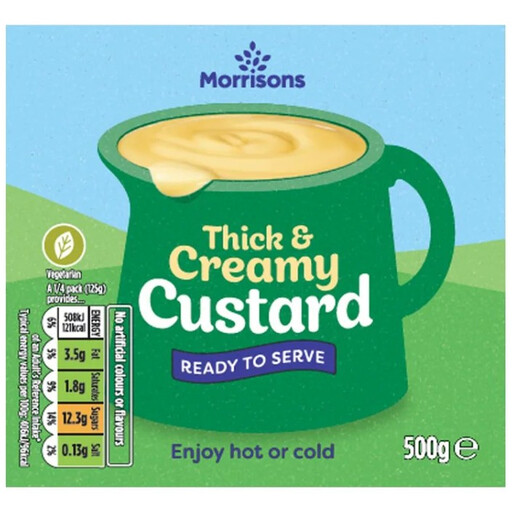
For a group considering a larger ready-to-serve pack, this 500g custard is described in four quarter-pack servings. It can be served cold or heated. The product is described as a tub rather than a tin; refrigerate leftovers after opening and consume them within three days. It declares milk.
 No image available
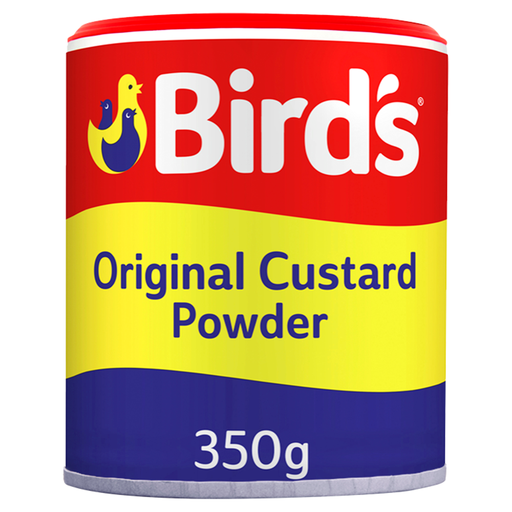
Choose this dry-pack alternative for repeated campsite batches only if you can bring milk, sugar and equipment for heating and stirring. Bird's lists 40 portions for the 350g pack. This is powder, not tinned ready-to-serve custard; refrigerate it once prepared and check the current allergen label.
Check the exact product: Ambrosia lists three 130g portions for its Devon Custard 400g can, while the examined Sainsbury's Stamford Street Co. and ASDA Creamy Custard 400g products each list two servings. Compare that serving count with your group before packing one tin.
The examined ready-to-serve products direct users to keep unopened packs in a cool, dry place, so they do not require refrigeration before opening when stored as labelled. Check the date and storage directions on your pack, and do not leave it in excessive heat.
Follow that product's label and refrigerate the remainder. Ambrosia directs users to remove its Devon Custard from the can and consume it within three days; the examined Sainsbury's product calls for a non-metallic container and use within one day. Without refrigeration, plan to finish the pack at the meal.
Check the current allergen declaration on each product rather than relying on the category or variant name. The examined ready-to-serve custards declare milk, and the Bird's powder listing says it may contain milk.