Small-desk route planners
You need room for the laptop alongside a mouse, phone or notes. Komoot’s route planner uses map clicks and waypoint changes, so both the laptop’s footprint and the space left on its screen matter.


Choose a laptop that fits your usable desk space and runs the browser and cycling-device tools you need. A 13-inch model is worth considering when space is tight; a 14-inch 16:10 screen gives you more vertical room for maps and route controls if its chassis fits. Check the actual width and depth before deciding, because screen size alone does not establish the desk footprint.
You need room for the laptop alongside a mouse, phone or notes. Komoot’s route planner uses map clicks and waypoint changes, so both the laptop’s footprint and the space left on its screen matter.
You inspect roads, tracks or cycleways and adjust routes or upload GPX files. Komoot documents map and waypoint editing, while Strava documents route creation from a GPX file; a screen that keeps the map and controls usable is important to this workflow.
You mainly plan routes in Komoot or Strava rather than using specialist desktop mapping software. Strava lists supported browsers for Windows and Mac and says Chromebook users can continue to access its service through a browser.
Start with the space available on your desk and the route-planning tools you actually use. Then decide how much built-in map workspace you want and whether the laptop will often travel with you.
| Concern | What to check | Who this matters to |
|---|---|---|
| Desk footprint | Compare the exact chassis width and depth with your usable desk area, allowing space for the charging cable and a mouse. | If I need space for a mouse or notes beside the laptop, I cannot judge its fit from the screen diagonal. Around 31% of consumers put desk footprint first. |
| Map workspace | Compare the exact display size, resolution and aspect ratio. A 1920 × 1200 screen has more vertical pixels than a 1920 × 1080 screen, though the whole laptop must still fit. | When I edit several waypoints, I want to see enough of the map without constantly hiding route controls. Map workspace comes first for around 31% of consumers. |
| Browser and GPX workflow | Confirm support for your browser, GPX uploads and any cycling-device software on the chosen operating system. Strava documents browser support and GPX upload from a computer. | If I reuse GPX tracks or sync routes to a cycling device, those steps need to work on the laptop I choose. Around 25% of consumers put workflow compatibility first. |
| Carrying and charging | Check the exact model’s weight, supplied charger, USB-C charging support and ports if you will plan routes away from your desk. | I may take the laptop to a club meeting or use it while travelling, so carrying it and finding a suitable way to charge it matter most to me. Around 13% of consumers put portability and charging first. |
A 13- or 14-inch label describes the display diagonal, not the space the chassis and charging cable occupy.
Measure the usable width and depth of your desk, then compare them with the exact laptop’s dimensions.
Strava says its Android app on Chromebooks stopped receiving updates on 26 February 2026, although browser access remains available.
Check that Strava in the browser, GPX files and any device-sync steps cover your intended workflow instead of relying on the Android app staying current.
Komoot’s documented map and waypoint controls and Strava’s documented GPX upload do not, by themselves, establish a need for dedicated gaming graphics. Graphics specifications also cannot confirm that your cycling-device utility will run.
Check browser, operating-system, GPX and device-software requirements before choosing a configuration for other hardware features.
ASUS and Lenovo list different configurations within the laptop families discussed here. A family name alone cannot establish the display, memory, ports or supplied charger of a particular listing.
Match the full model code or part number to the exact configuration before deciding whether it meets your desk and route-planning needs.
The 13-inch MacBook Air line is relevant if you want a compact-screen macOS option for browser-based route planning.
The Zenbook A14 UX3407 line is a 14-inch Windows option for considering a 16:10 built-in screen.
The IdeaPad Slim 5i Gen 10 14-inch line is relevant if you want to compare a Windows laptop with a 1920 × 1200 built-in display.
These choices span 13-inch Mac laptops, a 14-inch Windows laptop and a 14-inch Chromebook. Compare their exact desk fit and your browser, GPX and cycling-device workflow before choosing between them.
 No image available
Consider this 14-inch Windows-route option if you have room for its chassis and prefer a larger built-in screen for editing maps.
 No image available
Consider this macOS option when a 13-inch screen category suits your desk and your route-planning tools work on a Mac.
 No image available
Consider this 14-inch Chromebook if your route planning works in a browser and you have checked your GPX and device workflow on ChromeOS.
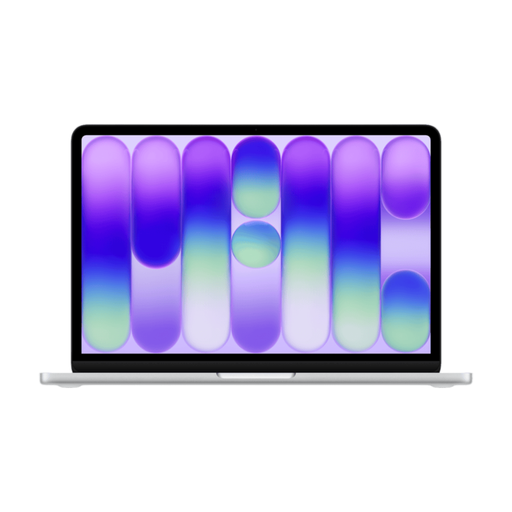 No image available
Consider this 13-inch macOS option if its screen and physical dimensions meet your small-desk needs and your cycling tools support macOS.
Not for the browser-based tasks described by Komoot and Strava. Komoot documents map and waypoint editing, while Strava documents browser access and GPX uploads from a computer; check your own device software separately before deciding what hardware it requires.
Yes, Strava says its website remains accessible through a Chromebook browser. Its Android app on Chromebooks stopped receiving updates on 26 February 2026, so check browser access and your GPX and device workflow rather than depending on that app.
Consider 13 inches when leaving space around the laptop is your main concern, or 14 inches when you want more room for map editing and the chassis fits. Compare the exact width and depth: the display diagonal does not tell you how much desk space the laptop occupies.
Potentially, if the exact laptop supports the monitor connection you need. Apple’s UK MacBook Air specification lists external-display support through Thunderbolt 4 USB-C, and ASUS UK lists display-capable USB-C/USB4 options for the Zenbook A14 family; check the particular configuration and any required cable or dock.