
24/7 Customer Support

Free returns

Same-day & Next-day Delivery

Quality Guaranteed

Unlock Your Welcome Offers: FREE Delivery | Up to 80% OFF | Free 30-day JoyPlus trial
Download the APP
Choosing cycling accessories can seem straightforward until you compare helmet sizes, bag measurements, lighting systems and tyre pumps. Marketing often focuses on impressive-sounding features while overlooking the details that determine whether an item works on a wet commute, a long road ride or a rough trail.
The following guide highlights common buying traps, explains the specifications worth checking and matches selected products to different riding needs.
A rechargeable bike helmet with a rear light can help make a rider more noticeable, but it does not replace front and rear bicycle lights on a road-legal cycle. Check whether the helmet light is intended for visibility rather than illuminating the route, and look at the number of LEDs, light modes, charging method and fit range.
Also check safety information carefully. A product listing may mention standards such as CPSC, ASTM or CE, but UK buyers should confirm that the product’s marking and documentation are appropriate for the intended use. A helmet must fit correctly and should be replaced after a significant impact, even when damage is not visible.
Bike bags can look compact in product photographs but may interfere with knees, cables, bottle cages or the rider’s pedalling position. Bicycle top tube bags and triangle frame bags need to match the available clearance on your particular bicycle.
Measure the frame space first, then compare it with the listed dimensions. Consider how the bag attaches, whether the straps can be tightened securely and whether the material is described as water-resistant or waterproof. These terms should not be treated as interchangeable.
A bike tyre inflator displaying a high maximum pressure may still be inconvenient if it relies on a 12V socket, has a short cable or becomes hot during extended use. A 12V air compressor can be useful for vehicles and bicycles, but it is not automatically the most portable choice for a rider who carries equipment on the bike.
Check the power source, hose length, display readability, valve compatibility and cooling instructions. For emergency roadside use, size and storage matter as much as the headline PSI figure.
Measure your head circumference according to the manufacturer’s instructions. An adjustable dial and chin strap can improve fit, but adjustment range is not a substitute for selecting the correct size. The helmet should sit level, remain stable when you move your head and not obstruct your vision.
Common materials include EPS foam liners and shells made from ABS or polycarbonate (PC). These describe construction rather than guaranteeing a particular result in every accident. Do not modify the helmet, remove padding or continue using it after a major crash.
For a top tube bag, compare the full length, width and height with the bicycle frame. Hook-and-loop straps are convenient for fitting and removal, while a multi-point system can help reduce movement on rough surfaces. Clean the frame before installation and check the straps regularly.
A smaller water-resistant bag may suit daily essentials such as keys, cards and a compact tool. A larger waterproof triangle frame bag may be more suitable for touring, gravel riding or carrying heavier equipment.
LED safety lights should be securely attached and visible from the relevant direction. Look for multiple settings, weather-resistant construction and a fastening method that suits your clothing, backpack or bike.
Rechargeable lights reduce disposable battery purchases but need regular charging. Battery-powered models can be convenient as backups. Whichever type you choose, check the light before leaving and carry a spare option on longer rides.
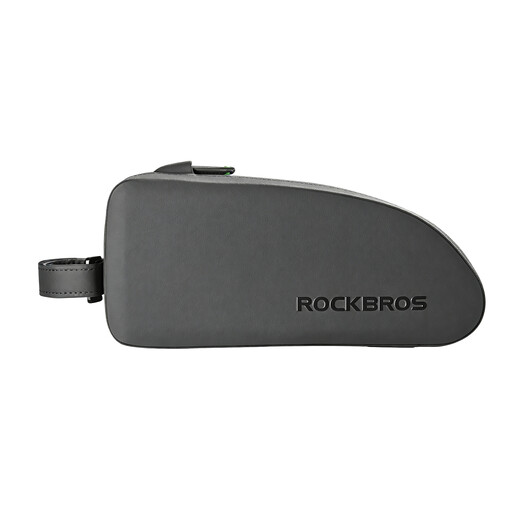
Why This Fits Their Persona: Its compact dimensions suit commuters and recreational riders who need space for small essentials without committing to a large luggage system.
The listed 8.5 x 5.5 x 21.5 cm size makes it easier to compare available frame clearance before purchase, while the water-resistant description sets a more realistic expectation than assuming full waterproofing.
Compact format; designed for road bikes and mountain bikes; water-resistant construction.
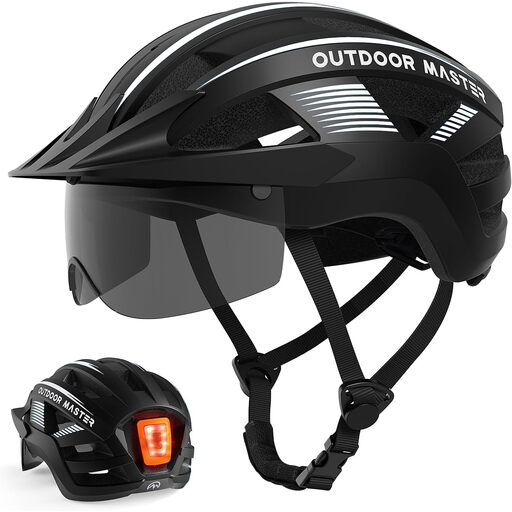
Why This Fits Their Persona: The combination of a stated 54–58 cm fit range, detachable goggles, visor and Type-C rear light suits commuters and riders who want several features in one helmet.
The rear light is specified as rechargeable rather than treated as a substitute for a complete bicycle lighting setup. The fit range is clearly stated, helping buyers measure before ordering.
PC shell and EPS foam liner; 17 vents; Type-C rechargeable rear light; detachable goggles and visor.
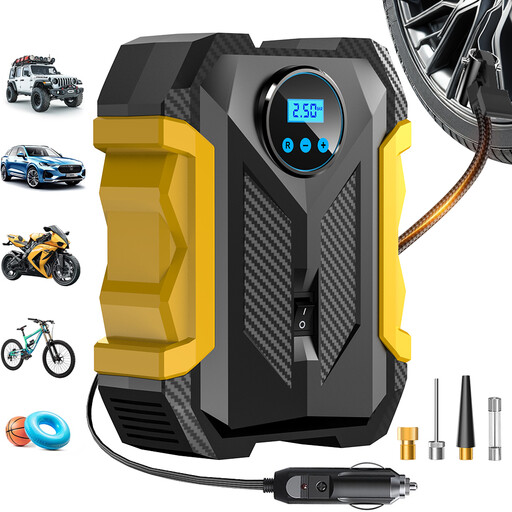
Why This Fits Their Persona: This is suited to households with cars, bicycles or multiple inflatables that need one portable pump for occasional roadside and home use.
The digital display supports pressure monitoring, while the 3 m cable clarifies that this is a 12V-powered unit rather than a pocket-sized rechargeable pump. The instructions also advise cooling between extended sessions.
150 PSI stated maximum; digital display; integrated LED light; suitable for cars, bikes and balls.
We have compiled a complete, real-time list of products that fully satisfy these strict selection criteria and UK safety regulations.
Start with a correctly fitted helmet, front and rear LED safety lights, reflective details and a practical storage option. A compact bike bag can carry keys, tools and a phone, while cycling gloves may improve grip and comfort in colder weather. For darker routes, use bicycle lights that provide appropriate illumination as well as visibility.
Replace a helmet after a significant impact, even if the shell appears intact. Inspect straps, adjustment dials, padding and lights regularly. Replace worn hook-and-loop fasteners, damaged cables, cracked housings and batteries that no longer hold charge. Storage in a cool, dry place can help protect materials between rides.
A 12V inflator can be practical when it is already used for a car or shared household equipment. For cyclists who only need occasional tyre top-ups and carry the pump on every ride, a smaller manual or rechargeable bike tyre inflator may be more convenient. Compare portability, charging needs and intended frequency of use rather than choosing by PSI alone.