
24/7 Customer Support

Free returns

Same-day & Next-day Delivery

Quality Guaranteed

Unlock Your Welcome Offers: FREE Delivery | Up to 80% OFF | Free 30-day JoyPlus trial
Download the APP
Cycling sunglasses need to do more than look sporty. They should help reduce glare, stay secure over uneven roads and protect your eyes from wind, dust and airborne debris. The right pair may also work for running, golf, fishing, driving or travel.
However, product listings can make comparison difficult. Terms such as “HD”, “impact-resistant” and “UV400” are useful only when you understand what they cover—and what they do not.
A darker tint does not automatically mean stronger ultraviolet protection. Look for clearly stated UV400 protection, which refers to coverage against ultraviolet wavelengths up to 400 nanometres. Also check whether the claim applies to the main lenses and any replacement lenses.
Tint and UV protection are separate features. A clear lens can offer UV protection, while a dark lens without adequate protection may not provide the coverage you expect.
Polarised cycling sunglasses are designed to reduce reflected glare from roads, wet surfaces, water and vehicles. They can be useful on bright rides, but they do not necessarily change tint as conditions alter.
Photochromic cycling glasses adjust their tint in response to UV exposure. This can be practical when a ride moves between open roads, tree cover and changing weather. The transition is not always suitable inside a vehicle, as windscreens can block some UV light.
A lens can have useful specifications but still be uncomfortable if the frame presses against your temples, slips down your nose or leaves excessive gaps at the sides. Cycling glasses should be checked for:
For prescription wearers, check whether the product includes a prescription inner frame or whether a separate prescription glasses clip-on sunglasses solution would be more practical.
For general outdoor use, look for clearly described UV400 sports sunglasses. Lens category is also relevant. A Cat.0-to-Cat.3 photochromic range, for example, indicates a lens designed to move from a very light tint to a darker tint depending on exposure.
Visible light transmission, or VLT, gives more detail about how much light passes through the lens. Lower percentages generally indicate a darker lens for brighter conditions. The Revoray Y1 cycling glasses list approximately 15.2% VLT, while some OutdoorMaster Hawk models list 12%, 17% or 48%, depending on the lens version.
A darker lens is not automatically suitable for every ride. If you cycle in shaded lanes, at dawn or in variable weather, a lighter or interchangeable lens may be more useful.
Polycarbonate and TAC lenses are commonly used in sports eyewear. Product descriptions may also mention impact-resistant sports eyewear, but impact resistance does not mean the glasses are unbreakable or suitable for industrial hazards.
The Revoray Y1 range lists testing to the ANSI Z87.1 performance standard. Other products state impact resistance alongside GB or CE-related information. These details are worth checking, but cycling sunglasses should not be used for grinding, machining or tasks requiring specialist protective eyewear.
A lightweight TR90 frame can help reduce pressure during longer rides. Weight figures in the supplied range include approximately 25.5g for the OutdoorMaster LARK SV, 26–29g for the HAWK LT and about 33g for the Revoray Y1.
Ventilation is particularly useful for riders who cycle in cool, damp or high-effort conditions. Curved lenses can improve side coverage, while adjustable nose pads help keep the frame stable. For driving and travel, portability may matter more than wraparound coverage: foldable sunglasses can fit more easily in a small bag or glove compartment.
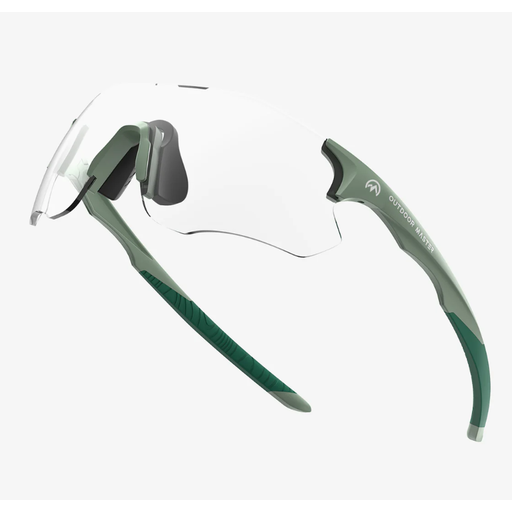
Why This Fits Their Persona: A practical option for new riders who want one pair for changing outdoor conditions, including everyday cycling, running and walks around the UK.
The listing specifies photochromic HD lenses, a Cat.0-to-Cat.3 range, UV400 protection and impact-resistant construction rather than relying only on a dark appearance.
Lightweight TR90 memory frame, anti-slip gel elements and included EVA case, pouch and lanyard.
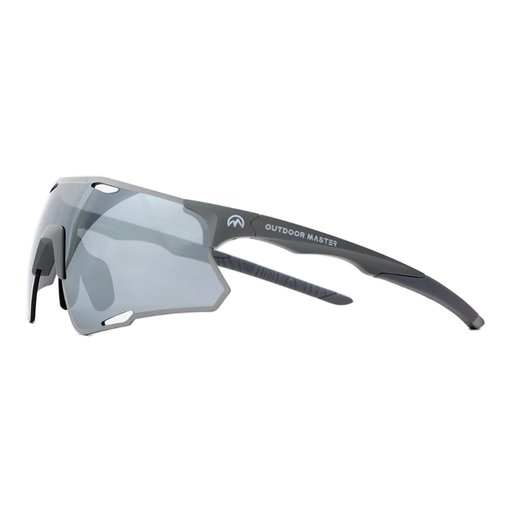
Why This Fits Their Persona: Suits regular cyclists and runners who prioritise a secure fit, peripheral coverage and ventilation on longer rides.
The design combines ventilated lenses with adjustable nose pads, addressing common slipping and fogging concerns.
HD polarised polycarbonate lenses, UV400 protection, 20% wider peripheral vision and an approximate 25.5g weight.

Why This Fits Their Persona: Designed for road cyclists, mountain bikers and outdoor sports users who need glare reduction and a stable fit in bright conditions.
Its listing provides a VLT figure, lens material, UV400 information and ANSI Z87.1 performance-standard testing details.
TR90 frame, adjustable anti-slip silicone pads, water- and oil-repellent coating and approximately 33g weight.
Cyclists are not the only people who benefit from glare-reducing eyewear. The Beneunder FD421 is designed as foldable sunglasses for driving and travel, with a tri-fold frame that measures 35mm thick when folded and weighs 26g. Its high-definition nylon lenses list UV400 protection and OAR anti-reflective coating.
If you already wear prescription glasses, a clip-on can be more convenient than carrying a second prescription pair. The Ochama polarised clip-on is designed to fit over many myopia frames, but check the clip dimensions and frame shape before ordering. It should sit securely without obstructing your view or interfering with your prescription lenses.
For any sunglasses used while driving, ensure the tint does not reduce visibility in poor light. Photochromic lenses may not darken sufficiently inside a vehicle, while very dark lenses may be unsuitable at dusk or in tunnels.
We have compiled a complete, real-time list of products that fully satisfy these strict selection criteria and UK safety regulations.
They can be used in bright or mixed conditions, but a very dark lens may reduce visibility under heavy cloud or in wooded areas. Consider a lighter lens, photochromic cycling glasses or interchangeable lenses if your routes regularly move between shade and sunlight.
Lifespan depends on use, storage and lens condition. Replace the glasses if lenses become deeply scratched, cracked or loose in the frame. Clean them with water and a soft microfibre cloth, avoid harsh chemicals and store them in a protective case rather than loose in a kit bag.
Many models are suitable for running, golf, fishing, sailing and everyday outdoor use when their fit and lens tint match the activity. They are not a substitute for specialist industrial eye protection, and impact-resistant sports eyewear should not be used for grinding or machining.