
24/7 Customer Support

Free returns

Same-day & Next-day Delivery

Quality Guaranteed

Unlock Your Welcome Offers: FREE Delivery | Up to 80% OFF | Free 30-day JoyPlus trial
Download the APP
Cycling sunglasses need to do more than reduce brightness. They should stay secure over potholes, protect against wind and debris, and remain comfortable across a long ride. The same applies to mountain bikers, runners and drivers who want versatile sports sunglasses for outdoor use.
However, product listings can make similar pairs appear interchangeable. Before buying cycling sunglasses, watch for these common traps.
UV400 sunglasses are designed to block ultraviolet wavelengths up to 400 nanometres, but that specification does not automatically confirm impact resistance. A lens may protect against sunlight while offering limited protection from grit, insects or small flying objects.
For cycling and mountain biking, check whether the listing identifies the lens material, such as polycarbonate or PC, and whether it provides a recognised impact-performance reference. Avoid treating vague phrases such as “HD protection” as a safety standard.
Photochromic cycling sunglasses change tint in response to UV exposure. This can be useful when moving between open roads, shaded lanes and woodland trails. Yet the transition is not always instantaneous, and the darkest category may still be insufficient for direct sun observation.
A Cat.0 to Cat.3 range, for example, covers clear to dark tint levels but is not intended for viewing the sun directly. Riders should also consider whether the lenses darken effectively inside a vehicle, where windscreen glass may reduce UV exposure.
A frame that looks lightweight may still press against the temples or slide down when you sweat. For active use, inspect the frame material, nose-pad design, temple grip and overall weight. Lightweight TR90 sunglasses can offer useful flexibility and low weight, but fit remains dependent on head and face shape.
Ventilation is another practical detail. Close-fitting lenses can offer good coverage, while vented designs may help reduce fogging during climbs or cold-weather rides.
Look for clearly stated UV400 protection, not simply “sun filtering”. Wraparound or oversized lenses can reduce wind exposure from the sides, although they should not obstruct peripheral vision. A curved lens can be useful for road cycling, but check that the frame does not touch your cheeks.
For driving, choose lenses that maintain a clear view of road signs, traffic lights and dashboards. Tinted eyewear should never be used when visibility is too low.
Polarised cycling sunglasses reduce reflected glare from wet roads, water and bright vehicle surfaces. This can make them suitable for sunny road rides, travel and general outdoor use. However, polarisation may make some LCD screens harder to read, including certain bike computers, phones and car displays.
Anti-reflective coatings can reduce reflections from the rear surface of the lens. Terms such as anti-glare sunglasses should be supported by a description of the coating or its intended function rather than treated as a guarantee of improved vision.
Polycarbonate and PC lenses are commonly selected for impact resistance, while TR90 frames are valued for flexibility and shape retention. Check whether the product includes adjustable nose pads, anti-slip temple sections or a retention strap.
For frequent use, also consider the supplied accessories. A hard case helps prevent scratches in a rucksack, while a microfibre cloth is preferable to clothing for cleaning. Do not use harsh chemicals unless the manufacturer specifically allows them.
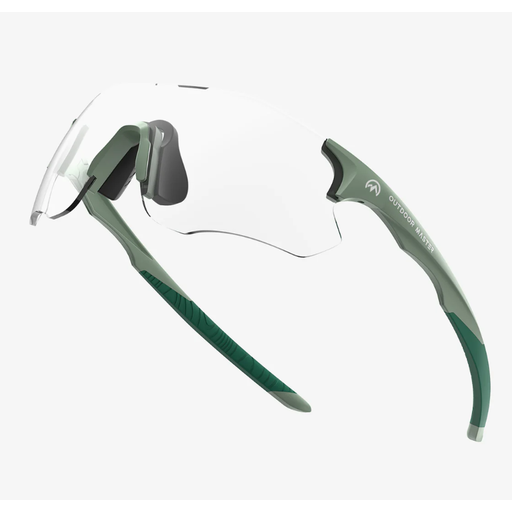
Why This Fits Their Persona: A practical option for new cyclists who want one pair for changing light on UK roads, leisure rides and outdoor walks.
The listing identifies photochromic HD lenses, a Cat.0 to Cat.3 range, impact-resistant construction and UV400 protection rather than relying only on appearance.
TR90 memory frame, anti-slip gel and included EVA case, microfibre cloth, lanyard and replaceable nose pad.

Why This Fits Their Persona: Suits regular road riders and outdoor users who prioritise defined lens specifications, adjustability and surface coatings.
The product description states approximately 15.2% visible light transmission and identifies ANSI Z87.1 performance certification, rather than using “HD” as the only detail.
TAC polarised lenses, adjustable silicone nose pads, TR90 frame, water- and oil-repellent coating and a stated 33 g weight.
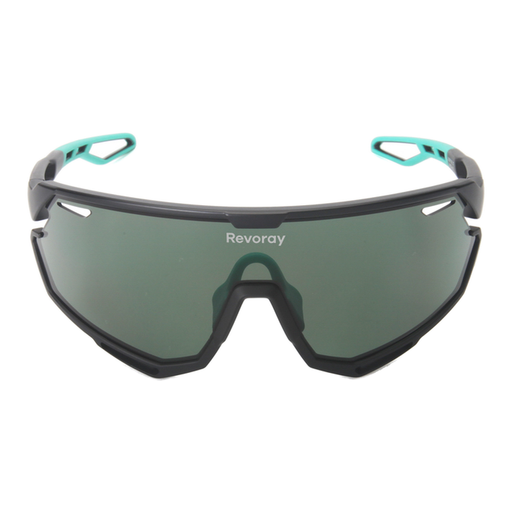
Why This Fits Their Persona: Designed around road cycling, mountain biking and high-movement outdoor sessions where coverage and stability matter.
It specifies a one-piece PC lens, rubber nose pad and anti-slip temples, addressing the risks of vague fit descriptions and loosely supported impact claims.
Approx. 30 g weight, aerodynamic integrated lens, UV400 protection and a stated medium-to-large fit.
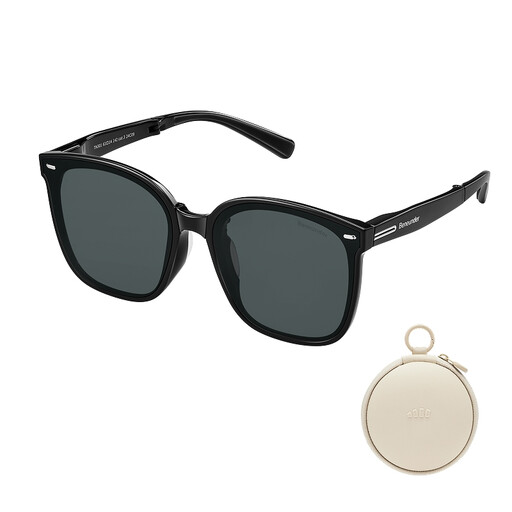
Why This Fits Their Persona: A portable choice for keeping sunglasses in a car, coat pocket or travel bag, with a larger frame profile for everyday outdoor wear.
Its dimensions, weight and folded thickness are listed, making portability easier to assess than relying on the word “compact”.
Tri-fold design, 26 g weight, 35 mm folded thickness, UV400 nylon lenses and OAR anti-reflective coating.
We have compiled a complete, real-time list of products that fully satisfy these strict selection criteria and UK safety regulations.
They can be useful where light changes between open roads and shaded paths. A Cat.0 to Cat.3 lens range offers adaptability, but tint changes depend on UV exposure and may not respond identically behind vehicle glass. Riders who mainly cycle in consistently bright conditions may prefer polarised lenses with a fixed tint.
They can reduce glare from wet roads, puddles and other reflective surfaces. Before choosing them for driving, check that you can read your dashboard and navigation screens comfortably, as polarisation can affect some displays. Never use any tint that makes road visibility inadequate.
There is no fixed lifespan. With careful cleaning and case storage, the frame and coatings may remain usable for an extended period, but frequent use, scratches, heat and accidental impacts can shorten service life. Inspect the lenses and hinges regularly, and replace the pair when damage affects vision, fit or structural integrity.