
24/7 全天候客户支持

免费退货

当日/次日达

品质保障

开启新人专享福利: 全场免邮 | 低至 2 折 | 免费试用 30 天 JoyPlus 会员
下载 Joybuy
For road cycling, mountain biking and everyday rides, cycling sunglasses need to do more than reduce brightness. They should stay secure over potholes, protect against wind and debris, and maintain clear vision when weather and light conditions change.
However, product listings often make similar promises using vague terms. Before buying, watch for three common pitfalls:
UV400 cycling glasses are designed to filter ultraviolet wavelengths up to 400 nanometres. This specification is more useful than simply choosing a dark tint, as tint darkness and UV filtering are separate features.
For bright summer rides, a lower visible light transmission (VLT) can help reduce glare. One of the listed polarised models specifies approximately 15.2% VLT, indicating a lens intended for bright conditions. Riders who regularly cycle at dawn, dusk or under tree cover may prefer eyewear with a lighter or interchangeable lens option.
A mirror finish can reduce the amount of visible light reaching the eye, but it should not be treated as proof of UV protection. Check the product information for a stated UV400 rating.
Cyclists face risks from grit, insects, branches and accidental falls. Impact-resistant cycling glasses usually use polycarbonate (PC), TAC or another specified lens material rather than ordinary fashion sunglasses.
The listed polarised Revoray Y1 models state testing to ANSI Z87.1 sports eyewear performance standards. ANSI Z87.1 is a US impact-performance standard; it is useful information, but UK buyers should not assume it automatically confirms every requirement that may apply to a particular use. For higher-risk cycling, compare the product’s stated markings and safety information with applicable UK and European requirements.
A one-piece PC lens can also provide a broad, unobstructed field of view. This is practical for checking traffic, junctions and movement at the edge of a trail.
For long rides, lightweight cycling sunglasses can reduce pressure around the nose and ears. The Revoray X3 models weigh approximately 30g, while the Y1 polarised versions weigh approximately 33g.
TR90 cycling glasses use a flexible thermoplastic frame material designed to balance low weight with resilience. Weight alone does not guarantee comfort, so also look for:
An aerodynamic cycling glasses design may help reduce wind exposure at speed, but fit remains more important than styling. A frame that shifts when you look over your shoulder can be distracting on both road and trail.
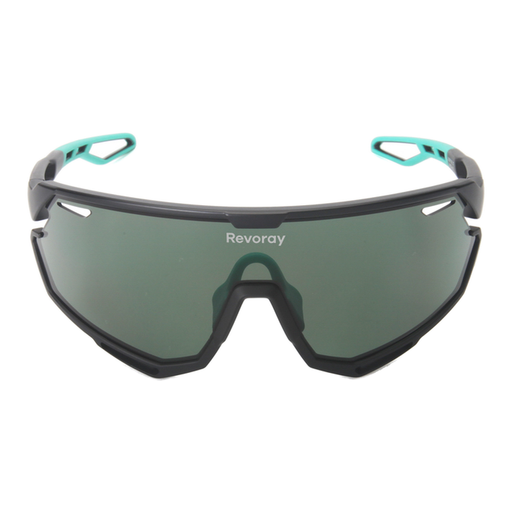
Why This Fits Their Persona: A practical option for new riders who want broad coverage and basic protection for commuting, weekend road rides or occasional trail use without choosing a heavier frame.
The listing specifies a one-piece PC lens, UV400 protection, approximately 30g weight and rubber anti-slip contact points rather than relying only on a fashionable appearance.
TR90 frame; one-piece PC lens; streamlined shape; rubber nose pad and anti-slip temples.
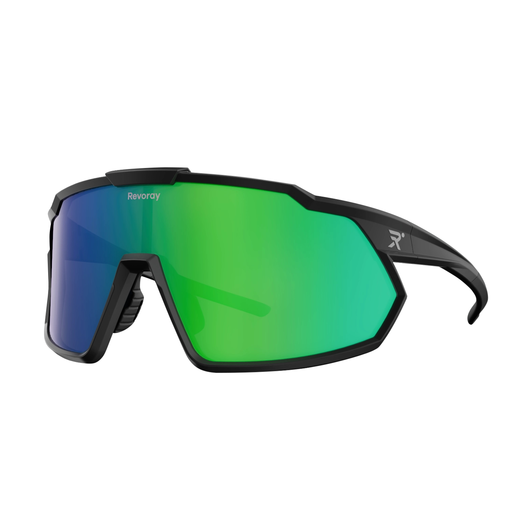
Why This Fits Their Persona: Suits frequent road cyclists who regularly encounter glare from wet tarmac, car windows or waterways during bright UK rides.
The product specifies polarised TAC lenses, approximately 15.2% visible light transmission, UV400 protection and ANSI Z87.1 performance testing instead of making an unqualified glare or safety promise.
Polarised TAC lenses; water- and oil-repellent coating; scratch-resistant coating; adjustable silicone nose pads.
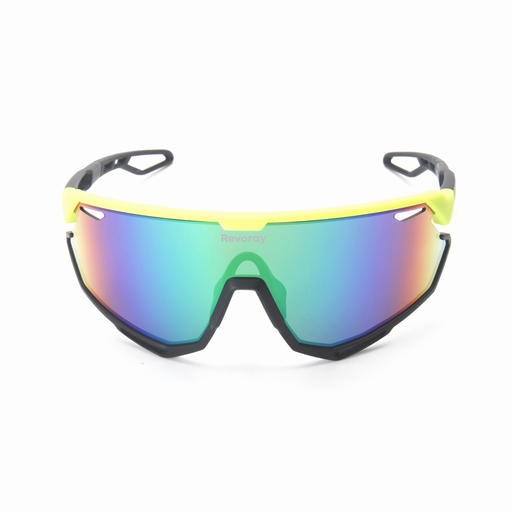
Why This Fits Their Persona: A sensible match for mountain bikers and riders on uneven terrain who need a stable fit, wide viewing area and a lightweight frame for repeated use.
Its stated impact-resistant PC lens, TR90 frame and anti-slip nose and temple sections address movement and debris concerns more directly than lens colour alone.
Approximately 30g; aerodynamic profile; one-piece PC lens; suitable for medium-to-large fits.
Even impact-resistant eyewear can be damaged by poor storage. Rinse dust and road grit with clean water before wiping the lens. Use a soft, clean cloth and avoid alcohol, abrasive cleaners and strong chemicals, which may affect lens coatings.
Store the glasses in a protective case rather than loose in a cycling jersey pocket or rucksack. Avoid leaving them in a hot car, placing heavy objects on them or allowing sharp items to contact the lens. If the lens becomes deeply scratched or the frame no longer fits securely, replace the glasses rather than continuing to ride with impaired vision.
For riders comparing road cycling glasses and mountain biking sunglasses, consider the main environment first. Road riders may prioritise glare reduction and wind coverage, while trail riders may place greater emphasis on impact resistance, stability and peripheral visibility.
We have compiled a complete, real-time list of products that fully satisfy these strict selection criteria and UK safety regulations.
They can be useful in bright conditions because they reduce reflected glare, particularly from wet roads and vehicles. However, a lens with approximately 15.2% VLT may appear too dark in woodland, heavy cloud or evening conditions. Check the intended light conditions before buying.
There is no single suitable weight for every rider, but lightweight models around 30–33g can reduce pressure during longer rides. Fit, nose-pad design and temple grip remain equally important, as a light pair can still slip if the frame is too wide or lacks secure contact points.
No. Cycling sunglasses provide eye coverage and optical protection only. They are not a substitute for a properly fitted helmet, lights, high-visibility clothing or other equipment appropriate to your route and riding conditions.