
24/7 Customer Support

Free returns

Same-day & Next-day Delivery

Quality Guaranteed

Unlock Your Welcome Offers: FREE Delivery | Up to 80% OFF | Free 30-day JoyPlus trial
Download the APP
For any dedicated cyclist in the UK, the right equipment is not just about performance—it is about safety and endurance. Whether you are navigating winding country lanes or tackling technical singletrack, your vision is paramount. Glare from a wet road, dust kicked up on a trail or the relentless buffeting of wind can quickly turn a great ride into a hazardous one. Choosing the right pair of cycling sunglasses is a critical decision, providing essential protection and enhancing your focus when it matters most.
This guide is designed to help you understand the key features that define high-performance cycling eyewear. As the Joybuy Product Recommendation Officer, my role is to provide clear, practical advice to help you select equipment that genuinely meets your needs on the road or trail.
When you are comparing options, moving beyond aesthetics is crucial. The technology and materials used in a pair of glasses directly impact their performance, comfort and safety. Here are the core elements to consider.
The lens is the most critical component of any sports eyewear. For cyclists, it needs to do more than just dim the sun. Look for UV400 sports sunglasses, as this standard ensures the lenses block 100% of harmful UVA and UVB rays, protecting your eyes during long hours of exposure.
Beyond UV protection, the lens material is vital. Polycarbonate (PC) lenses offer an excellent combination of clarity and high impact resistance, providing a crucial shield against road debris or low-hanging branches on a trail. A large, single-piece lens design also offers a wider, unobstructed field of view, which is essential for maintaining situational awareness at speed.
A heavy or ill-fitting frame can become a major distraction. Modern performance frames often use advanced materials like TR90, a thermoplastic known for being incredibly durable, flexible and lightweight. A pair of lightweight cycling glasses made from TR90 will sit comfortably on your face without causing pressure points, even on all-day rides.
Fit is equally important. Look for anti-slip cycling sunglasses that feature rubberised nose pads and temple tips. These elements ensure the glasses stay securely in place, even when you are sweating or riding over rough terrain. An ergonomic, wraparound design not only contributes to a secure fit but also enhances protection from wind and debris.
For those focused on speed, aerodynamic bike glasses can offer a marginal but meaningful advantage. A streamlined, wraparound design helps to reduce wind resistance and turbulence around the eyes. This not only helps with efficiency but also prevents your eyes from drying out on fast descents or during high-intensity efforts. This feature is beneficial for both road cycling glasses and mountain bike sunglasses, where maintaining clear, comfortable vision is key to performance.
Based on a combination of performance-oriented features, materials and design, here is a standout option for serious cyclists.
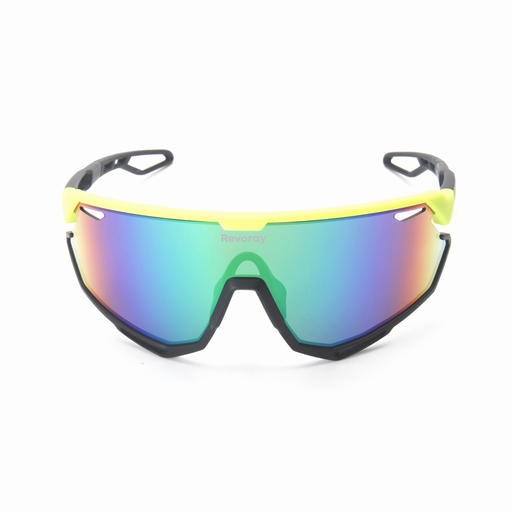
Why It Stands Out
The Revoray X3-green sunglasses are built around the core needs of a performance cyclist. The design successfully integrates a lightweight frame with a high-coverage, impact-resistant lens. Its aerodynamic profile is engineered to maintain stability at high speeds, while the TR90 construction ensures it remains comfortable for the duration of your ride. The one-piece PC lens provides a vast, uninterrupted field of view, a significant advantage for both road and trail riding.
Pros:
Who is it for?
This model is well-suited for performance-focused cyclists who participate in both road cycling and mountain biking. It is an ideal choice for riders seeking a balance of aerodynamic efficiency, comprehensive eye protection and a stable, lightweight fit for training and competitive events.
One style does not always fit every rider or every occasion. If the wraparound performance look is not what you are after, or if you wish to browse a wider collection of eyewear, our selection of Men's Designer Glasses features a variety of styles that blend function and fashion. You may find frames there that suit your personal aesthetic while still offering the quality you need.
1. Are polarised lenses a good choice for cycling? Polarised lenses are excellent at reducing glare from flat surfaces like water or wet roads. However, they can sometimes make it difficult to spot icy patches or oil slicks, which appear as glare through non-polarised lenses. They can also interfere with the visibility of LCD screens on bike computers or smartphones. The choice depends on your typical riding environment and personal preference.
2. What is the main benefit of a TR90 frame?TR90 is a high-performance thermoplastic material. Its primary benefits for cycling sunglasses are that it is exceptionally lightweight, highly flexible and extremely durable. This flexibility allows the frame to bend under pressure without breaking, and its light weight ensures comfort during long periods of wear, making it an ideal material for sports eyewear.
3. Why is UV400 protection so important in cycling glasses? Cyclists spend hours exposed to direct and reflected sunlight. UV400 protection is a standard that certifies the lenses block 99-100% of UVA and UVB radiation. This comprehensive protection is crucial for preventing long-term eye damage, including cataracts and other conditions related to ultraviolet exposure. It is a non-negotiable safety feature for any serious outdoor athlete.