
24/7 Customer Support

Free returns

Same-day & Next-day Delivery

Quality Guaranteed

Unlock Your Welcome Offers: FREE Delivery | Up to 80% OFF | Free 30-day JoyPlus trial
Download the APP
Whether you cycle to work, join weekend road rides or tackle muddy mountain-bike routes, the right cycling sunglasses should do more than shade your eyes. They need to stay secure in wind and rain, reduce distracting glare and provide suitable ultraviolet protection without becoming uncomfortable after an hour.
Marketing language can make this difficult. “HD”, “sports-grade” and “impact-resistant” do not always tell you how a pair will perform in practical UK conditions. Use the checks below to compare products more objectively.
A lens can appear very dark while offering little useful ultraviolet protection. Look for a clearly stated UV400 specification rather than judging protection by lens colour alone. UV400 refers to coverage against ultraviolet wavelengths up to 400 nanometres; it does not describe how dark the lens looks or whether it is suitable for every activity.
For everyday cycling, running and outdoor use, UV400 sports sunglasses are a sensible specification to prioritise. Sunglasses should not be used for direct solar observation, including eclipse viewing.
Polarised cycling sunglasses can reduce reflected glare from wet roads, car bonnets and water. This may make bright rides more comfortable, particularly on open roads. However, polarisation is not the same as UV protection, so both specifications should be listed.
Some riders also prefer to see certain display screens clearly, so check how your cycling computer or phone looks through the lens before committing to long-distance use.
A large wraparound lens may provide useful coverage, but a poor fit can cause pressure around the temples or slip down with perspiration. Ventilation is also important: a tightly enclosed lens can fog when climbing slowly in cool, damp weather.
Look for adjustable nose pads, non-slip temple sections and ventilation openings. Lens width and frame width matter more than a generic “universal fit” label, especially if you are comparing cycling glasses for men and women with different face shapes.
Choose according to how your light conditions change:
Photochromic lenses may not darken sufficiently inside a vehicle because windscreens can block some UV light. If you are buying sunglasses primarily for driving, a conventional tinted lens may be more predictable.
TR90 frames are thermoplastic frames valued for low weight and flexibility. The products below range from approximately 25.5g to 33g, which can help reduce pressure during extended wear. TR90 is not a guarantee of indestructibility, so still check the hinges, nose pads and storage instructions.
Polycarbonate, PC and nylon lenses can offer different combinations of lightness and impact resistance. A one-piece PC lens can provide a broad, unobstructed field of view, while a curved sports lens can improve side coverage. Impact-resistant cycling glasses are not unbreakable and should not replace specialist eye protection for grinding, machining or similar high-impact work.
Before ordering, compare:
A case is particularly useful for riders who keep glasses in a rucksack or car. Foldable sunglasses can be convenient for travel, but their hinges should be opened and closed as intended rather than forced.
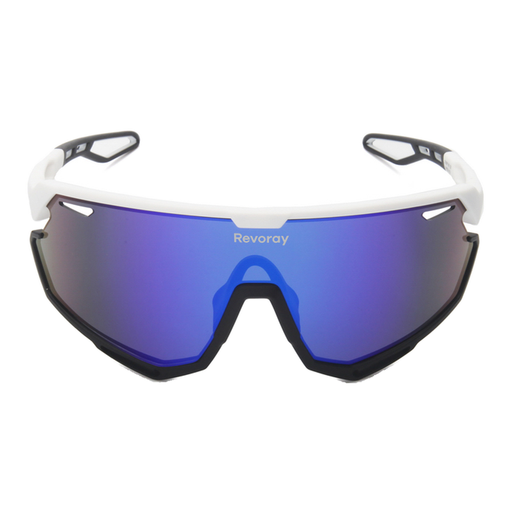
Why This Fits Their Persona: A practical starting point for road cycling, mountain biking and other outdoor activities, with a medium-to-large fit and ready-to-wear construction.
The listing specifies UV400 protection, a one-piece PC lens and anti-slip nose and temple sections instead of relying only on broad sports wording.
Approx. 30g TR90 frame, aerodynamic design, wide one-piece lens and rubber anti-slip fit.

Why This Fits Their Persona: Suits riders who want clearly listed lens coatings and an impact-resistance performance standard for regular road or trail use.
The specification lists ANSI Z87.1 performance certification, approximately 15.2% visible light transmission, UV400 and water- and oil-repellent coatings.
TAC polarised lenses, adjustable silicone nose pads, TR90 frame and stated one-year limited warranty.

Why This Fits Their Persona: Designed for riders moving between brighter roads, shaded lanes and changing outdoor light during longer UK rides.
The listing identifies both photochromic and polarised functions, rather than presenting a single lens feature as a solution for every lighting condition.
26–29g weight, UV400, impact-resistant polycarbonate lenses, adjustable nose pads and included storage case.

Why This Fits Their Persona: A portable option for commuting, driving, holidays and casual outdoor use when compact storage matters as much as coverage.
Its specifications give measurable portability details: a tri-fold design, approximately 35mm folded thickness and 26g weight.
UV400 nylon lenses, anti-reflective coating, TR90 frame and compact foldable construction.
Rinse lenses with clean water when grit or road spray is present, then use a soft microfibre cloth. Avoid abrasive materials, alcohol or strong corrosive cleaners where the product instructions advise against them. Keep sunglasses in their case rather than loose beside keys or tools.
Replace a pair when lenses become scratched, the frame no longer stays secure or coatings are visibly deteriorating. There is no universal lifespan: frequency of use, cleaning habits, heat exposure and storage all affect durability.
We have compiled a complete, real-time list of products that fully satisfy these strict selection criteria and UK safety regulations.
They can be useful in bright conditions where glare reflects from wet roads, vehicles or water. They do not automatically provide UV400 protection, so check both specifications. Riders should also confirm that their cycling computer screen remains easy to read through the lens.
Not necessarily. Photochromic lenses respond mainly to UV exposure, while a windscreen can block some UV. For driving, check the manufacturer’s guidance and consider whether a fixed tinted or anti-glare lens would be more predictable.
The temples should sit comfortably without pressing against the helmet straps, while the nose pads should prevent movement without pinching. A curved lens should provide useful side coverage but must not touch your cheeks. Try the glasses with your helmet and check that they remain stable when you look down or turn your head.