Who is each format for?
The useful distinction is when and how you will serve the custard, not whether its pack suggests a cycling-specific purpose.
Post-ride sharers
If two people want dessert after a longer ride, a ready-to-serve tin is straightforward to divide. Treat it as one part of the food you have afterwards: British Cycling identifies protein as a priority after rides longer than 90 minutes.
Portion-label comparers
If fat and sugars matter to your choice of shared dessert, compare the same serving size across tins. ASDA’s labelled half-can values differ across its Just Essentials, Light and Creamy 400g custards.
Batch planners
If you are making custard for several people in advance, Bird's powder lets you choose the milk and adjust the sugar and consistency. It requires preparation rather than simply opening a tin.
What matters when choosing?
Decide whether the custard is for a meal after the ride, a portion to share at home or a batch you will prepare ahead; then compare packs on the same serving basis.
| Concern |
What to check |
Who this matters to |
| Place in a post-ride meal |
Plan what else you will eat if custard is the dessert after a longer ride. |
After a long ride, I want a shared dessert that fits alongside other food, not one that has to serve as the whole meal. About 31% of consumers put that meal fit first. |
| Portions and leftovers |
Check the suggested servings and the opened-pack storage instructions. |
If we divide a tin but leave some for later, I need a portion plan that lets us use the remainder as directed. That is the main concern for about 25% of consumers. |
| Ride-day practicality |
Plan food for eating during the ride separately from a spoonable dessert. |
When I am cycling, I need food I can carry and eat at the right time; custard makes more sense for me at a stop or at home. Roughly 25% of consumers prioritise that distinction. |
| Fat and sugars per portion |
Compare per 100g or equivalent suggested servings, rather than pack names alone. |
For a dessert we will share, I want to compare the labelled fat and sugars in my actual portion before choosing a richer or lighter recipe. About 19% of consumers make that label profile their primary concern. |
Brands to consider
These ranges illustrate different ready-to-serve and make-at-home formats; compare the particular product and its current pack rather than assuming all products under one brand share a recipe.
Ambrosia
A ready-to-serve custard range that includes 400g Devon Custard cans.
- Sainsbury's describes the 400g Devon Custard as ready to serve hot or cold.
- Check the current pack for ingredients, allergens and nutrition, as Ambrosia notes that products can be reformulated.
Bird's
A powder option for making custard as a planned batch rather than opening a sharing tin.
- Bird's directions allow a choice of milk and adjustments to sugar and consistency.
- Preparation takes time, and nutrition stated for a semi-skimmed-milk recipe should not be applied to a different recipe.
Tesco
An own-label 400g ready-to-serve custard format for a shared dessert.
- Tesco lists a 400g ready-to-serve custard in its tinned-custard range.
- Compare the current product label with other tins if the nutrition or portion size affects your decision.
Sainsbury's
An own-label 400g custard option, including Stamford Street Co. custard.
- The Stamford Street Co. product provides instructions for heating a portion in a microwaveable dish.
- Its instructions say to heat until piping hot and not to reheat once cooled.
Asda
A range of 400g ready-to-serve tins with different labelled fat and sugar values per suggested half-can.
- ASDA labels Just Essentials, Light and Creamy tins on the same half-can serving basis, making their stated values straightforward to compare.
- All three contain milk and instruct users to refrigerate unused contents and use them within 3 days.
M&S
A 400g canned custard option for a shared dessert.
- M&S describes its Silky Smooth Custard as made with whole milk; its listed ingredients include cream.
- M&S instructs users to refrigerate it after opening and eat it within 2 days.
Joybuy custard selections
These options cover ready-to-serve custard for sharing at home, including a 500g tub as well as 400g tins, plus powder for a planned batch. Choose the portion and preparation method that fit your meal.
 Image unavailable
Ambrosia Low Fat Custard 400g
A ready-to-serve tin for a shared dessert when you want to compare a lower-fat recipe. Its listing gives 2.0g fat and 12.1g carbohydrate per 100g; it can be served hot or cold. It contains milk, and the listing says to refrigerate it after opening and use it within 3 days.
View on Joybuy
 Image unavailable
Ambrosia Devon Custard 400g
A ready-to-serve tin for dessert after a ride, served hot or cold. The listing gives nutrition per 100g and per 130g portion, so use the basis that matches what you serve. It contains milk; remove leftovers from the can, refrigerate them and consume them within 3 days, as directed in the listing.
View on Joybuy
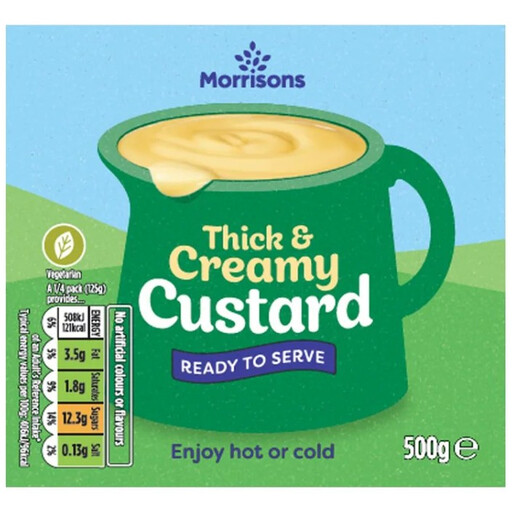 Image unavailable
Morrisons Ready To Serve Custard 500g
A 500g tub rather than a 400g tin, suited to dividing a ready-to-serve dessert at home. Its listing gives nutrition per 100g and per quarter pack and says it can be served chilled or gently heated. It contains milk; refrigerate after opening and consume within 3 days, as directed in the listing.
View on Joybuy
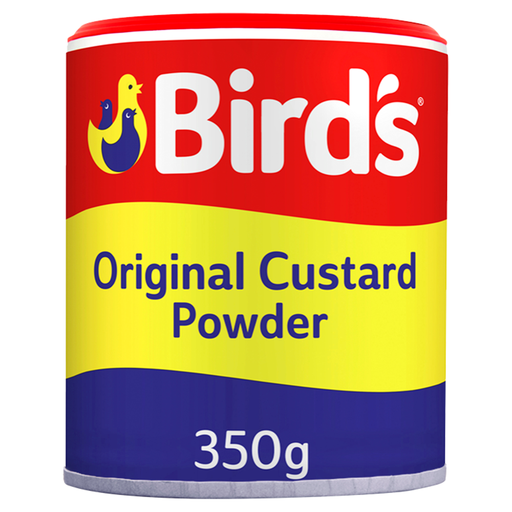 Image unavailable
Bird's Custard Powder 350g
A powder option for making custard ahead for a shared meal, rather than serving it straight from a tin. Bird's preparation guidance allows different milks and adjustments to sugar; check the pack directions for the batch you intend to make. Check the current allergen label, and refrigerate the custard once prepared as directed in the listing.
View on Joybuy
Frequently asked questions
Is a sharing tin practical to eat while cycling?
A spoonable sharing tin is better suited to a planned stop or to eating at home than to eating while moving. For a longer event, plan food you can carry and eat during the ride separately; British Cycling discusses carbohydrate intake during an event rather than treating a dessert portion as a ride-fuelling plan.
Can custard be part of a meal after a long ride?
Yes, as a dessert component rather than the whole meal. British Cycling identifies protein as a priority after rides longer than 90 minutes and also discusses carbohydrate for recovery, so consider what else you will eat alongside the custard.
How should I keep custard left over from a sharing tin?
Follow the particular pack’s opened-storage directions. The cited ASDA 400g tins instruct users to move unused contents to a covered non-metallic container, refrigerate and use within 3 days; M&S gives a 2-day refrigerated period for its 400g custard.
Does a vegetarian label mean custard is dairy-free?
No. The cited ASDA ready-to-serve custards contain milk, so check the ingredients and allergen information on the pack being shared. UK government guidance says regulated allergens in prepacked food must be clearly labelled.
When does Bird's powder make more sense than a tin?
Choose powder when preparing a batch and controlling the milk, sugar or consistency matters more than immediate serving. Bird's directions allow those adjustments, but nutrition stated for custard prepared with semi-skimmed milk will not describe a batch made with different ingredients.


