Small-flat gap cleaners
You mainly need to pick up loose fluff behind chairs. A tool that fits the gap matters, as does a vacuum you can put away easily in a rented flat.


For loose fluff behind chairs, start with a cylinder vacuum whose crevice tool fits the gap, then check whether its hose and cable let you reach the area without repeatedly moving the machine. A compact bagged model suits limited storage and a preference for contained disposal; a bagless model suits those willing to empty the bin and maintain its filters. Consider a larger-capacity cylinder when this is part of more extensive cleaning, rather than the only small job.
You mainly need to pick up loose fluff behind chairs. A tool that fits the gap matters, as does a vacuum you can put away easily in a rented flat.
Fluff also collects on fabric chairs, cushions or rugs, so you need to consider an upholstery tool as well as a crevice tool for the floor gap.
You want to weigh contained bag disposal against a reusable bin that needs emptying and filter care.
Check the chair gap and the tools supplied before deciding on capacity or dust-collection type. John Lewis & Partners describes cylinder vacuums as generally easy to store, but the space needed still depends on the model.
| Concern | What to check | Who this matters to |
|---|---|---|
| Reaching behind chairs | Check the crevice tool against the gap, then assess hose and cable reach from your socket. | If I cannot move the chair easily, getting a nozzle into the narrow space is my main concern. Around 31% of consumers put gap access first. |
| Storage and carrying | Compare the vacuum's dimensions with your storage space and check how its hose and tube are parked. | With little room to put a vacuum away, I need one I can store after a short clean-up. Limited storage is the primary concern for around 25% of consumers. |
| Fluff on chair fabric | Check whether the exact model includes an upholstery or mini turbo tool suited to the chair surface. | When fluff clings to the chair rather than lying behind it, I need a way to clean the fabric too. Around 25% of consumers chiefly need that upholstery option. |
| Disposal and upkeep | Compare bag replacement with bin emptying, and read the model's filter-care instructions. | I would rather choose the emptying and maintenance routine I can manage regularly. For around 19% of consumers, that routine is the main deciding factor. |
A floorhead cannot clean a gap it will not fit into. Fluff attached to the chair fabric calls for a different tool from loose fluff behind it.
Check the exact model's supplied crevice tool; look for an upholstery or mini turbo tool if you also need to clean the chair.
A bagless cylinder still needs its bin emptied and its filters maintained. Vacmaster specifies that filters on its D8 must be completely dry before refitting.
Read the instructions for the model you choose, including how to clean or replace its filters.
A larger bag or tank can serve longer cleaning sessions, but capacity does not tell you whether the vacuum will fit in your cupboard.
Measure where it will go and compare the machine's dimensions and hose-storage arrangement before buying.
Miele's bagged-cylinder range is relevant if contained disposal and a tool for tight spaces are priorities.
Hoover's H-POWER 300 Pet HP320PET is a bagless model to consider when fluff is both behind and on furniture.
Vacmaster's bagged D8 VZA0708P-01 is relevant when cleaning behind chairs is part of a larger, more frequent job.
These cylinder vacuums offer different approaches to the rented-flat chair-cleaning task. Compare the tools supplied with each exact model and the space you have to store it; a pet-oriented name alone does not establish that a tool will fit your chair gap.
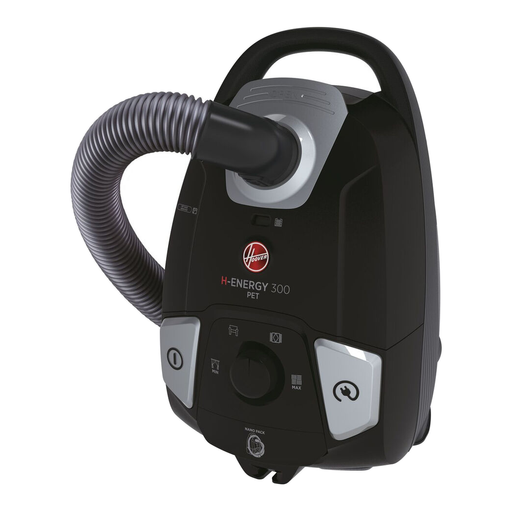 Image unavailable
Consider this bagged model if contained disposal and storage are priorities, while checking that its supplied tools fit behind your chairs.
The product name specifies NanoPack storage, a 3.5 L capacity and a 7 m retractable cable. Check the machine's dimensions against your storage space and which replacement bags it takes.
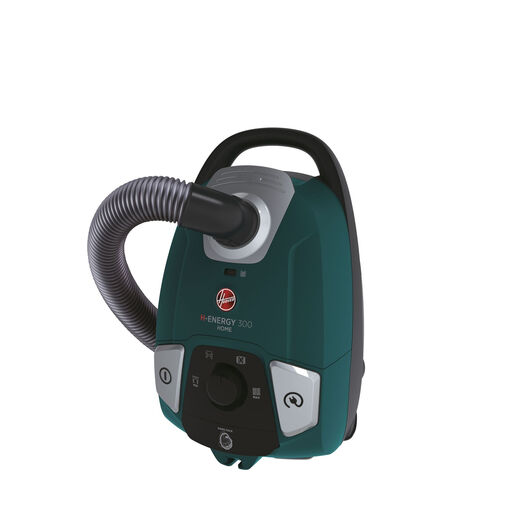 Image unavailable
This is another bagged option for a flat where putting the vacuum away matters; check the supplied tools if you also need to clean chair upholstery.
The product name specifies NanoPack storage, a 3.5 L capacity and 360-degree manoeuvrability. Compare its dimensions with your cupboard and confirm which replacement bags it takes.
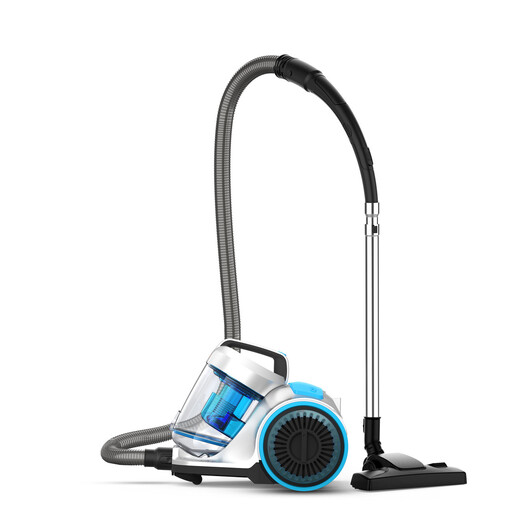 Image unavailable
If you need to clean both behind a chair and on its fabric, check the tools supplied with this exact CVRAV013 variant rather than relying on the Pet name.
Compare its dimensions with your storage space and check its dust-emptying and filter-care instructions.
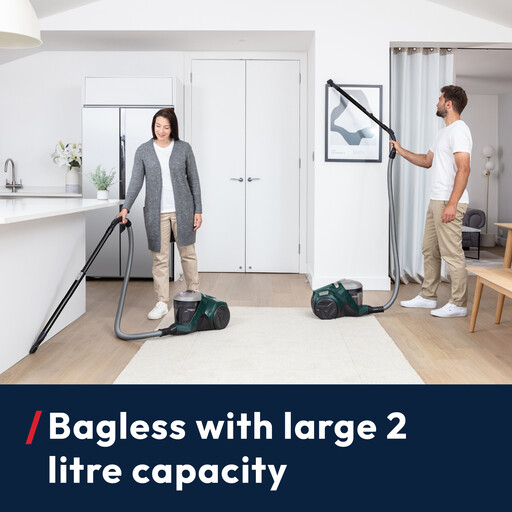 Image unavailable
Consider this bagless model if working reach is important and you are comfortable with bin and filter care. Check that its supplied tool fits the chair gap.
The product name specifies a 2 L capacity, 12 m reach and HEPA H13 filter. Confirm its dimensions for storage and its tools if you also need to clean upholstery.
 Image unavailable
If fluff collects on the chair as well as behind it, check whether this model's supplied tools suit both surfaces.
The product name specifies a 3 L capacity and 700 W rating. Check its storage footprint and confirm how collected dust is emptied before choosing it.
Start with a crevice tool that fits the space behind the chair. A flexible nozzle may help around chair legs or skirting boards; if fluff is attached to fabric, check separately for an upholstery or mini turbo tool.
Choose bagged if contained disposal matters more to you and you are willing to replace compatible bags; choose bagless if you prefer a reusable bin and can maintain its filters. John Lewis & Partners notes that bagless models still need filter cleaning or replacement. For either type, check that the exact machine fits your storage space.
Follow the exact model's instructions for emptying its bin or replacing its bag and caring for its filters. For the Vacmaster D8 specifically, Vacmaster says its filters must be completely dry before they are refitted.
Check your local electrical-waste collection options and whether a retailer offers a take-back route. GOV.UK describes the UK waste electrical and electronic equipment framework, while the practical collection options depend on the services available to you.