For ordinary loose household debris around door thresholds, choose a cylinder vacuum with a crevice tool, a head suited to the adjoining floor and enough reach for the rooms you need to clean. A bagged model offers more contained disposal, while a bagless model avoids replacement bags but requires you to empty its dust box. If the debris may be fine dust from building work, assess the material before using a domestic vacuum: Health and Safety Executive guidance calls for H- or M-class extraction for finer construction material.
Who needs which approach?
Moving-in edge cleaners
If loose dirt has settled along door thresholds, corners and skirting, focus on access to narrow gaps and a head suited to the adjoining floor. Check the exact model’s tools rather than assuming they come with every cylinder vacuum.
Consumers who prefer bagged disposal
If you expect an ordinary but dusty household clean-up, a bag lets you dispose of collected debris without tipping out a dust box. You will need compatible replacement bags; bagged disposal does not make a domestic vacuum suitable for construction dust.
Consumers dealing with possible building residue
If the material may come from concrete, mortar, sanding or woodwork, establish what created it before selecting equipment. The Health and Safety Executive calls for H- or M-class extraction for finer material in its construction-cleaning guidance.
What matters when choosing?
Identify the debris before comparing domestic vacuums. For confirmed ordinary household dirt, the main choice is between contained bagged disposal and a bagless dust box, alongside the tools needed for the threshold and adjoining floor.
Bagged domestic cylinder
Choose when: You want to collect ordinary household debris around several edges and dispose of it in a bag.
Trade-off: Keep compatible replacement bags available.
Bagless domestic cylinder
Choose when: The debris is ordinary household dirt and avoiding replacement bags matters more to you.
Trade-off: You must empty the dust box, bringing you into contact with collected debris.
Construction-rated extraction
Choose when: Fine debris may be related to building, sanding or woodwork rather than a household move alone.
Trade-off: This is a specialist equipment decision, not a feature upgrade to a domestic cylinder. Health and Safety Executive construction guidance calls for H- or M-class extraction for finer material.
| Concern | What to check | Who this matters to |
|---|
| Debris type |
Establish whether the material is ordinary household dirt or residue from building work. For finer construction material, check the extraction class appropriate to the task under Health and Safety Executive guidance. |
If I cannot tell whether the residue came from moving or building work, I need to identify it before using a domestic vacuum. Around 42% of consumers put that material check first. |
| Edge and floor access |
Check for a crevice nozzle and a head specified for the adjoining floor; confirm both in the exact model’s included-tool list. |
When dirt sits in a narrow threshold gap beside hard flooring, I want to reach the edge without relying on an unsuitable floorhead. That is the main concern for around 33% of consumers. |
| Disposal and reach |
Compare the exact model’s capacity and cable or operating reach, then decide whether you would rather replace bags or empty a dust box. |
If I have several doorways to clear, I want fewer stops to replug or dispose of debris, while keeping disposal contact in mind. Around 25% of consumers make that their primary concern. |
Buying pitfalls
-
Assuming all post-move dust is household dirt
Fine residue from concrete, mortar, sanding or woodwork changes the equipment decision. Health and Safety Executive construction guidance calls for H- or M-class extraction for finer material.
Find out what created the debris before buying or using a domestic cylinder; do not rely on a domestic filter label as a substitute for the appropriate extractor.
-
Checking the floorhead but not the edge tool
A head suited to hard floors does not establish that the vacuum can reach a narrow threshold gap. Included accessories differ by model.
Check the exact model’s supplied crevice tool and floorhead. Consider a compatible parquet brush if its intended floor contact suits your flooring.
A compatible specialist floorhead may need to be obtained separately.
-
Choosing bagless solely to avoid replacement bags
Bagless collection also means emptying a dust box. Bosch says bagged disposal limits contact with collected dust; that is the manufacturer’s design guidance, not a claim that every bagged model performs alike.
Choose the disposal method you are willing to use after cleaning, and check compatible bags or filter-care instructions for the exact model.
Relevant brands to consider
Numatic
The bagged Henry HVR160 illustrates a route for ordinary, extended household clean-ups.
- Numatic specifies a 6 L capacity and 10 m cable for the HVR160.
- Those domestic specifications do not establish suitability for fine construction dust; assess the material separately.
Miele
The bagged Guard M1 Parquet XL is a model to consider when the adjoining hard floor calls for a supplied parquet brush.
- Miele specifies a Parquet Twister XL brush and an 11 m operating radius for this model.
- Check whether its supplied tools also meet your narrow-edge needs; a parquet brush does not replace a crevice nozzle.
SEBO
The bagged AIRBELT E1 offers a combination-head route where thresholds adjoin both hard floors and carpet.
- SEBO specifies a KOMBI head for hard floors and carpets, variable power and a 3.5 L bag for the E1.
- SEBO recommends considering a rotating brush-head model for pet hair or deep-pile carpet; check the exact E1 tool kit for threshold-edge access.
Bosch
The Series 2 BGS05BU2GB illustrates a compact bagless route for ordinary household debris.
- Bosch specifies a 1.5 L dust capacity, 4.4 kg cleaner-only weight and 9 m operating radius for this model.
- Its dust box requires emptying; Bosch says bagged disposal limits contact with collected dust.
Joybuy cylinder vacuum choices
These bagged and bagless cylinder choices are relevant to cleaning confirmed ordinary household debris around thresholds. Check each model’s supplied edge and floor tools before choosing; for possible fine construction dust, follow the specialist-extraction decision above instead.
 No image available
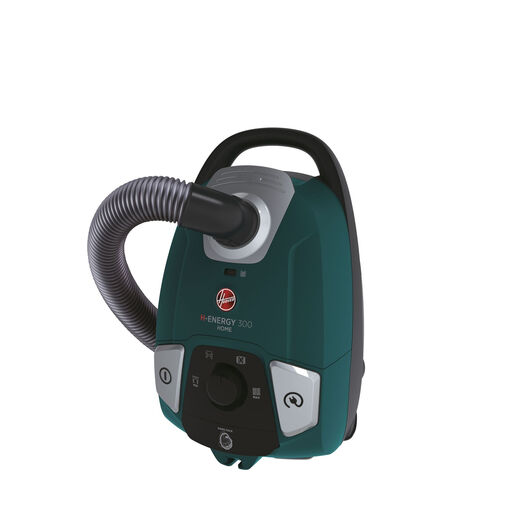
Hoover HE3 HE310HM NanoPack Bagged Cylinder Vacuum
Consider this bagged model for ordinary threshold debris if you prefer to dispose of dust in a bag. Its stated capacity is 3.5 L; confirm that the supplied crevice and floor tools suit your thresholds and that compatible replacement bags are available.
View on Joybuy
 No image available
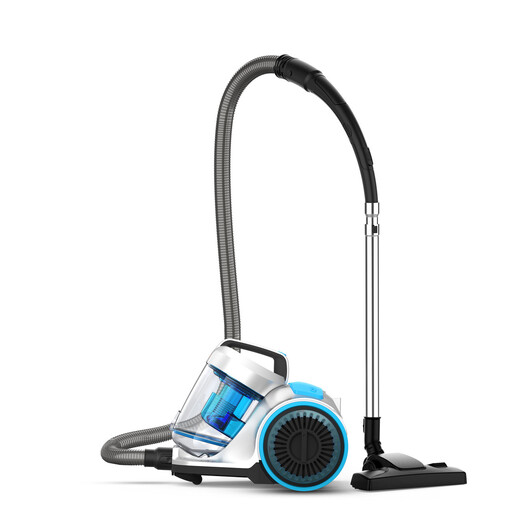
Vax Pick Up Pet CVRAV013 Cylinder Vacuum
Consider this model for ordinary loose dirt if you prefer emptying a dust bin to replacing bags. Check that the exact supplied kit includes tools suited to narrow threshold gaps and the adjoining floor; emptying the bin brings you into contact with collected debris.
View on Joybuy
 No image available
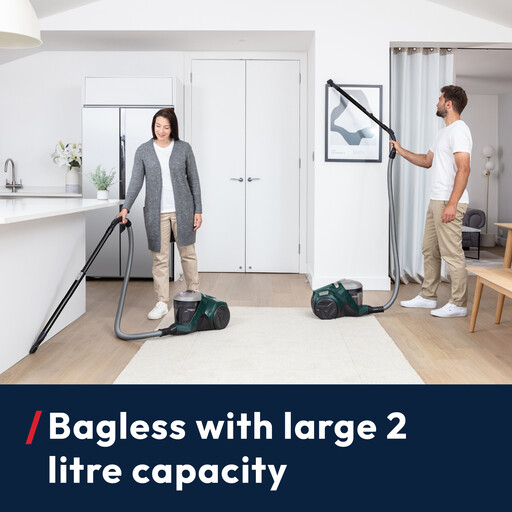
Hoover HP3 HP310HM Bagless Cylinder Vacuum
Consider this bagless model for ordinary household debris if you are comfortable emptying its dust bin. Its product name specifies a 2 L capacity and HEPA H13 filter; check the included tools and confirm working reach from the exact model’s cable and hose measurements before buying.
View on Joybuy
Frequently asked questions
Can a domestic cylinder vacuum collect any dry debris left after a move?
No: use the domestic-vacuum route only when the loose debris is ordinary household material. If it may be fine residue from building work, identify the material first; Health and Safety Executive construction guidance calls for H- or M-class extraction for finer material.
Should I choose a bagged or bagless cylinder for dusty thresholds?
Choose bagged if more contained disposal matters to you and you can keep compatible bags available; choose bagless for ordinary household dirt if you prefer not to replace bags and accept emptying a dust box. Bosch says bagged disposal limits contact with collected dust, but neither domestic design should be treated as construction-rated extraction.
Which tool should I check for a narrow threshold edge?
Check that the exact model includes a crevice nozzle for the gap, then look at the supplied head for the adjoining floor. For example, SEBO specifies a KOMBI head for hard floors and carpets on its AIRBELT E1, while Miele supplies a parquet brush with the Guard M1 Parquet XL; confirm the full accessory kit rather than assuming either floorhead reaches the gap.
Should I dry-sweep debris into a pile before vacuuming?
Avoid dry sweeping if the material could be building dust: the Health and Safety Executive warns that sweeping construction debris can generate high dust levels. For confirmed ordinary household debris, clear larger pieces separately before vacuuming loose dirt so they do not obstruct the tool or hose.


