Behind-furniture cleaners
If the move has exposed hair and dust behind sofas or along skirting boards, focus on whether the crevice tool and tube can enter and reach across the gap. A wide floor head is less relevant to that narrow space.


Choose a cylinder vacuum by checking whether its hose, tube and crevice tool can reach into the gap behind your sofa. If you also need to remove hair from upholstery or carpet, look for a supplied pet or turbo tool. Bagged and bagless models involve different emptying routines; neither format alone establishes how well a particular model will pick up pet hair.
If the move has exposed hair and dust behind sofas or along skirting boards, focus on whether the crevice tool and tube can enter and reach across the gap. A wide floor head is less relevant to that narrow space.
If hair is also caught in sofa fabric, on stairs or in carpet, check for a supplied pet or turbo attachment as well as a crevice tool. The two tools address different surfaces.
If unpacking means repeated cleaning across several rooms, consider how far the vacuum reaches from a socket, how collected debris is emptied and where the machine and tools will be stored.
Start with access to the sofa gap, then check the attachment needed for hair on soft surfaces. Finally, choose an emptying and storage routine you can live with during longer post-move cleans.
| Concern | What to check | Who this matters to |
|---|---|---|
| Access behind the sofa | Measure the gap and check the crevice nozzle’s shape, hose and tube arrangement, and stated cleaning reach. | If I cannot move the sofa easily, the nozzle needs to enter the gap and reach the hair along its edge. Around 42% of consumers put that access need first. |
| Hair on soft surfaces | Confirm that a pet or turbo attachment is included and intended for the upholstery or carpet you need to clean. | Hair caught in the sofa fabric or on stairs calls for a different tool from the one used in the narrow gap. For around 33% of consumers, soft-surface hair removal is the primary need. |
| Repeated cleaning and upkeep | Compare capacity, bag or bin emptying, model-specific filter care and storage space. | Several rounds of cleaning after unpacking make interruptions and debris handling more important to me. Upkeep is the first concern for around 25% of consumers. |
A crevice nozzle reaches the space behind furniture; a pet or turbo attachment is intended for hair on soft surfaces. One does not take the place of the other.
Check the included accessories for the exact variant before ordering.
The hose, tube and nozzle still have to reach and fit the space, even when the main vacuum stays outside it.
Measure the opening and compare it with the tool shape and stated reach. A flexible or extra-long crevice nozzle may be useful if moving the sofa is difficult.
Bagged models use replaceable bags, while bagless models require bin emptying and may have model-specific filter-care instructions.
Check the correct bag type or the manufacturer’s bin and filter instructions for the model you choose.
That choice also affects whether you need to keep replacement bags or spend time emptying a bin.
Models within a brand’s cylinder range can have different attachments, so a similar name does not establish that the tool bundle suits your sofa.
Check the full model identifier, included tools, product documentation and UK-appropriate plug on the product-detail page before ordering.
Miele’s Guard M1 Cat & Dog Flex is a bagged cylinder model relevant to cleaning both furniture gaps and pet-hair surfaces.
The researched Vax Power Pet Cylinder is a bagless example with tools aimed at pet-hair cleaning.
Henry Petcare HPC160 is a bagged cylinder option to consider for repeated cleaning after a move.
The researched HP1 Pet is a compact bagless cylinder model with accessories for pet hair and tight spots.
Dyson Cinetic Big Ball Animal 2 is a bagless cylinder model for consumers interested in its stated maintenance routine.
These cylinder vacuums offer different starting points for post-move pet-hair cleaning. Before choosing one for the space behind your sofa, check the exact attachments and whether its nozzle will fit the gap.
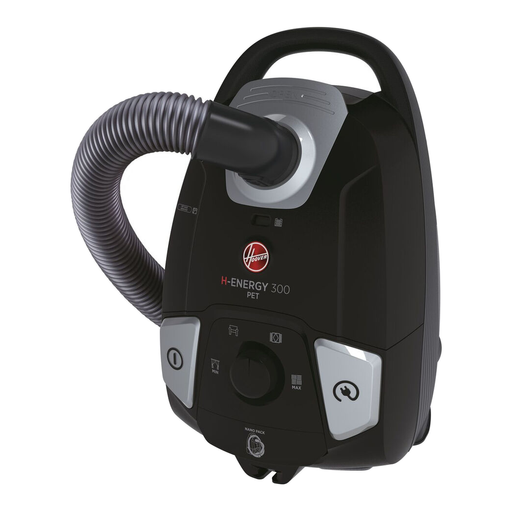 No image available
Consider this model if you want a bagged vacuum with a pet tool for cleaning after the move. The named variant has a 3.5 L capacity, a 7 m retractable cable and NanoPack storage; check the crevice tool’s fit against your sofa gap and the supplied electrical documentation before use.
 No image available
This 700 W Pet variant is worth considering if you need to clean pet hair as well as furniture gaps. Check which attachments come with the RHCV4601, whether its nozzle fits behind your sofa and the supplied electrical documentation before use.
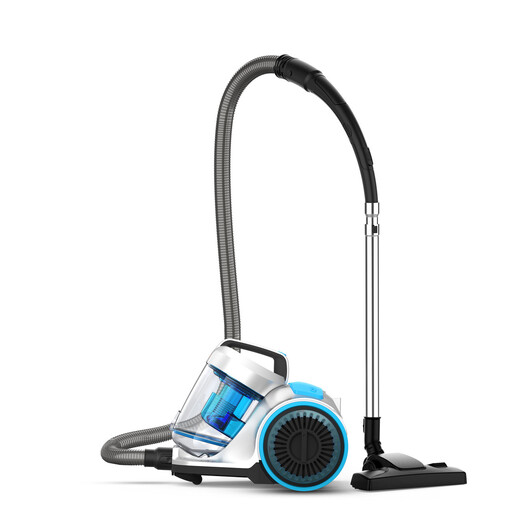 No image available
For cleaning both pet-hair surfaces and awkward spaces, check the CVRAV013’s included attachments and the dimensions of its crevice tool. Assess usable reach against your room layout rather than assuming separate cord and hose lengths give a total cleaning radius.
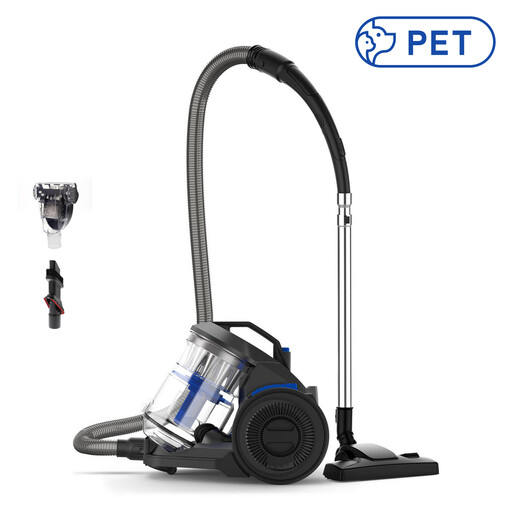 No image available
Consider this pet-focused cylinder for post-move cleaning only after checking that the exact bundle has the tools you need for upholstery and the sofa gap. Confirm its usable reach, nozzle fit and supplied electrical documentation before use.
It can be, provided its hose and crevice tool reach and fit the gap. Dyson’s UK format guidance describes cylinders as useful for hard-to-reach areas, but the dimensions and attachments of the particular model determine whether it will work behind your sofa.
For hair both behind the sofa and caught in its upholstery, the tools serve different purposes. Check for a crevice nozzle that fits the gap and a supplied pet or turbo attachment intended for the soft surfaces you need to clean.
Choose according to the emptying routine you prefer, not an assumed difference in pet-hair pickup. Bagged models need compatible replacement bags; bagless models need their bins emptied and any model-specific filter instructions followed.
Check that the supplied plug is appropriate for your socket and follow the product’s safety instructions. GOV.UK explains that electrical equipment placed on the Great Britain market is subject to the Electrical Equipment (Safety) Regulations 2016; a model’s individual compliance cannot be established from its name or listing alone.
Check your local council’s electrical-equipment collection arrangements or a retailer take-back option before discarding it. GOV.UK guidance on waste electrical and electronic equipment describes routes intended to support its recovery, reuse and recycling.