For dry debris around thresholds, choose a cylinder whose supplied narrow tool fits the gap, then check whether its stored size and weight work in your flat. A compact bagged model suits consumers who prefer contained disposal and can keep compatible bags on hand; a compact bagless model avoids replacement bags but needs bin and filter care. Consider a larger-capacity cylinder only if that capacity matters more to you than easy lifting and storage.
Who is this for?
Small-flat threshold cleaners
If cupboard space is limited and you regularly move the cleaner around hard-floor thresholds, compare its stored dimensions and lifting weight. Check the telescopic tube and the edge or crevice accessory supplied with the exact variant rather than assuming a floorhead will reach into a narrow gap.
Consumers who prefer contained disposal
A bagged cylinder may suit you if you would rather remove dry debris in a disposable bag and are willing to keep replacements available. Bosch describes dust as remaining in the bag during disposal; check the compatible bag code for the model you choose.
Consumers who want to avoid replacement bags
A bagless cylinder avoids buying bags, but its reusable bin still needs emptying and its filter needs care according to the model instructions. Allow any washed parts to dry fully before reassembly.
What matters when choosing?
Start with the fit of the tool and cleaner in your flat, then decide which disposal routine you would rather manage. Capacity and reach matter, but neither establishes whether a tool can enter your particular threshold gap.
| Concern |
What to check |
Who this matters to |
| Storage and lifting |
Measure the storage space against the stated dimensions, and check whether the quoted weight is for the cleaner alone or includes its tools. |
If the vacuum has to fit in a small cupboard and be carried between rooms, its size and lifting burden come first. Around 42% of consumers put storage and lifting first. |
| Threshold access |
Confirm the exact variant includes a narrow tool that fits your gap; check the floorhead against the surrounding hard floor. |
For debris caught beside a threshold, I need to direct a tool into the edge without relying on the main floorhead to fit. Roughly 33% of consumers make threshold access their primary concern. |
| Disposal and maintenance |
For bagged models, check the compatible bag code and supply. For bagless models, read the bin and filter cleaning instructions. |
I would choose between keeping replacement bags and taking time to empty and maintain a reusable bin. For about 25% of consumers, that disposal routine is the deciding concern. |
Buying pitfalls
-
Choosing capacity without checking where the cleaner will go
A larger dust container does not make a cylinder easier to lift or store. Bosch specifies a 3.0 kg cleaner-only weight for the BGBS2BA1GB, while Numatic specifies an 8 kg weight for the larger Henry HVR200; check each model's stated weight basis before comparing them.
Measure your storage spot and compare the exact model's dimensions. Treat capacity as a separate choice from the space and effort needed to handle the cleaner.
-
Assuming a floorhead reaches every threshold gap
A universal or hard-floor head can address the adjoining floor without necessarily fitting beside a narrow threshold.
Check which crevice or edge tool comes with your chosen variant, then compare the tool's width with the gap you need to clean.
-
Treating bagless as maintenance-free
Removing replacement bags from the routine still leaves a bin to empty and filters to maintain. Bosch instructs owners to let washed bagless parts dry for at least 24 hours at room temperature before refitting them.
Read the exact model's cleaning instructions and decide whether you have somewhere to leave washed parts until they are completely dry.
-
Using a dry-debris vacuum on damp material
Electrical Safety First advises against vacuuming wet floors unless the cleaner is designed for that use. It also advises against using a cleaner with a damaged plug or cord.
Keep this choice focused on dry debris, inspect the plug and cable before use, and follow the instructions for the exact model.
Brands to consider for these cylinder types
Bosch
Bosch offers examples of both compact bagged and compact bagless cylinders: the Series 2 BGBS2BA1GB and BGS05BU2GB.
- Bosch specifies a 3.5 L bag, 3.0 kg cleaner-only weight and 10 m operating radius for the BGBS2BA1GB. Its bagless BGS05BU2GB has a 1.5 L container, 4.4 kg cleaner-only weight and 9 m operating radius.
- The bagged model needs compatible replacement bags. The bagless model avoids bags but requires reusable-bin and filter maintenance; neither route removes the need to check the supplied threshold tool.
Miele
The Guard S1 is a bagged cylinder for consumers considering an adjustable telescopic tube, a universal floorhead and a 10 m operating radius.
- Miele describes the Guard S1 as light and compact and specifies a FiberTeQ universal floorhead.
- The Guard S1 uses replaceable TU HyClean Pure bags. Check their compatibility and supply, along with whether the exact accessory bundle reaches your threshold gap.
Numatic
Henry HVR200 illustrates the choice of a higher-capacity bagged cylinder when compact storage is not the overriding need.
- Numatic specifies a 9 L capacity, 10 m cable and hard-floor and combination tools for Henry HVR200.
- Its stated 8 kg weight and 340 × 360 × 370 mm dimensions deserve particular attention if you must lift it or store it in a small flat.
Joybuy product choices for compact cylinder cleaning
These bagged and bagless cylinders are choices to consider for dry debris in a small flat. Compare the exact tool bundle with your threshold gap, and check stored dimensions and lifting weight before deciding between models.
 No image available
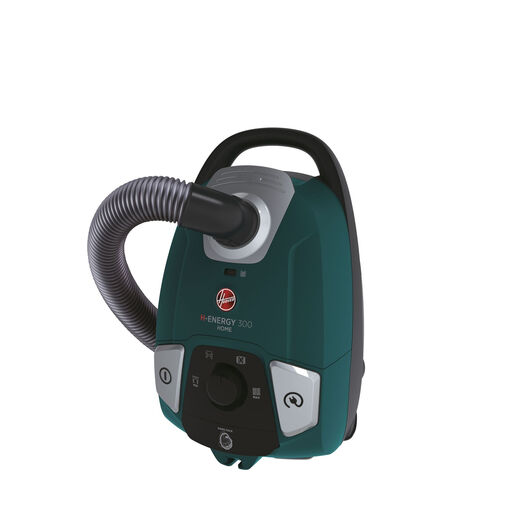
Hoover HE3 HE310HM bagged cylinder vacuum, 3.5 L NanoPack
Consider this bagged model if storing the cleaner and its attached components together appeals to you. Its stated capacity is 3.5 L; check its stored dimensions, lifting weight, compatible bags and whether the supplied narrow tool fits your threshold.
View on Joybuy
 No image available
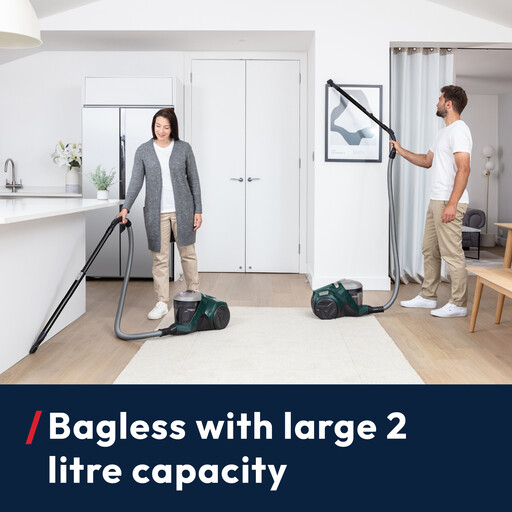
Hoover HP3 HP310HM bagless cylinder vacuum, 2 L
Consider this bagless model if avoiding replacement bags matters more than emptying a reusable bin. Its title specifies a 2 L capacity and 12 m reach; check the reach measurement, stored dimensions, lifting weight and narrow-tool fit for your flat.
View on Joybuy
 No image available
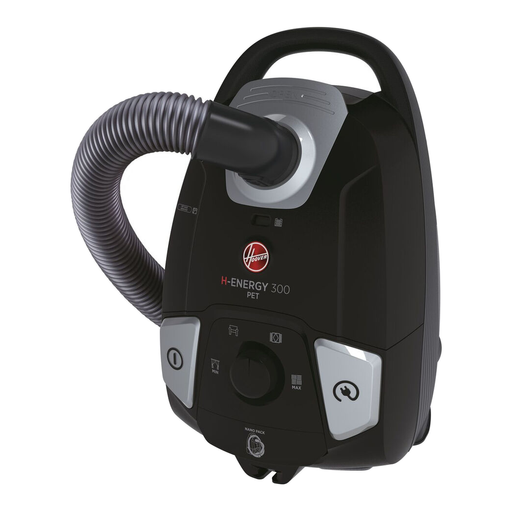
Hoover HE3 HE320PET bagged cylinder vacuum with pet tool, 3.5 L
This bagged HE3 variant is worth comparing if you also want the stated pet-tool bundle. Its title specifies a 3.5 L capacity and 7 m retractable cable; confirm the included threshold tool, stored dimensions, lifting weight and compatible bags.
View on Joybuy
 No image available
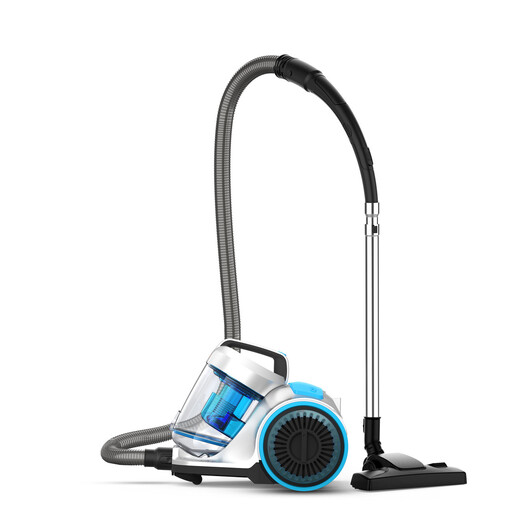
Vax Pick Up Pet CVRAV013 cylinder vacuum
Consider this bagless cylinder if you prefer emptying a reusable container to keeping replacement bags. Before choosing it for a tight threshold, check the width of its detail tool; also compare its stored dimensions and the stated weight basis with your lifting needs.
View on Joybuy
Common questions
Can a household cylinder vacuum clean a dry threshold?
Yes, provided the debris and adjoining floor are dry and a supplied tool fits the area. Electrical Safety First advises against using an ordinary vacuum on wet floors unless that specific cleaner is designed for wet use.
Is bagged or bagless easier to live with for small amounts of debris?
Choose bagged if contained disposal matters most and you can keep compatible bags available; choose bagless if you would rather empty and maintain a reusable container. For washed bagless parts, follow the exact model instructions and wait until they are completely dry before reassembly.
What should I check before committing to a bagged model?
Check the exact replacement-bag code and whether you can obtain compatible bags when needed. Miele, for example, lists TU HyClean Pure bags for Guard S1 and Guard L1; that compatibility should not be assumed for other models.
What electrical checks matter for a corded vacuum?
Check the plug and cable for damage before use, and read the instructions for the model you buy. Electrical Safety First advises against using a vacuum with a damaged plug or cord and recommends unplugging it when it is not in use.


