Bench-gap cleaners
If crumbs, grit or dust collect behind bench legs, the attachment’s shape and your control of the hose matter more than the cylinder body’s ability to fit nearby.


Choose a cylinder vacuum only after checking that its supplied attachment can enter the gap beneath the bench: a long hose cannot make a tall floorhead fit. In a small rented flat, weigh that access against storage space, carrying weight, floorhead suitability and whether you prefer bagged or bagless collection.
If crumbs, grit or dust collect behind bench legs, the attachment’s shape and your control of the hose matter more than the cylinder body’s ability to fit nearby.
If cupboard space is tight or you carry the vacuum between rooms, check its full weight, parked dimensions and where the tube and cable go when it is put away.
If handling collected debris is part of the decision, compare replacing a dust bag with emptying and maintaining a bagless bin.
Measure the space beneath the bench before comparing vacuums. Once an attachment can reach the debris, consider whether the whole machine fits your storage and cleaning routine.
| Concern | What to check | Who this matters to |
|---|---|---|
| Bench-gap access | Measure the lowest clearance and narrowest approach; compare both with the dimensions of the supplied crevice tool or floorhead. | If debris sits behind legs or close to a wall, I need an attachment that can enter the gap and reach it. Around 40% of consumers put bench-gap access first. |
| Storage and carrying | Compare parked dimensions, tube storage and full machine weight, rather than cleaner-only weight. | With little cupboard space or stairs to negotiate, I need a machine I can put away and carry comfortably. Storage and carrying come first for around 30% of consumers. |
| Collection and upkeep | Check whether the model uses bags or a bin, its stated capacity and the bags or filters it requires. | If I clear dry debris regularly, I want an emptying routine I can live with. Around 20% of consumers make collection and upkeep their primary concern. |
| Floor and furniture care | Identify the floor finish and confirm the appropriate supplied head and setting; consider how the body moves around furniture. | Where the bench stands on a floor I do not own, I want to avoid using an unsuitable head or setting. That is the leading concern for around 10% of consumers. |
A cylinder can fit neatly in a cupboard while its floorhead or tube joint is still too large to pass beneath the bench.
Measure the gap and the approach around the legs, then check the dimensions and inclusion of the attachment you intend to use.
Bosch lists its BGL38BA3GB at 4.5 kg for the cleaner alone and 6.4 kg net weight. Those figures answer different carrying questions.
Use the full or net weight when deciding whether you can move and store the complete vacuum comfortably.
The right head and setting depend on the floor beneath the bench. SEBO says its floor-suitability guidance is general and calls for the correct head and setting.
Identify the floor finish before use and follow the vacuum maker’s guidance; ask the landlord or flooring supplier if its care requirements are unclear.
Vacuum cleaners are electrical items that can go through electrical reuse or recycling routes.
Consider repair, donation or passing the machine on if appropriate. Otherwise, check local electrical recycling or retailer take-back options, as advised by Recycle Your Electricals.
Miele’s cited cylinder models illustrate two different approaches for a small flat: a bagged machine with flexible crevice tooling and a compact-bodied bagless machine.
The bagged AIRBELT K1 Red is worth considering when manoeuvring around bench legs and furniture is a priority.
The bagged BGL38BA3GB provides stated dimensions and weight figures that help with a storage and carrying decision.
The bagged Henry HVR160 presents a higher-capacity option where frequent dry-debris clear-ups and reach matter more than keeping the machine small.
These cylinder vacuums are choices to consider for dry-debris cleaning in a rented flat. For each one, check the attachment against your measured bench gap and the floorhead against the actual floor finish before deciding.
 No image available
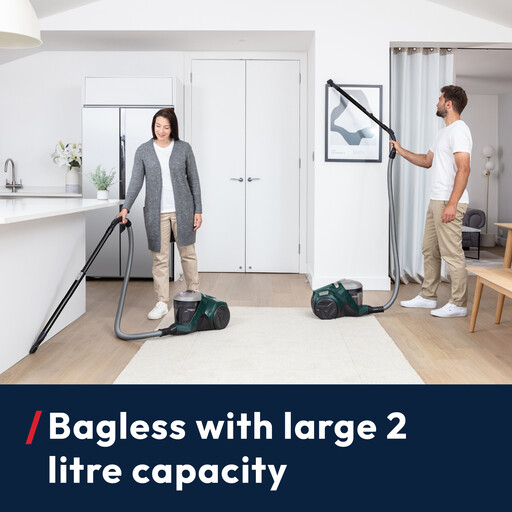
Consider this bagless model if avoiding replacement dust bags suits your routine, provided its supplied attachment fits beneath the bench.
The product title specifies a 2 L capacity, 12 m reach and HEPA H13 filter. Check the attachment dimensions, storage fit and floorhead suitability for your flat.
 No image available
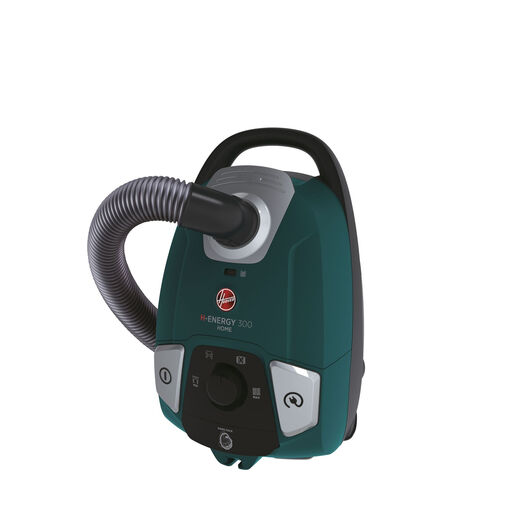
Consider this bagged model if storing the vacuum and handling collected debris are central to your choice, subject to checking its fit beneath the bench.
The product title specifies NanoPack storage, a 3.5 L capacity and 360-degree manoeuvrability. Check the full weight, attachment dimensions and appropriate floorhead setting.
 No image available
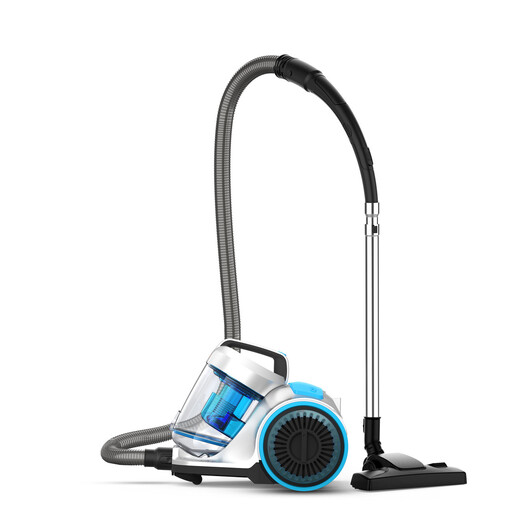
Consider this cylinder model for the under-bench task if its supplied narrow attachment can reach the debris without catching on the bench.
Check its attachment profile, the space needed to store the body and tube, and whether its floorhead suits the flat’s floor finish.
 No image available
Consider this model if its supplied attachment fits the bench opening and the machine fits your intended storage space.
The product title specifies a 3 L capacity, 700 W rating and grey-and-purple finish. Check its collection format and the suitable floorhead setting before choosing a maintenance routine or using it on the rented floor.
Measure the lowest gap and the narrowest route around the bench legs, then compare them with the supplied floorhead and crevice tool. A flexible tool may help around an obstruction, but it still has to fit through the opening.
Choose according to the collection routine you prefer: a bagged model uses replaceable bags, while a bagless model requires you to empty its bin. Compare the exact model’s capacity, compatible consumables and filter-care instructions alongside its size and weight.
Check the head and its recommended setting against the actual floor finish before use. SEBO, for example, says its floor-suitability guidance is general and that the correct head or setting matters; ask the landlord or flooring supplier if the finish’s care requirements are unclear.
Consider repair or passing it on if it is suitable for reuse; otherwise, look for a local electrical recycling or eligible retailer take-back route. Recycle Your Electricals advises recycling unwanted vacuum cleaners as electrical items.