
24/7 Customer Support

Free returns

Same-day & Next-day Delivery

Quality Guaranteed

Unlock Your Welcome Offers: FREE Delivery | Up to 80% OFF | Free 30-day JoyPlus trial
Download the APP
Replacing ageing HID or Xenon lamps can improve visibility and reduce the inconvenience of frequent bulb changes, but choosing D1S D2S D3S LED headlight bulbs is not simply a matter of selecting the highest lumen figure. Socket type, ballast arrangements, beam control and vehicle electronics all affect whether a replacement works properly.
For UK drivers, the wrong bulb can lead to poor road illumination, dashboard warnings, flickering or an unacceptable beam pattern. Use the checks below before ordering a D-series LED replacement.
D-series codes are not interchangeable. A D1S bulb generally has an integrated igniter, while D2S systems commonly use an external ballast. D3S applications use a different fitting and electrical arrangement again. A product described as D1S/R LED bulbs, D2S/R LED bulbs or D3S/R LED bulbs may cover projector and reflector variations, but it still needs to match your vehicle’s original lamp specification.
Check the marking on the removed HID bulb, the vehicle handbook or a reputable parts catalogue. Do not rely on the car model alone, as the same model can use different headlamp systems depending on trim and production specification.
A listing may advertise 110W LED headlight bulbs or 21000 lumen car bulbs, but a high headline figure does not automatically mean a better beam on the road. Reflector shape, projector optics, chip placement and alignment determine how light is distributed.
Look for information about a focused beam pattern, chip positioning and glare control. A replacement that produces scattered light can be uncomfortable for oncoming drivers and less useful to the person behind the wheel, even if its laboratory lumen figure appears impressive.
CANbus error-free bulbs are designed to reduce warning messages, flicker and communication problems in compatible vehicle systems. They cannot guarantee that every Audi, BMW, Mercedes-Benz, Volkswagen or Lexus will operate without an additional decoder.
Some vehicles may still need a CANbus adaptor, a resistor solution or coding. Before installation, check whether the bulb is suitable for your car’s monitoring system and whether the original ballast must be bypassed.
Confirm the exact bulb family first: D1S/R, D2S/R or D3S/R. Also verify that the vehicle uses a 12V system. Many D2S installations use an external HID ballast, and an LED replacement may need the ballast bypassed or removed so that it receives direct 12V power.
This is not always a simple swap. If the headlamp housing is difficult to access, an automotive repairer can check the wiring and mounting position before purchase.
A suitable replacement should sit in the same position as the original light source. Features such as ultra-thin CSP chip spacing and 1:1 positioning are intended to help preserve the original optical alignment. They are useful specifications to compare, but the result still depends on the condition and design of the vehicle’s headlamp assembly.
After fitting, inspect the cutoff and beam direction on a level surface. A professional beam check is advisable if the light appears uneven, points too high or produces excessive glare.
LED headlight bulbs generate heat around the chip and driver. Aluminium construction and an integrated fan can help move heat away from the light source. An IP68 waterproof rating is a stated enclosure feature, not a guarantee against every installation problem, condensation issue or damaged dust cover.
A 6000K cool white headlight produces a noticeably whiter appearance than many warm-coloured halogen or ageing HID lamps. However, colour temperature is a preference rather than a direct measure of road performance. Check that the bulb’s fan, driver and dust-cover clearance suit the headlamp housing.
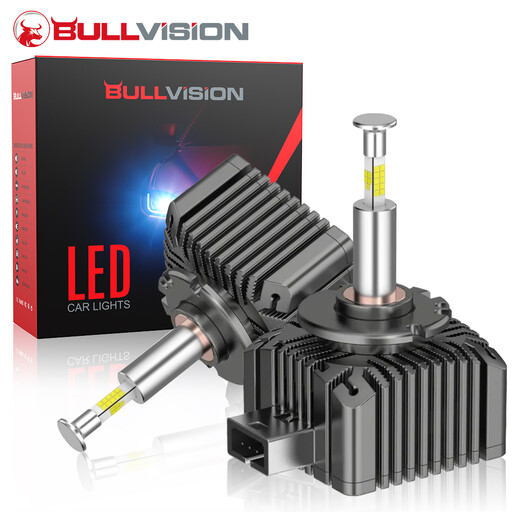
Why This Fits Their Persona: A practical two-pack for drivers replacing standard D2S or D2R HID bulbs in compatible 12V cars, including selected Audi, BMW, Mercedes-Benz, Volkswagen and Lexus applications.
The listing specifies D2S/R fitment, a 1:1 beam pattern design and CANbus-ready operation rather than relying only on a lumen headline.
110W stated rating, 6000K colour temperature, aluminium housing, IP68 water resistance and a built-in fan.
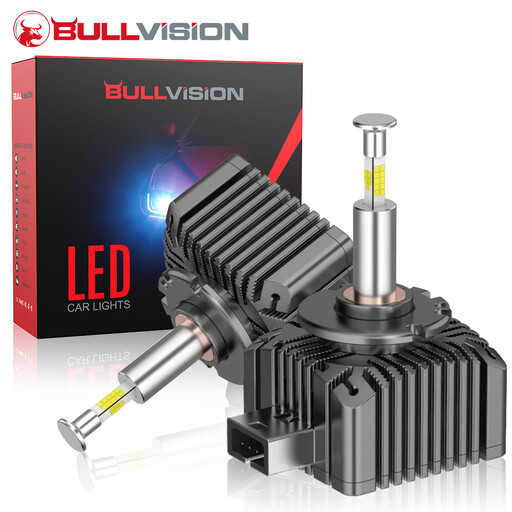
Why This Fits Their Persona: Suited to owners who have confirmed a D1S or D1R system and want a defined specification set with a cool-white appearance and integrated thermal management.
Its listed bulb family helps prevent the common mistake of ordering a visually similar but electrically different D-series lamp.
The product details list CSP chips, CANbus-ready design, IP68 water resistance and a stated 50,000-hour operating life.
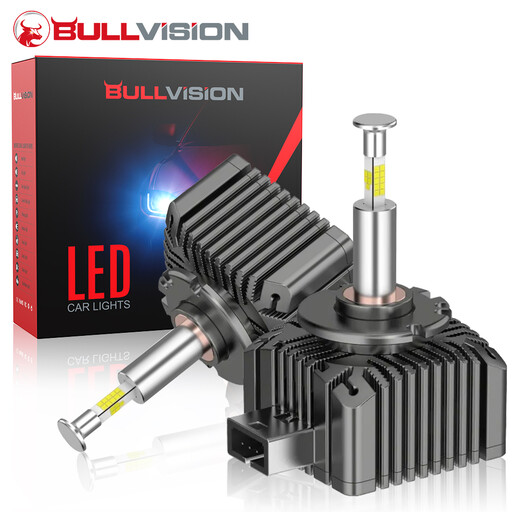
Why This Fits Their Persona: A direct option for drivers with D3S or D3R HID headlamps who regularly drive at night, on rural roads or in wet UK conditions.
The D3S/R specification is clearly stated, while the cooling fan and water-resistant housing address heat and moisture considerations.
Two-bulb pack, 6000K cool white output, integrated fan and stated IP68 water resistance.
Before fitting any plug-and-play headlight bulbs, switch off the vehicle, allow the old lamp to cool and avoid touching the LED or HID light source with bare fingers. Some products become hot during operation, so follow the supplied instructions and check that the fan and rear housing do not obstruct the dust cover.
After installation:
LED fog light bulbs are a separate product category and should not be assumed to replace D-series headlamps. If you are unsure about ballast bypassing or beam alignment, ask a qualified automotive repairer to complete the work.
No. The three fitting families have different physical and electrical characteristics. Match the replacement to the original bulb marking and confirm the vehicle’s headlamp system before ordering.
Potentially, but the actual running cost depends on the vehicle’s wiring, ballast arrangement and the bulb’s real power draw. A stated 110W rating should be treated as a product specification, not an automatic guarantee of lower energy use.
Some listings state an operating life of 50,000 hours, but real service life can be affected by heat, fan wear, vibration, moisture and installation quality. Keeping the housing sealed and ensuring adequate cooling can help the bulbs operate as intended.