
24/7 Customer Support

Free returns

Same-day & Next-day Delivery

Quality Guaranteed

Unlock Your Welcome Offers: FREE Delivery | Up to 80% OFF | Free 30-day JoyPlus trial
Download the APP
Replacing ageing xenon lights can improve clarity and restore consistent illumination, but choosing HID replacement LED bulbs is not simply a matter of selecting the highest lumen figure. Vehicle compatibility, beam control, heat management and electrical communication all affect whether an upgrade works properly.
Many UK drivers encounter the same purchasing pitfalls:
First, check the marking on the existing bulb, the vehicle handbook or the headlamp housing. Common formats include:
The “S” and “R” suffixes can indicate different original optical applications. A replacement marketed for both may physically fit, but the headlamp’s projector or reflector still determines the final beam. Do not fit these products to a halogen or factory LED assembly unless the listing specifically confirms compatibility.
6000K white headlights generally produce a cool white appearance, while 6500K can look slightly bluer. This is mainly a colour description, not a direct measurement of visibility.
For regular UK driving, consider whether the appearance suits your headlamp lenses and weather conditions. Very blue light can appear harsh in rain or mist. More importantly, check that the LED chips are positioned to replicate the original filament or arc location. A 1:1 LED headlight bulb design may help preserve the projector’s intended focal point, reducing stray light and glare.
LED chips produce heat at the rear of the bulb. Products in this category commonly use an aluminium body, copper elements and a built-in fan. A cooling fan LED bulb may support heat dissipation, but it also introduces a moving component and requires clearance behind the dust cap.
Check:
A built-in fan does not remove the need for correct installation. Switch off the lights, allow existing HID components to cool and follow the vehicle and product instructions. HID systems can involve high voltage, so drivers who are not comfortable working around headlamp wiring should use a qualified garage.
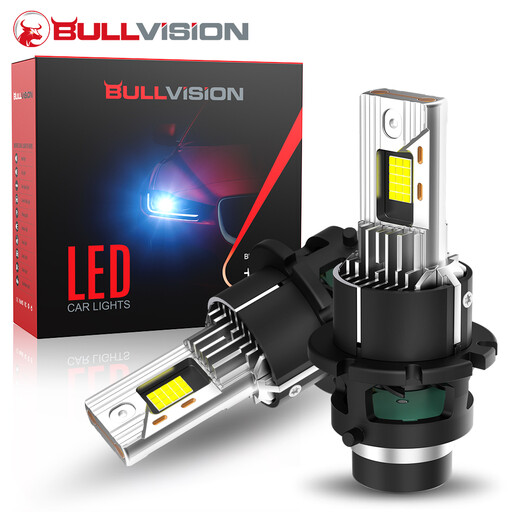
Why This Fits Their Persona: A compact D2S/R option for drivers wanting a straightforward change from older HID bulbs without selecting a higher-output specification.
Its stated 1:1 mini-size design addresses the risk of a replacement fouling the rear cover or fitting poorly.
6000K cool white output, CSP chips, built-in fan and stated 20,000LM output.
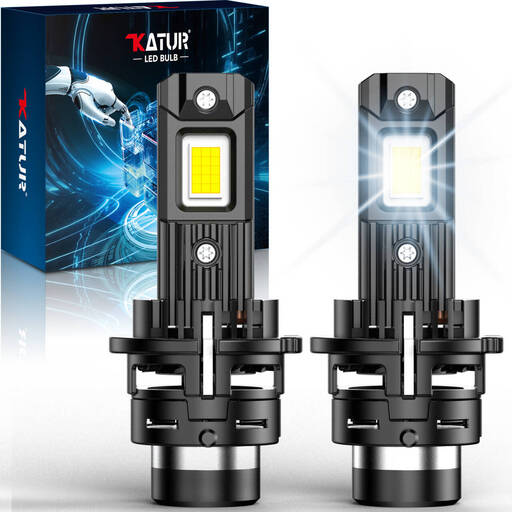
Why This Fits Their Persona: Suited to D2S HID owners who prioritise a whiter appearance, rapid start-up and an integrated design without external wiring.
The listing specifies a 1:1 fit, integrated driver and no extension wires, helping reduce installation complexity.
Advertised 6500K colour, 100W design, 16,000RPM fan and stated lifespan of up to 60,000 hours.
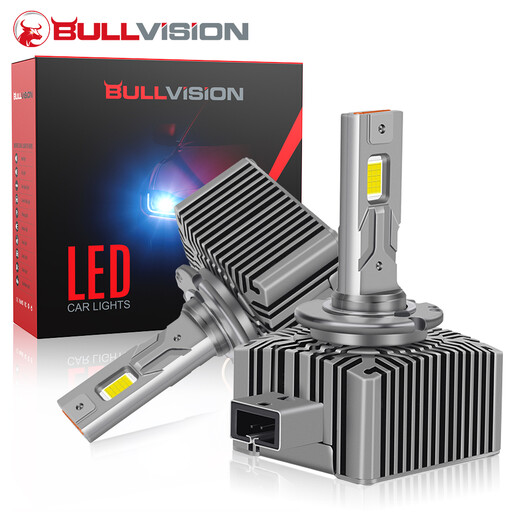
Why This Fits Their Persona: A practical choice for D3S/R drivers who regularly travel on unlit roads and need a replacement designed for frequent night use.
Its stated original-size and 1:1 beam-pattern approach focuses on optical alignment rather than brightness figures alone.
6000K light, 10,000RPM fan, IP68 listing and stated 50,000-hour operating life.
After fitting, compare both beams on a flat surface and arrange a professional headlamp alignment if necessary. A bulb that physically fits can still create an unsuitable beam if the LED emitter does not sit at the correct focal point. Excessive glare can inconvenience other road users and may lead to an MOT concern if the lamp aim or beam pattern is unacceptable.
Also check the product documentation and your vehicle’s requirements before conversion. UK roadworthiness and lighting rules can depend on the complete headlamp assembly, not just the bulb. Keep the original HID bulbs until the replacement has been confirmed to work correctly.
We have compiled a complete, real-time list of products that fully satisfy these strict selection criteria and UK safety regulations.
Not necessarily. The base may match, but available rear space, projector design and the vehicle’s CANbus system can vary. Confirm the exact bulb code and check whether the listing supports your model before ordering.
They may have a different rated wattage, but actual consumption depends on the bulb and driver. Compare the published wattage rather than assuming every LED conversion will reduce running costs. Correct heat management and stable electrical operation are also important.
Listings may state 50,000 or 60,000 hours, but real service life depends on heat, vibration, voltage and usage. Treat these figures as product specifications rather than a guaranteed lifespan. A fan, aluminium housing and unobstructed airflow can support more consistent operation.