
24/7 Customer Support

Free returns

Same-day & Next-day Delivery

Quality Guaranteed

Unlock Your Welcome Offers: FREE Delivery | Up to 80% OFF | Free 30-day JoyPlus trial
Download the APP
Replacing factory-fitted HID bulbs can improve the appearance and usability of your headlamps, but choosing the wrong D3S D3R LED headlamp bulbs may create fitting, warning-light or beam-pattern problems. Many listings use impressive lumen figures while giving limited information about compatibility, heat management or the original headlamp design.
This guide explains the checks that matter before buying D3S LED bulbs, D3R LED bulbs or D3S/R replacement bulbs for UK driving.
D3S bulbs are generally associated with projector headlamp systems, while D3R bulbs are designed for reflector systems and include features intended to manage stray light. Although some products are listed as D3S/R compatible, the correct choice still depends on your vehicle’s original bulb type and headlamp assembly.
Check the marking on the old bulb, the vehicle handbook or a reliable parts catalogue before ordering. A bulb that physically fits may not produce the correct beam in a different optical system.
Listings may advertise figures such as 20,000LM LED headlamps, 21,000LM or 30,000LM. These figures are product-listing specifications, not a guarantee that the light reaching the road will be proportionally brighter. Beam focus, reflector condition, projector lenses, headlamp alignment and road conditions all affect usable illumination.
A well-positioned LED chip and a suitable beam pattern can matter more than a larger headline number.
CANbus-compatible headlamp bulbs are designed to reduce dashboard warnings, flickering or compatibility issues. However, vehicle electrical systems differ, and some cars may still require an additional decoder or resistor. Treat claims such as “99% compatibility” as a stated product feature rather than a universal guarantee.
Also check whether your vehicle has factory HID ballasts. Some HID to LED conversion bulbs connect through the existing ballast, while others may require a particular connection method.
Confirm all of the following before purchasing:
A 1:1 plug-and-play LED bulb design can simplify installation, but “plug and play” does not remove the need to check clearance or ballast compatibility.
Many replacement bulbs use 6000K LED headlamp bulbs, producing a cool white appearance. This can look whiter than traditional HID lighting, but colour temperature should not be confused with brightness. A higher Kelvin rating does not automatically mean more road illumination and may produce a bluish appearance that some drivers find less comfortable in rain or mist.
A 6000K specification is a practical middle ground for buyers seeking a cooler appearance without selecting an especially blue colour.
LED conversion bulbs generate heat around the chips and require effective dissipation. Common features include:
Cooling fan LED bulbs may need extra rear clearance and can produce a low operating noise. Check that the fan is not obstructed by the dust cap or surrounding components. Product listings may quote operating lives of 50,000 or 60,000 hours; these are stated specifications and can vary with temperature, installation and vehicle use.
The bulb should position its LED chips similarly to the original HID light source. A poorly positioned replacement can create dark areas, excessive glare or an unfocused beam, even if the bulb appears bright.
After installation, check the beam alignment and ensure the headlamp remains suitable for road use. UK drivers should also confirm that the conversion is appropriate for their vehicle and headlamp assembly and that the lamps do not cause glare to oncoming traffic. If the beam cannot be aligned correctly, professional fitting is advisable.
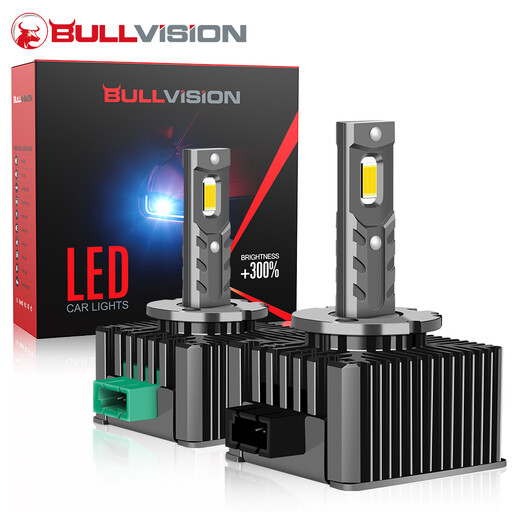
Why This Fits Their Persona: A straightforward option for DIY motorists wanting a cool-white D3S/R replacement without changing the complete headlamp assembly. The original-size design is suited to buyers prioritising uncomplicated fitting.
The listing specifies 1:1 sizing, plug-and-play installation and CANbus readiness, helping address common fitment and dashboard-warning concerns. Vehicle compatibility should still be confirmed first.
6000K cool white output, 20,000LM listed brightness, 1:1 size and a 2-pack format.
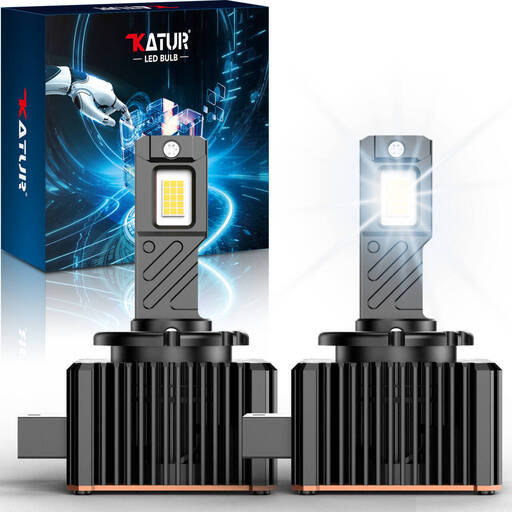
Why This Fits Their Persona: Suitable for drivers who place greater emphasis on listed output, rapid start-up and integrated thermal management when upgrading factory HID headlamps.
Its listing identifies a 1:1 design, integrated driver and cooling fan, avoiding the need for external wiring modifications. The advertised CANbus compatibility remains vehicle-dependent.
6500K white colour, listed 30,000LM output, 0.01-second start-up claim and a 16,000RPM cooling fan specification.
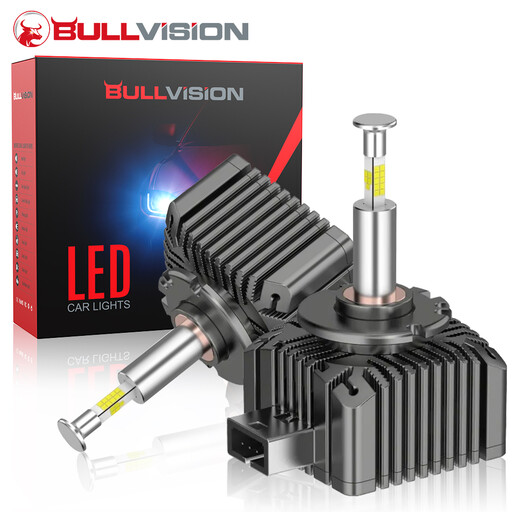
Why This Fits Their Persona: A practical match for frequent night-time drivers and motorists covering long distances who want a fan-cooled, dual-bulb replacement for compatible HID assemblies.
The listing combines an aluminium body, built-in fan, IP68 waterproof specification and CANbus-ready design. These features address heat and warning-light concerns, subject to correct vehicle fitment.
110W and 21,000LM listed specifications, 6000K colour temperature, cooling fan and 2-pack format.
We have compiled a complete, real-time list of products that fully satisfy these strict selection criteria and UK safety regulations.
Not automatically. Some products are listed for both D3S and D3R applications, but the headlamp assembly and original bulb specification must match. Check the vehicle manual and the original bulb marking before ordering.
It depends on the product and vehicle. Some LED conversion bulbs are designed to work with the existing HID system, while others use an integrated driver or a different connection arrangement. Confirm the listing details and wiring layout before installation.
Product listings may state operating lives from 50,000 to 60,000 hours. These are manufacturer or seller specifications rather than a guarantee for every installation. Actual service life can be affected by heat, moisture, fan obstruction, voltage and driving patterns. Proper fitting and ventilation can help the bulbs operate as intended.