
24/7 Customer Support

Free returns

Same-day & Next-day Delivery

Quality Guaranteed

Unlock Your Welcome Offers: FREE Delivery | Up to 80% OFF | Free 30-day JoyPlus trial
Download the APP
Finding a daily face sunscreen that you’ll actually want to wear every day can feel like an impossible task. The market is flooded with options, but many fail to live up to their promises, leaving you with a greasy finish, a ghostly white cast or worse, irritated skin. As your Joybuy Product Recommendation Officer, my role is to help you navigate the clutter and identify what truly matters.
Many of us have been caught out by common shopping pitfalls. Before you spend another pound, let's look at the frequent traps that prevent you from finding the right facial sunscreen:
To avoid these issues, it pays to understand a few core parameters. Focusing on these will help you select a product that not only protects your skin but also feels comfortable enough for daily wear.
The Sun Protection Factor (SPF) number on a bottle primarily indicates the level of protection against UVB rays, which are the main cause of sunburn. For daily use in the UK, an SPF 30 is a solid baseline, while an SPF 50 for face offers a higher level of protection, particularly if you spend time outdoors or have concerns about pigmentation.
However, UVA rays are present all year round, even on cloudy days, and can penetrate glass. They are a primary driver of premature skin ageing, contributing to wrinkles and loss of firmness. Always look for the term "broad-spectrum" or the UVA logo (UVA in a circle) on UK and EU packaging. This ensures the product provides proportional protection against both types of harmful rays.
The texture and finish—often called 'cosmetic elegance'—are what separate a good sunscreen from one that sits unused in a drawer. Modern formulations have come a long way from the thick, sticky creams of the past.
If you have reactive skin, finding a sunscreen for sensitive skin in the UK is a top priority. Look for products that are fragrance-free and specifically tested on sensitive skin. Ingredients like ceramides can help support the skin's natural barrier, while antioxidants like Vitamin E can offer additional protection against environmental stressors. For those looking to address concerns like dullness or dark spots, some sunscreens are now fortified with ingredients like Vitamin C.
Based on these practical criteria, here are a few options that align with different user needs and preferences.
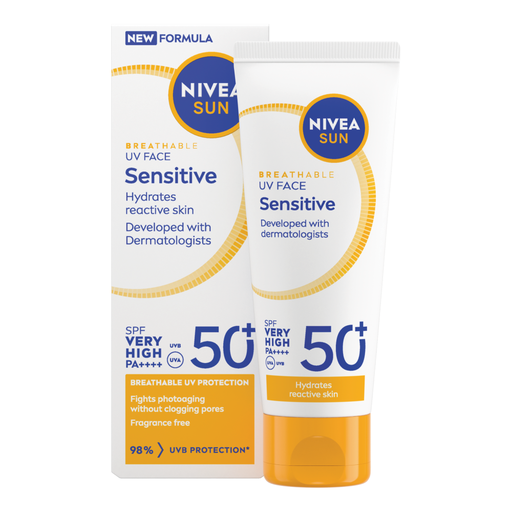
Why This Fits Their Persona: This is for the person who needs reliable, high-level protection for incidental exposure during their commute and workday. Their primary concern is avoiding irritation, redness and that heavy 'sunscreen' feeling.
It directly counters the "one-size-fits-all" trap by being specifically developed for sensitive skin. The lightweight, non-comedogenic formula is designed to soothe and prevent sun-induced irritation.
Offers high SPF50+ broad-spectrum protection in a 0% greasy formula that leaves an invisible finish, making it comfortable for all-day wear.
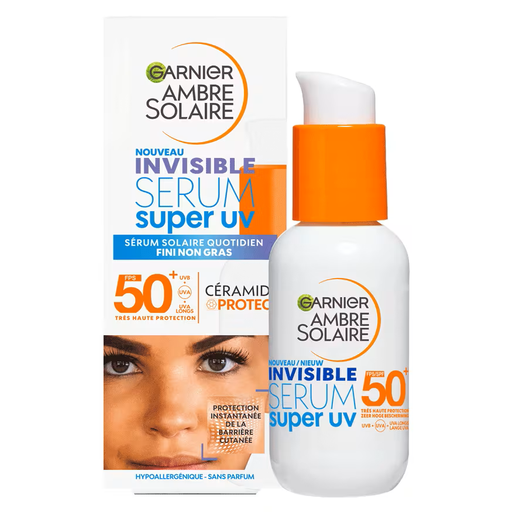
Why This Fits Their Persona: This user needs a facial sunscreen that acts as a perfect primer. It must be completely transparent, non-sticky and create a smooth surface for foundation without pilling or causing makeup to slide off.
It tackles the "invisible finish" myth head-on. The serum texture is specifically designed to be lighter than a cream and become invisible on all skin tones, leaving no white marks or greasy film.
Its primary benefit is its texture and finish, making it ideal as a makeup base. It also contains Ceramide to help reinforce the skin barrier.
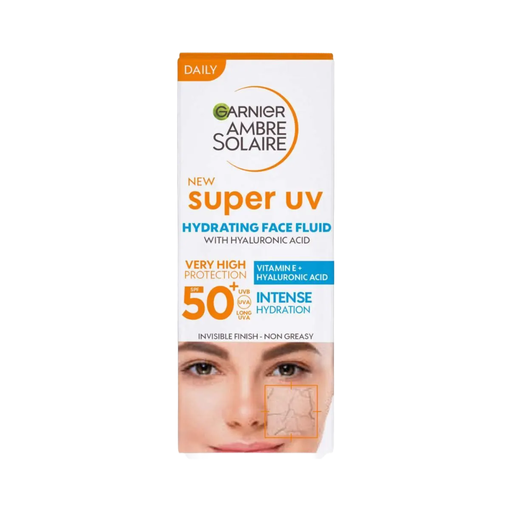
Why This Fits Their Persona: This person wants their sunscreen to work harder. They are looking for a multi-tasking product that provides high-level UV protection while also actively helping to improve their skin's radiance and evenness.
This avoids the trap of being just a basic sunscreen. It moves beyond simple protection by incorporating active skincare ingredients, satisfying the demand for a product that does more than one job.
The formula is enriched with Vitamin Cg, Glycerin and Vitamin E to help boost glow and prevent uneven skin tone, all within an ultra-light, non-comedogenic fluid.
We have compiled a complete, real-time list of products that fully satisfy these strict selection criteria and UK safety regulations.
A commonly cited guideline for the face and neck is the "two-finger rule." Squeeze a line of sunscreen onto your index and middle fingers from base to tip. This amount, typically around 1/4 to 1/2 a teaspoon, is what's needed to achieve the level of protection stated on the bottle. Applying less will significantly reduce the SPF.
While you can, it's not always ideal. Facial sunscreens are specifically formulated to be lighter, less greasy and non-comedogenic. Body sunscreens can be thicker and heavier, which may feel uncomfortable on the face or lead to clogged pores and breakouts for some individuals.
Yes, it is still highly recommended. UVA rays, which are responsible for premature ageing, can penetrate standard window glass. If you sit near a window at home or in the office or during your daily commute, your skin is still being exposed to UV radiation. Making a daily face sunscreen a consistent part of your morning routine is a simple way to ensure you're protected.