
24/7 Customer Support

Free returns

Same-day & Next-day Delivery

Quality Guaranteed

Unlock Your Welcome Offers: FREE Delivery | Up to 80% OFF | Free 30-day JoyPlus trial
Download the APP
Choosing daily multivitamin supplements can seem straightforward until you compare adult multivitamins, women’s multivitamins, children’s multivitamins, liquid multivitamins, gummies and tablets. Packaging often highlights “energy”, “immunity” or “wholefood” ingredients, but these terms do not tell you whether the formula suits your age, diet or existing supplements.
A sensible purchase starts with the label rather than the front of the pack. Here are the main traps to avoid and the specifications worth checking before you buy.
A long ingredient panel may look impressive, but higher amounts are not necessarily appropriate for everyone. Some products contain iron, vitamin A, vitamin K or high levels of zinc, while others are deliberately iron-free. Taking overlapping products can also lead to unnecessary intake.
Check the serving size, not only the amount per tablet or gummy. A product that provides its listed nutrients across three tablets may be less convenient than a one-a-day capsule, even if both have extensive formulas.
Gummies and liquid multivitamins may be easier to take, but they can contain sweeteners, sugar, preservatives or flavourings. Tablets and capsules may offer a more compact formula, but they are less suitable for people who have difficulty swallowing.
“Natural”, “wholefood” and “plant-based” describe the source or formulation approach; they do not remove the need to check nutrient quantities, allergens and usage instructions. Look for clear nutritional information and avoid relying on vague claims about absorption.
Baby vitamin drops, children’s gummies and adult multivitamins are not interchangeable. Children’s products have age-specific doses, and some contain iron or vitamin A that requires particular care. Products intended for infants may include a syringe or measured spoon because accurate dosing matters.
Always follow the stated age range and daily dose. Keep supplements out of children’s reach, especially products that resemble sweets.
Compare the actual quantities of vitamins and minerals with the UK Nutrient Reference Value (NRV) where shown. Pay particular attention to:
A multivitamin should complement a varied diet rather than replace it. If you have a diagnosed deficiency, do not assume a general product provides the right treatment or dose.
Choose the format you are most likely to take consistently:
Take products with food when the label recommends it. This can also make formulas containing fat-soluble vitamins more comfortable to take.
Vegan multivitamins may use plant-based capsules or pectin rather than gelatine, but “vegan” does not automatically mean allergen-free. Check for soya, barley, fish-derived omega-3 and other ingredients.
If you want omega-3 multivitamins, confirm whether the omega-3 comes from flaxseed ALA, algae or fish oil. These are different sources and should not be treated as identical. For an iron-free product, make sure iron is absent from the nutrition panel as well as the ingredients list.
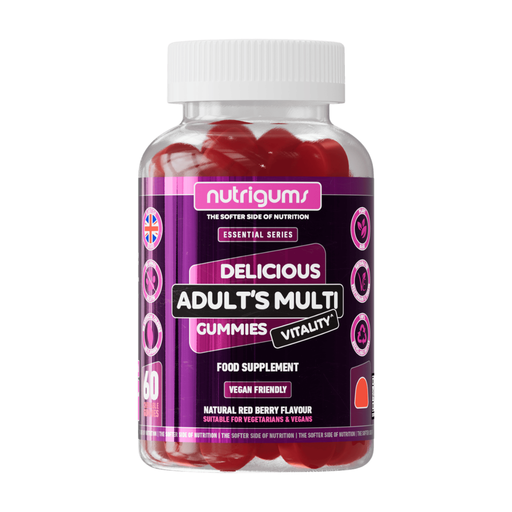
Why This Fits Their Persona: A one-gummy-per-day format is straightforward for adults starting a daily routine, including those who prefer not to swallow tablets.
The label states one gummy daily and identifies the formula as vegan and pectin-based, helping shoppers avoid unclear serving sizes and gelatine.
Provides vitamins A, C, D3, E, B6 and B12; suitable for vegan and vegetarian diets.
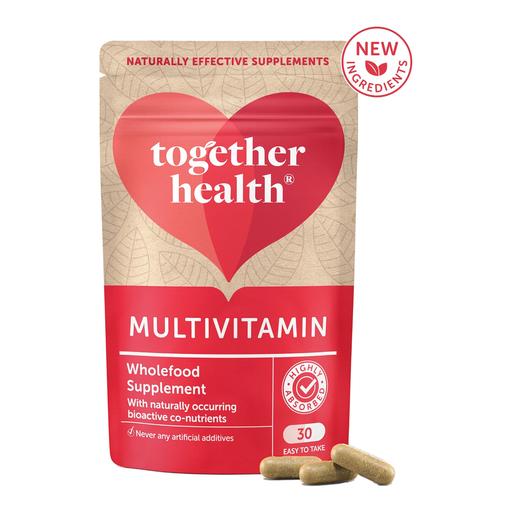
Why This Fits Their Persona: Suitable for adults looking for a one-a-day, plant-based wholefood multivitamin rather than a flavoured chewable.
The product information lists its plant, algae and mineral sources and provides a full per-capsule nutrient panel rather than relying only on broad wellness language.
One capsule supplies 21 listed vitamins and minerals; the capsule is suitable for vegetarians and vegans.
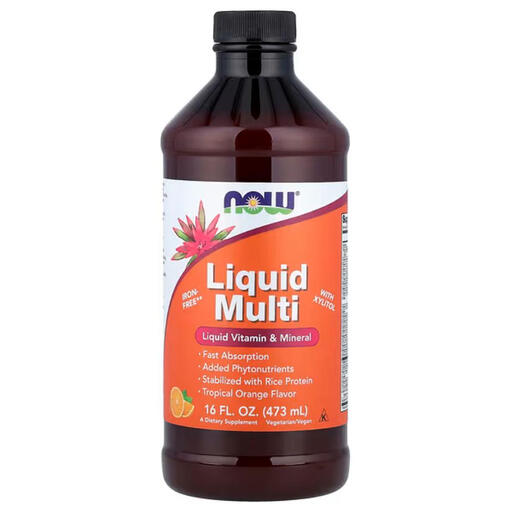
Why This Fits Their Persona: A practical option for adults who prefer liquid multivitamins or specifically need an iron-free formula.
The product is clearly labelled iron-free, with a stated 15 ml serving and instructions to shake well and refrigerate after opening.
Vegan and non-GMO; includes added fruit blend, grape seed extract, lutein and lycopene.
We have compiled a complete, real-time list of products that fully satisfy these strict selection criteria and UK safety regulations.
They can help top up dietary intake when meals are inconsistent or a specific format makes regular use easier. They are not a substitute for a varied diet, and a general multivitamin may not address a diagnosed deficiency.
Neither format is automatically better. Liquid products can be useful for people who cannot swallow tablets, while tablets and capsules are usually easier to store and measure. Choose according to the label, dose and your routine.
Follow the product label. Some liquid multivitamins need refrigeration and should be used within a specified period after opening. Keep all supplements sealed, dry and away from direct sunlight, and check the best-before information before use.