For a cold or unheated basement, start with a desiccant dehumidifier; for a reliably warmer space, a compressor model may be the more suitable choice if energy use is a priority. Electrical Safety First distinguishes the two technologies on temperature suitability, but the operating range and drainage arrangement still need checking for the exact model. If a leak or building defect is causing the damp, address that source rather than relying on a dehumidifier alone.
Who needs to consider what?
People with cold, unheated basements
If the space stays cold, check whether a dehumidifier's technology and stated operating range suit those conditions. Electrical Safety First identifies desiccant models as better suited to cooler or unheated environments.
People managing persistent damp air
If the unit may need to run regularly, consider how you will empty its tank or route a continuous drain. Extraction ratings, humidity controls and the manufacturer's instructions also matter.
Households tracing a damp source
Damp patches, mould, musty odours or suspected water ingress call for investigation. Manchester City Council advises repairing the cause of penetrating damp, rising damp or defective plumbing rather than treating moisture in the air as the whole problem.
What matters when choosing?
For a basement dehumidifier, establish where the moisture comes from and how cold the room gets before comparing extraction ratings. Electrical Safety First notes that desiccant models suit cooler spaces but may use more energy overall.
Desiccant dehumidifier
Consider when: The basement is cold or unheated and the chosen model's stated operating range covers its conditions.
Trade-off: Electrical Safety First says desiccant models may use more energy overall; compare the selected model's power use for the way you intend to run it.
Compressor dehumidifier
Consider when: The basement stays reliably warmer and the model's operating range suits the space.
Trade-off: A compressor model may be less suitable in cooler or unheated conditions; do not judge its basement fit from a headline extraction rating alone.
| Concern |
What to check |
Who this matters to |
| Cold-room suitability |
Compare the basement's temperature with the exact model's stated operating range and extraction-rating conditions. |
If my basement is unheated, I need a unit suited to its actual temperature. Around 29% of consumers put cold-room suitability first. |
| Water disposal |
Check tank capacity and shut-off, or confirm that a continuous-drain option and a workable drain route are available. |
When damp air needs ongoing attention, I want a way to manage collected water without frequent trips to the basement. For around 24% of consumers, water disposal is the primary concern. |
| Cause of damp |
Investigate possible leaks, defective plumbing, rising damp or penetrating damp before treating extraction as the solution. |
If water is entering the building, I need the cause dealt with rather than an appliance-only response. This is the first concern for around 29% of consumers. |
| Safe, manageable use |
Check the product instructions for placement, airflow, maintenance and any unattended use. |
Where the unit will sit out of sight, I need to know how to place and maintain it safely. Around 18% of consumers make safe, manageable use their main priority. |
Common buying mistakes
-
Using a dehumidifier instead of fixing water ingress
A dehumidifier can assist drying, but it cannot repair a leak, defective plumbing, rising damp or penetrating damp. Manchester City Council advises fixing the cause of the problem.
Investigate the source and arrange appropriate repairs; use moisture extraction alongside or after that work where it is helpful.
-
Choosing a compressor model without checking temperature
Electrical Safety First identifies desiccant technology as better suited to cooler or unheated spaces. A compressor model's headline capacity does not establish how it will suit a cold basement.
Check whether the space is regularly heated, then compare the exact models' stated operating ranges.
-
Looking only at litres per day
Extraction ratings do not tell you how collected water will be handled. A full-tank shut-off can interrupt operation until someone empties the tank.
If regular emptying is impractical, check for a continuous-drain option and follow the manual's hose-routing requirements.
Without a suitable drain, tank emptying remains a regular task.
-
Blocking airflow or assuming unattended use is permitted
Restricted airflow and neglected vents or drainage can impair operation. Electrical Safety First advises against leaving a dehumidifier unattended unless the manufacturer says it is safe.
Allow the specified clearance, maintain filters and drainage, and follow the exact model's unattended-use instructions.
Brands to consider for basement use
EcoAir
EcoAir is relevant to shoppers considering a desiccant model for a colder basement. Its DD3 Simple is specified by EcoAir to operate from 1°C to 35°C; that range belongs to this model, not every EcoAir dehumidifier.
- The DD3 Simple has humidity settings, a 3.5-litre tank and automatic shut-off in EcoAir's specifications.
- EcoAir lists consumption of 420W to 670W for the DD3 Simple; compare the applicable setting and your electricity tariff when considering running use.
Meaco
Meaco offers compressor and desiccant domestic ranges. Meaco describes its compressor models for warmer indoor use and its desiccant models for cooler locations such as cellars.
- The range includes 10L, 12L, 20L and 25L domestic models.
- Capacity, drainage arrangements and warranty vary by model; check the particular product rather than assuming a range-wide specification.
Ebac
Ebac lists domestic compressor models and PowerDri products aimed at DIY and trade-type drying tasks.
- Ebac lists a permanent drainage kit for its PowerDri 18 model.
- Do not assume that drainage kit, laundry mode or smart controls are present on another Ebac model; features vary by series.
Pro Breeze
Pro Breeze is among the brands covered by Which? in its UK dehumidifier testing, which includes extraction in normal and colder spaces.
- Which? also assesses energy efficiency and quietness in its dehumidifier testing.
- Brand inclusion alone does not establish that a particular Pro Breeze model suits a cold basement; check model-specific specifications or test results.
Joybuy dehumidifier options
These choices include compressor models to consider for a basement that stays within their stated operating conditions, plus a desiccant model to assess for a colder space. Check drainage and the exact model instructions before deciding; none replaces a repair to the source of water ingress.
 No image available
TRULIVA 25 L/day dehumidifier, 2.8 L tank and drain hose
A compressor option to consider if your basement stays within the stated 5–35°C range and a drain is reachable.
The name lists a 2.8 L tank and continuous-drain hose. The stated 25 L/day extraction figure is tied to 90% relative humidity and 95°F, so it is not a fixed basement extraction rate.
Below 15°C, the product information says frost may occur and the compressor stops while defrosting. Check the instructions for hose installation and unattended use.
Joybuy
 No image available
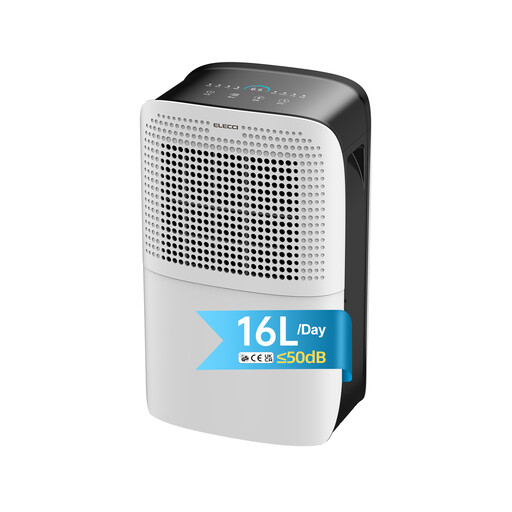
ELECCI 16 L/day dehumidifier, 3.1 L tank and drain hose
Consider this compressor model for a reliably warmer basement where a suitable drain route is available.
Its name lists a 3.1 L tank, continuous drainage and a 24-hour timer. The stated 16 L/day rating applies at 86°F and 90% relative humidity, not necessarily at your basement's conditions.
Check the exact operating-temperature range, hose setup and instructions for unattended use before choosing it for ongoing operation.
Joybuy
 No image available
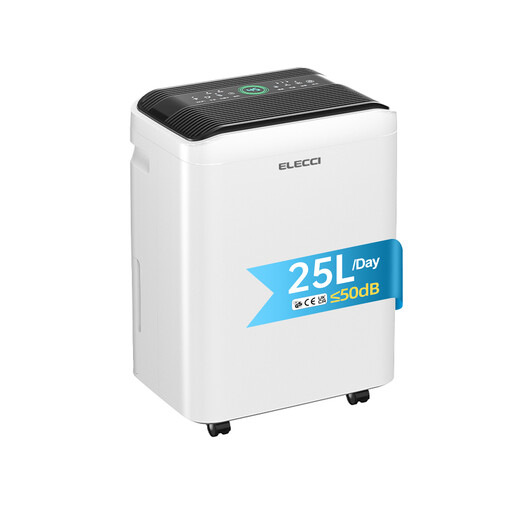
ELECCI 25 L/day dehumidifier, 4.8 L tank and drain hose
This compressor model is an option to assess for a warmer basement if its drain arrangement suits the intended location.
Its name lists a 4.8 L tank and continuous drainage. The stated 25 L/day extraction rating applies at 30°C and 80% relative humidity; it should not be compared as though measured under the same conditions as every other model here.
Check the operating-temperature range and gravity-drain route. The listed pump-ready outlet does not mean a pump is included; also consult the instructions before unattended use.
Joybuy
 No image available
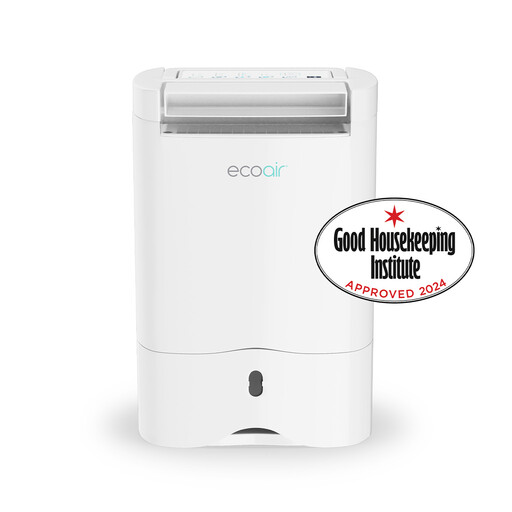
EcoAir DD3 Slimline desiccant dehumidifier, 3 L tank
Its desiccant technology makes this a model to assess for a cool or unheated space; confirm the DD3 Slimline's own operating range against your basement temperature.
The name lists 10 litres/day extraction and a 3 L tank. A continuous-drain option is described, but check whether a hose is included and how it must be routed.
Do not apply the operating-temperature specification for EcoAir's different DD3 Simple model to the DD3 Slimline.
Joybuy
 No image available
EcoAir DC26 compressor dehumidifier, 6.5 L tank
Consider this compressor model for sustained moisture control if the basement is reliably warm enough for its stated operating range.
Its name lists 26 litres/day extraction, a 6.5 L tank and humidistat control; a continuous-drain option is also described. Treat the extraction figure as a rating, not a promised rate in your basement.
Check the model's temperature range, drain-hose installation requirements and instructions for unattended use.
Joybuy
Questions about basement dehumidifiers
Should I use a desiccant or compressor dehumidifier in a cold basement?
Start with desiccant models for a cold or unheated basement: Electrical Safety First says they perform better in cooler environments. If the space stays reliably warmer, a compressor model may suit it; check the exact product's operating-temperature range either way.
Will a dehumidifier fix rising damp or a plumbing leak?
No: moisture extraction does not repair the source of rising damp, water ingress or defective plumbing. Manchester City Council advises fixing the cause; a dehumidifier can assist drying afterwards.
Can I leave a basement dehumidifier connected to a drain?
Use continuous drainage only if the exact model provides for it and the hose can be installed as its instructions require. Check the route for blockages, and do not assume that a drain connection makes unattended operation safe: Electrical Safety First says to follow the manufacturer's permission for that use.
What should I do about damp or mould in a rented basement in England?
Report the problem to your landlord or managing agent and keep a record of what you have observed. England-specific government guidance says the underlying issue should be tackled promptly; a dehumidifier should not stand in for investigating a possible defect.
What safety checks matter before setting up a dehumidifier?
Check the product's plug and marking for the intended UK use, then choose a position with the airflow clearance specified in its instructions. Electrical Safety First advises keeping vents and filters clear and not leaving the unit unattended unless its manufacturer says that is safe.


