What should you check?
Decide first whether the purchase is for planned intake during a run or for chocolate to enjoy or give as a gift. Then compare portions and pack details within that purpose.
Endurance carbohydrate products
Choose when: You want to measure carbohydrate intake during a long training run or event.
Bear in mind: Practise the product, amount and fluid plan in training; a labelled amount does not establish how you will tolerate it.
Dark chocolate
Choose when: Dark flavour or a chocolate gift matters more than measured on-run intake.
Bear in mind: Cocoa percentage describes the chocolate, not how well it fits a carbohydrate plan.
Mixed chocolate boxes
Choose when: You want a sharing box and the recipient is happy with milk and dark varieties together.
Bear in mind: A box containing a dark piece is not necessarily an all-dark selection, and pieces may differ in their ingredients.
| Priority |
What to check |
Your needs |
| On-run carbohydrate |
Read the carbohydrate amount for the portion you would carry. World Athletics lists 30–60 g per hour for 1–2.5-hour endurance events and up to 90 g per hour for events over 2.5 hours; those are guidance ranges, not a serving instruction for any particular product. |
I want to work out how a product’s labelled portion fits the amount I plan to take during a long run. |
| Cocoa preference |
Check the declared cocoa percentage, then compare carbohydrate and fat on the same per-100 g or per-portion basis. Cocoa percentage alone does not state the carbohydrate in a serving. |
Dark flavour matters to me, but I do not want to mistake a cocoa figure for a fuelling measure. |
| Box contents |
Read the precise assortment description and current contents. Tesco describes its checked Quality Street carton as assorted milk and dark chocolates and toffees; Ferrero Collection includes dark Rondnoir alongside other varieties, according to Ocado. |
If I am giving someone dark chocolate, I need to know whether the whole box is dark or only some pieces are. |
| Nutrition and portion |
Compare carbohydrate, sugars and fat per 100 g, then use the pack’s portion information for the amount you intend to eat. NHS food-label guidance describes more than 17.5 g fat or 22.5 g total sugars per 100 g as high. |
I would rather compare the amount I might actually eat than assume that one piece equals the pack’s stated serving. |
| Ingredients and allergens |
Read the current ingredients, highlighted allergens and any may-contain statement for the exact product. Check individual varieties in a mixed assortment rather than relying on the word “dark”. |
The recipient may need to avoid particular ingredients, so the name and outer chocolate type are not enough for my choice. |
Relevant chocolate ranges
These examples distinguish dark products from mixed and milk-chocolate assortments; a brand name alone does not establish what is in a particular box.
Cadbury / Bournville
Cadbury describes Bournville Classic 180 g as a dark chocolate bar.
- A named dark option for someone seeking Cadbury chocolate.
- The checked Bournville product is a bar, not a boxed assortment.
Cadbury Roses
Cadbury describes its checked 290 g Roses box as assorted milk chocolates.
- A boxed assortment when milk chocolates suit the recipient.
- That description does not meet a request for an all-dark box; check the current pack’s ingredients and allergens.
Cadbury Heroes
Cadbury describes its checked 290 g Heroes box as assorted milk chocolate treats.
- A miniature assortment for a milk-chocolate sharing preference.
- The miniature format does not itself provide a measured endurance-fuelling portion.
Celebrations
The checked Celebrations Pop Box lists a mix including Snickers, Mars, Twix, Bounty, Galaxy, Maltesers Teasers and Milky Way.
- A multi-variety sharing choice when those named chocolates appeal.
- The listed mix is not an all-dark selection; check each variety’s ingredients when buying for someone else.
Quality Street
Tesco describes the checked Quality Street carton as assorted milk and dark chocolates and toffees.
- Includes dark chocolate within a mixed assortment.
- Not every piece is dark, so confirm the current contents if particular varieties matter.
Ferrero
Ocado describes Ferrero Collection as including dark-chocolate Rondnoir alongside other varieties, and lists a separate Ferrero Rocher 70% dark chocolate bar.
- Offers a choice between a mixed collection containing a dark variety and a specifically dark bar.
- The collection is not all-dark; for either product, check the current portion and allergen information against your needs.
Joybuy product options
These options serve different parts of the decision: a gel for measuring carbohydrate during a run, and a dark chocolate box for enjoyment or gifting. They are not interchangeable portions.
 No image available
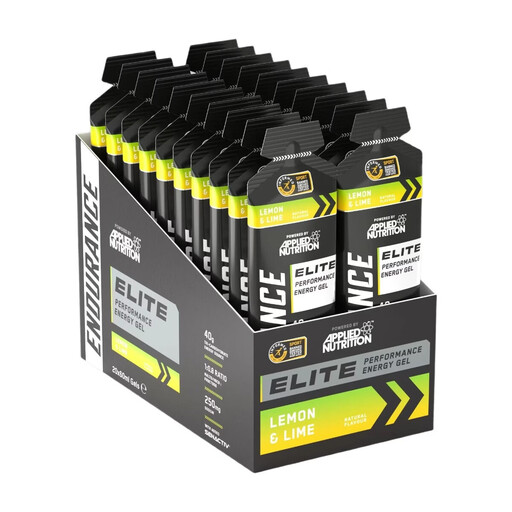
Applied Nutrition Endurance Elite Tri-Source Energy Gel, Lemon & Lime, 20 gels
For a planned on-run carbohydrate amount, the product name states 40 g carbohydrate per gel. Compare that portion with your intended hourly intake and practise using it during training; the pack contains 20 gels.
View on Joybuy
 No image available
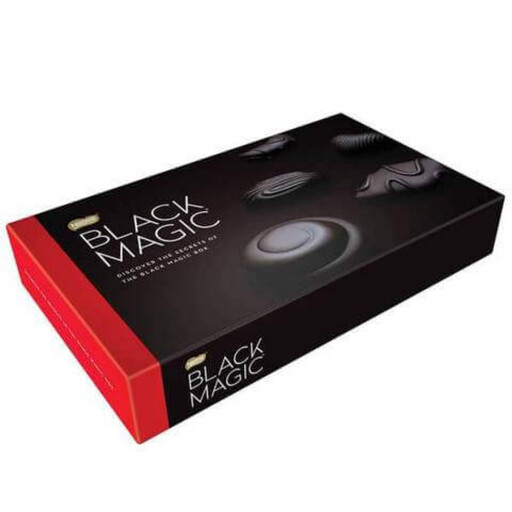
Nestle Black Magic Dark Chocolate Box, 348 g
For a dark-chocolate gift or an off-run chocolate choice, this is a 348 g box. Check the current contents, ingredients, allergens and portion information on the pack; the box weight alone does not establish carbohydrate per piece.
View on Joybuy
Frequently asked questions
Can a dark chocolate box replace gels or sports drinks during a marathon?
Do not treat a box as a direct, portion-for-portion replacement for a planned on-run product. World Athletics lists 30–60 g carbohydrate per hour for 1–2.5-hour endurance events and up to 90 g per hour for events over 2.5 hours. Check carbohydrate in the portion you would actually carry, and practise your fuelling plan in training.
Does 70% dark chocolate make a better running fuel?
A 70% cocoa description identifies the chocolate style, not its fit with your running plan. Ocado lists 35.5 g carbohydrate and 46.3 g fat per 100 g for the checked Ferrero Rocher 70% dark chocolate bar; you would still need to assess the portion and your intended intake separately.
Which of these familiar chocolate boxes contain dark pieces?
Tesco describes the checked Quality Street carton as containing milk and dark chocolates and toffees, while Ocado describes dark Rondnoir as one variety in Ferrero Collection. Cadbury describes the checked Roses and Heroes boxes as milk-chocolate assortments, and the checked Celebrations Pop Box lists a mixed selection of named chocolates rather than an all-dark assortment. Confirm the contents of the particular pack you buy.
How do I compare chocolate nutrition labels?
Compare carbohydrate, sugars and fat per 100 g, then look at the amount in the portion you intend to eat. NHS food-label guidance classifies more than 17.5 g fat or 22.5 g total sugars per 100 g as high; those label thresholds do not prescribe a marathon fuelling portion.
Is dark chocolate automatically free from milk or nuts?
No: the word “dark” is not an allergen statement. Check the current ingredients, highlighted allergens and may-contain wording for the exact bar or box, including its individual varieties. Cadbury Gifts Direct notes that product ingredients and allergy information can change.


