Car boot sale sellers offering gum
Sealed packs make it possible to offer gum without splitting it into new portions. If you plan to sell it, check how food-business and local trading requirements apply to your particular sale.


If “dark” means cocoa or dark chocolate, do not substitute an ordinary chewing gum: the Tesco and Sainsbury’s listings considered here identify standard gum flavours, not cocoa content. If chewing gum is what you want for a car boot sale, choose a sealed format that suits how you will offer it, then check the exact pack label and the rules for your selling arrangement.
Sealed packs make it possible to offer gum without splitting it into new portions. If you plan to sell it, check how food-business and local trading requirements apply to your particular sale.
If cocoa is not part of the request, choose by flavour, pack format and the ingredients on the exact product label.
Keep that requirement separate from an ordinary gum purchase. The cited Tesco and Sainsbury’s listings describe standard gum flavours; a cocoa-based choice calls for a different product search.
Decide whether the request is for chewing gum or a cocoa product before comparing gum packs. For a stall, the way you offer the product matters alongside flavour and ingredients.
Choose when: You want to offer gum and cocoa content is not required.
Trade-off: Mint and fruit-flavoured gum should not be described as dark chocolate or high-cocoa gum.
Choose when: “Dark” specifically means cocoa content or dark chocolate.
Trade-off: Chocolate is a separate food choice with its own ingredient, storage and stall-handling checks.
| Priority | What to check | Your needs |
|---|---|---|
| Meaning of “dark” | Check the stated flavour and ingredients of the exact product. Dark packaging or a strong flavour does not establish cocoa content. | If I mean dark chocolate, I need a product identified as such—not a mint or fruit gum. |
| Pack format | Compare sealed individual packs, multipacks and bottles. Tesco presents Extra bottles as an on-the-go or sharing format; check whether the original packaging suits how you will offer the gum. | For separate hand-outs, I want portions I can offer without repacking; for a shared supply, I may prefer a bottle. |
| Ingredients and warnings | Read the received pack for allergens, sweeteners and safety wording. Tesco’s listings for particular Extra variants include soya and phenylalanine warnings; wording can differ by product. | I want customers to be able to inspect the label for ingredients relevant to them. |
| Selling arrangement | Check the sale organiser’s terms and ask the relevant local authority which food-business or stall requirements apply. If you intend to rebag gum, check the labelling rules for that arrangement first. | Before offering gum for sale, I need to know which requirements apply at my particular location and whether I can keep it in its original packaging. |
The cited Tesco product descriptions identify mint or watermelon gum. A dark colour or product name alone would not establish cocoa content.
If cocoa matters, check an exact product’s name and ingredients before describing or buying it as a cocoa product.
Food Standards Agency and Food Standards Scotland guidance defines prepacked for direct sale food by how and when the same business packs it. Changing the packaging can therefore change the labelling questions you need to resolve.
Keep manufacturer-sealed packs intact if they suit your plan. Before repacking for sale, ask your local authority which requirements apply.
Tesco’s listings for particular Extra products show that sweeteners, allergens and warnings need attention at variant level.
Keep the original packaging available and check the pack you receive rather than making a blanket suitability claim.
These references help distinguish pack formats and label information; they are not a list of brands available on Joybuy.
Tesco and Sainsbury’s list Extra chewing gum in formats including single packs, multipacks and bottles.
Tesco’s product listings give variant-specific pack descriptions and ingredient information for several Extra gums.
Its mints and chewing gum category lists Extra bottles and multipacks.
These are sugar-free gum options for when chewing gum—not cocoa content—is the requirement. Compare the stated flavours and pack formats, and check each received pack before offering it to others.
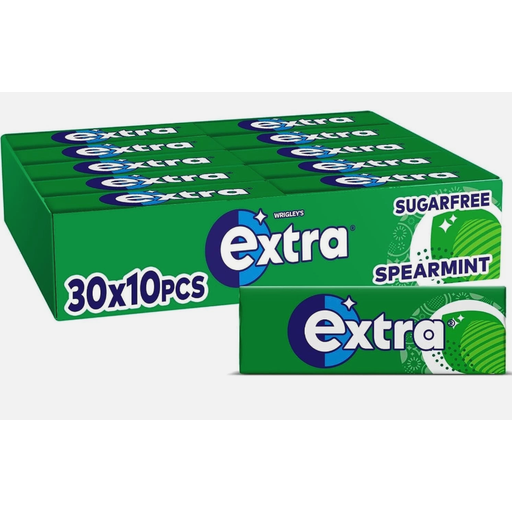 Image unavailable
The separate packs may suit a plan to offer sealed portions. This is spearmint gum, not a stated cocoa product; check the received packs for ingredients and warnings.
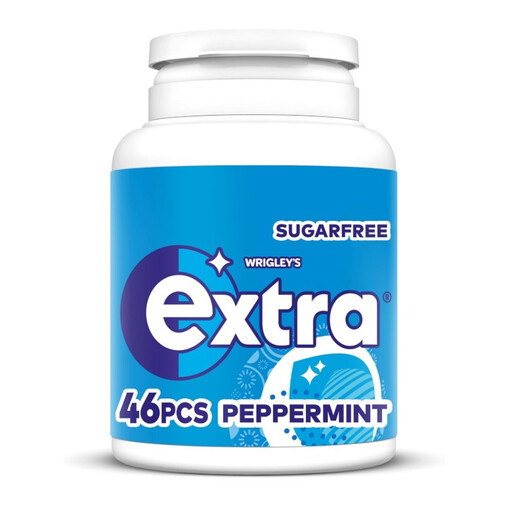 Image unavailable
The bottle format is an option for keeping a shared gum supply together. It is peppermint gum rather than a stated cocoa product; read the received bottle’s ingredient label before offering it.
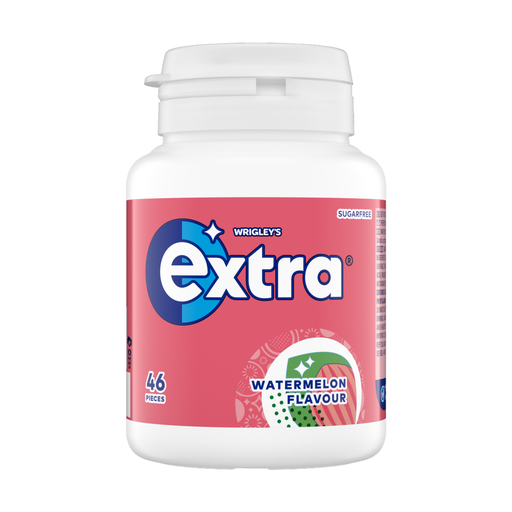 Image unavailable
This bottle offers a watermelon-flavoured option when a shared gum format suits the stall. Watermelon flavour does not meet a cocoa requirement; check the received label for ingredients and warnings.
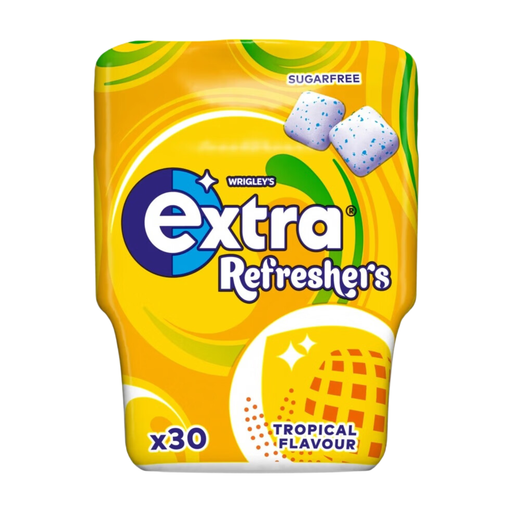 Image unavailable
The 30-piece bottle is another format to consider for a shared gum supply. Its stated tropical flavour does not establish cocoa content; inspect the received label before offering it.
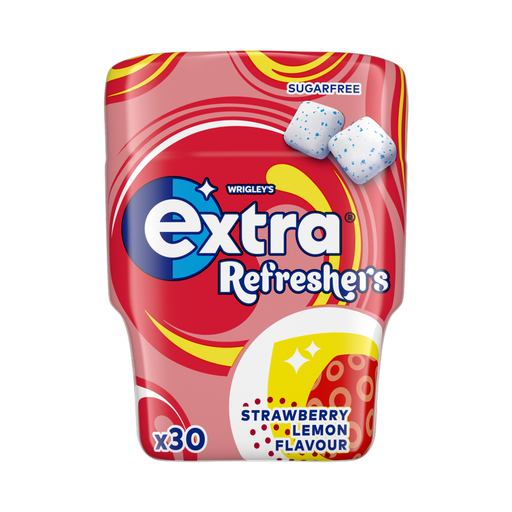 Image unavailable
The product information describes individually wrapped pieces, which may suit portioned hand-outs while retaining the outer pack for label checks. This is strawberry-lemon gum, not a stated cocoa product.
No: the word alone does not establish an ingredient. The cited Tesco and Sainsbury’s gum listings identify standard flavours, so check an exact product’s name and ingredients if cocoa content is essential.
Check the requirements for your particular sale before trading. GOV.UK states that food-business registration applies to businesses selling food and drink, while its market-stall guidance addresses licensing for market traders; ask the sale organiser and relevant local authority how the rules apply to your arrangement.
Check the applicable food-labelling requirements before doing so. Food Standards Agency and Food Standards Scotland guidance identifies food packed before sale by the same business as a distinct prepacked-for-direct-sale arrangement; keeping gum in manufacturer-sealed packs avoids changing how it is packed for your sale.
Read the exact pack’s ingredients, allergens, sweeteners and safety wording. Tesco’s listings for particular Extra variants illustrate why these details matter, but the label on the product you receive is the one to inspect before offering it to customers.