Recreational 5k runners
If you want a small chocolate item in your lunchbox or after a run, distinguish that treat from any food you plan to eat before exercise.


For a 5k, choose a dark-chocolate multipack for portioned lunchbox or after-run treats, not as your planned main pre-run fuel. The British Dietetic Association advises a low-fat, carbohydrate-rich snack or light meal before exercise; if you want chocolate as well, compare the size, nutrition and allergen information of each individual bar.
If you want a small chocolate item in your lunchbox or after a run, distinguish that treat from any food you plan to eat before exercise.
Individually sized bars make it easier to choose a portion for a lunchbox or workday than an unportioned sharing bar. Check the weight of each bar as well as the pack count.
Check the current ingredients and precautionary allergen wording on the exact pack. A dark or vegan label does not replace those checks.
Decide whether you are choosing food before a run or a portioned chocolate treat; those are different jobs for a snack.
| Priority | What to check | Your needs |
|---|---|---|
| Pre-run food | Compare carbohydrate and fat per serving. The British Dietetic Association advises a low-fat, carbohydrate-rich snack or light meal two to three hours before exercise; University College London Hospitals describes a different, 60–90-minute pre-training snack window. | If I am planning food before a run, I want to choose it for that purpose rather than assume a chocolate bar will do the same job. |
| Portion size | Read both the bar weight and pack count. Divine lists 100 mini bars of 4.2 g each and a separate 30-pack of 35 g bars; Montezuma's lists a 25 g FitzRoy mini bar and a 26-mini-bar pack. | For a lunchbox treat, I might prefer a very small piece; for sharing, I might choose larger individually sized bars. |
| Ingredients and allergens | Check the exact pack's ingredients, dietary description and precautionary allergen statement. GOV.UK says regulated allergens present as ingredients in prepacked food must be clearly labelled in the ingredients list. | I need to know whether this particular pack suits my requirements, without assuming that dark or vegan chocolate is suitable for an allergy. |
A higher cocoa percentage does not establish that a bar is low in fat or rich in carbohydrate. Montezuma's lists 44 g fat and 33 g carbohydrate per 100 g for its 74% FitzRoy mini bar.
If you are choosing a deliberate pre-run snack, compare its nutrition with the British Dietetic Association's low-fat, carbohydrate-rich guidance. Choose chocolate separately for its flavour or portion format.
Divine's 4.2 g mini bar works out at about 1.2 g carbohydrate from its declared 29.7 g per 100 g. Its small size matters when deciding what you expect it to provide before a run.
Use a tiny bar as a portioned sweet item, not as a substitute for a carbohydrate-focused snack if you need one.
Divine's mini bars and Montezuma's FitzRoy mini bar carry precautionary allergen information despite their dietary descriptions.
Read both the ingredients and the may-contain statement on the exact pack, particularly if milk, nuts, peanuts or cereals containing gluten are relevant to you.
Divine lists individually sized 70% dark chocolate in both a 100-pack of 4.2 g mini bars and a 30-pack of 35 g bars.
Montezuma's lists a 25 g FitzRoy 74% dark mini bar and a 26-mini-bar multipack.
Lindt's UK dark-chocolate range includes build-your-own bar selections and sharing formats.
Hotel Chocolat lists dark batons and boxed selections, including 70% and 85% baton options.
M&S lists an 85% dark chocolate bar for shoppers considering a high-cocoa bar rather than a mini-bar multipack.
These are portioned cereal snack bars containing dark chocolate, not solid dark-chocolate mini bars. Compare them as possible lunchbox snacks or against the nutrition requirements of a planned pre-run snack.
 No image available
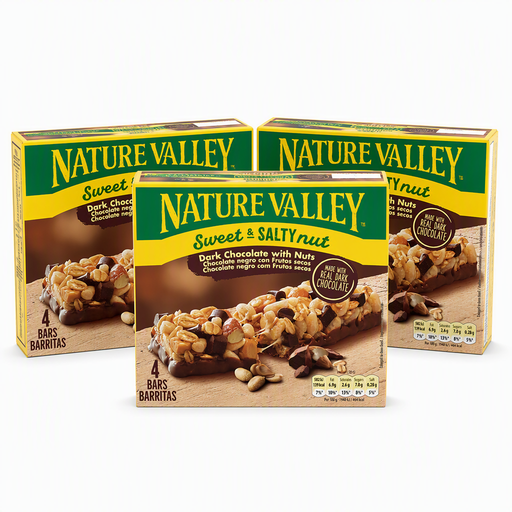
Six individually sized cereal bars offer portions to compare when choosing a snack before a run. This is not a solid dark-chocolate bar; check the current pack's nutrition and ingredients against what you need from a pre-run snack.
 No image available
The 360 g pack contains twelve 30 g cereal bars with dark chocolate and nuts, giving each lunchbox snack a defined size. These are not solid dark-chocolate bars; check the current pack's ingredients if allergens matter.
 No image available
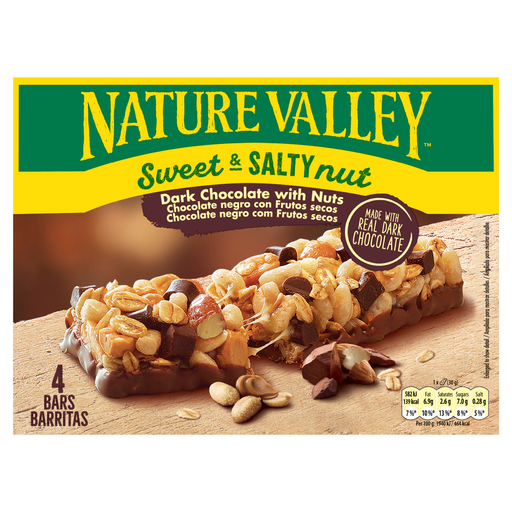
This smaller pack has four individually sized 30 g cereal bars with dark chocolate and nuts, rather than solid dark-chocolate bars. If you are considering one before a run, check carbohydrate per bar on the current pack instead of judging it by the chocolate description.
Dark chocolate is not the closest match to the British Dietetic Association's advice for a planned pre-exercise snack: it advises a low-fat, carbohydrate-rich snack or light meal two to three hours before exercise. Check a chocolate bar's per-serving nutrition rather than assuming its cocoa percentage makes it suitable as fuel.
A portioned bar can be a lunchbox or after-run treat without being your planned pre-run snack. If you are choosing food 60–90 minutes before training, University College London Hospitals describes a snack containing carbohydrate, protein and minimal fat.
Read the ingredients and precautionary allergen statement on the exact pack. GOV.UK says regulated allergens present as ingredients in UK prepacked food must be clearly labelled in the ingredients list; a vegan description does not rule out a may-contain warning.
Use the listing to compare pack formats, then check the current product label before buying or eating it. M&S advises shoppers to read the label because product information can change.