Families planning an occasional treat
If chocolate is on the half-term snack list, choose an amount before serving it. For the usual snack routine, the NHS recommends fruit and vegetables.


For an occasional at-home half-term treat, a labelled 70% bar is a starting point when the eater wants some sweetness alongside the cocoa flavour; choose 100% cocoa when they specifically want a more intense taste and no added sugar. Neither percentage settles the portion, nutrition or allergy decision, so check the exact pack before serving.
If chocolate is on the half-term snack list, choose an amount before serving it. For the usual snack routine, the NHS recommends fruit and vegetables.
A 70% bar and a 100% cocoa bar present different choices in sweetness and cocoa intensity. Start with the eater’s taste preference rather than assuming the higher figure will suit them.
Read the ingredients and allergen declaration on the current pack. A vegan recipe or the absence of milk from an ingredient list does not, by itself, establish suitability for a milk allergy.
For an at-home half-term treat, decide which cocoa intensity the eater wants, then compare the portion format and the information on each bar’s pack.
| Priority | What to check | Your needs |
|---|---|---|
| Cocoa intensity | Check the stated cocoa percentage and ingredients. Lindt lists 70% minimum cocoa for its EXCELLENCE bar; Montezuma’s describes Absolute Black as 100% cocoa with no added sugar. | I want some sweetness alongside the cocoa flavour, or I already know I prefer an intense 100% cocoa bar. |
| Nutrition panel | Compare sugars and saturates per 100g on the exact packs, then look at any per-serving figures. Cocoa percentage alone does not provide those values. | I want to compare two bars on the same basis before deciding what to serve. |
| Portion format | Check the size of the bar or individual pieces and the total pack quantity. Divine lists 12.5g 70% mini bars in a pack of 160. | A piece chosen in advance would suit our treat plan, but a large multi-pack may be more than we need. |
| Allergens | Read the current pack’s ingredients and may-contain statements for the specific allergy. Do not use a vegan or no-added-sugar description in place of that check. | Someone eating the chocolate has a dietary restriction, so I need to check the actual product before serving it. |
| Snack occasion | Decide whether this is a planned treat or a routine snack. The NHS recommends fruit and vegetables as the usual snack choice for children. | Chocolate is an occasional half-term treat, not what I plan to offer whenever someone wants a snack. |
A 100% cocoa label and a 70% cocoa label describe cocoa content, not the complete nutrition of either bar.
Compare sugars and saturates per 100g on the packs, alongside the amount you intend to serve.
Ingredients and potential cross-contact are different questions. Lindt says its 70% bar is made to a vegan recipe but is not suitable for people with a milk allergy.
For an allergy, check the current pack’s full allergen declaration rather than relying on a dietary description.
Divine’s 12.5g mini bars provide individual pieces, but the listed format contains 160 bars.
Match the number of pieces to the occasions you have in mind before choosing a bulk pack.
Department for Education guidance concerns food provided in state-funded schools in England. Separate government guidance addresses retail promotions and placement of certain foods high in fat, sugar or salt.
For a school-provided snack, check the applicable school-food standards and school policy. Do not apply those rules to an at-home half-term treat.
These brand examples show different cocoa levels and formats; compare the individual product label rather than assuming every bar from a brand has the same ingredients or nutrition.
Divine lists a 70% dark chocolate bar and a separate 12.5g mini-bar format.
Lindt EXCELLENCE Dark 70% is a 100g bar labelled with 70% minimum cocoa solids.
Montezuma’s describes Absolute Black as a 100% cocoa bar with no added sugar.
M&S lists a dark chocolate product containing at least 70% cocoa solids.
Hotel Chocolat lists dark-chocolate batons at 70% and 85% cocoa.
Green & Black’s lists a Dark 70% chocolate bar in a 90g format.
These are 70% and 72% dark-chocolate bars to consider for an occasional at-home half-term treat. Choose by flavour, pack size and the current label rather than assuming they are individually portioned.
 Image unavailable
A 72% cocoa bar for someone choosing a stated high-cocoa level for an at-home treat. Check the pack’s nutrition, allergens and piece format when deciding the amount to serve.
 Image unavailable
A 70% cocoa bar to consider when the eater wants some sweetness alongside the cocoa flavour. Decide how much of the 90g bar to serve, and check the current pack for ingredients and allergens.
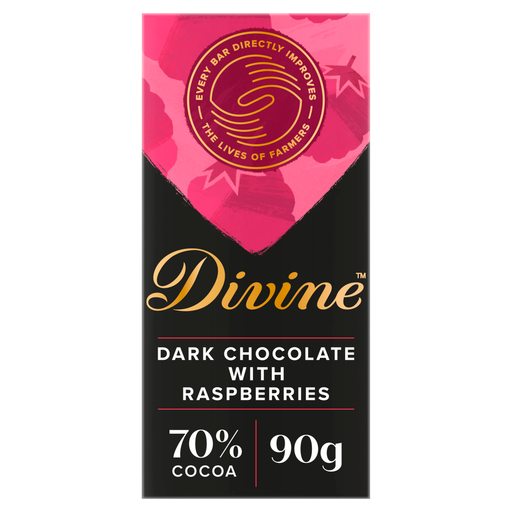 Image unavailable
A 70% dark bar with raspberries for someone who wants a fruit-flavoured option. The product description gives conflicting milk information, so check the physical pack before buying for anyone with a milk allergy; also decide the serving amount from the 90g bar.
No. It states the cocoa level, but you still need the exact pack’s sugars, saturates, ingredients and allergen information to compare bars. For children’s usual snacks, the NHS recommends fruit and vegetables rather than treating chocolate as the default.
A labelled 70% bar is a starting point if they want some sweetness; choose 100% cocoa when they specifically want a more intense taste. Lindt labels its EXCELLENCE bar 70% minimum cocoa, while Montezuma’s describes Absolute Black as 100% cocoa with no added sugar.
No. Lindt says its 70% bar is made to a vegan recipe but is not suitable for people with a milk allergy. Check the current pack’s ingredients and allergen declaration for the specific product.
No. Department for Education guidance addresses food provided in state-funded schools in England, not a treat eaten at home. The Requirements for School Food Regulations 2014 classify chocolate as confectionery; if choosing a school-provided snack, check the applicable standards and school policy.