What should you check?
Choose the solid-bar cocoa range first, then assess formats, flavours and product-specific information for the rest of the shelf.
| Priority | What to check | Your needs |
|---|
| Cocoa declaration |
Read the cocoa-solids percentage on the current pack. Lindt Shop UK states 70% minimum for its Excellence 70% bar and 85% minimum for its Excellence 85% bar; compare products using their own declared values. |
I want customers to see a clear difference between the core dark bar and the higher-cocoa option, without assuming everyone will prefer the latter. |
| Bar format |
Separate solid bars from coated snacks. Lindt Shop UK lists its reviewed solid bars at 100g, Tony’s Chocolonely UK identifies a 180g Extra Dark bar, and KitKat UK lists its dark-coated wafer at 41.5g. |
A sharing bar, a solid tasting bar and a single-serve wafer have different places on my shelf. |
| Flavour additions |
Check whether a flavoured bar also states the cocoa percentage needed for a high-cocoa comparison. Cadbury UK describes Bournville Orange and its hazelnut and salted caramel variant as dark chocolate with added flavours. |
I would like flavour choices alongside the plain bars, but not at the expense of a clear cocoa-percentage range. |
| Ingredients and allergens |
Read the current ingredients and precautionary warnings for each variant. Lindt Shop UK warns that its Excellence 85% bar is unsuitable for people with a milk allergy; KitKat UK lists wheat and milk in its dark wafer. |
Before I list a bar for customers with dietary requirements, I need information for that particular product rather than an assumption about dark chocolate generally. |
| Sourcing claims |
Keep credentials tied to the product that states them. Tony’s Chocolonely UK describes its Extra Dark 70% bar as using Fairtrade-certified cocoa traced from bean to bar and states that its range is palm-oil-free. |
If sourcing matters to my customers, I want to describe the specific bar’s stated credentials without extending them to every dark option. |
Dark chocolate options on Joybuy
These bars offer declared 70%, 72% and 85% dark-chocolate choices, plus a 70% raspberry variant for a flavoured part of the range.
 No image available
Green & Black’s Dark 70% Chocolate 90g
A solid 70% dark bar for the core cocoa-percentage range. The product information warns that it may contain almonds, hazelnuts, other nuts and milk; check the current pack when allergen information matters.
View on Joybuy
 No image available
Green & Black’s Dark 85% Chocolate 90g
This 85% solid bar provides a separate higher-cocoa choice from the 70% bar. Its product information warns that it may contain almonds, hazelnuts, other nuts and milk; consult the current pack for allergen details.
View on Joybuy
 No image available
Morrisons The Best 85% Cocoa Ecuador Dark Chocolate 100g
Another 85% bar for customers choosing by declared cocoa percentage, in a 100g format identified as Ecuador dark chocolate. The product information warns that it may contain cereals containing gluten, milk, nuts and peanuts; check the current pack.
View on Joybuy
 No image available
Morrisons The Best 72% Cocoa Dominican Republic Dark Chocolate 100g
A 72% bar for a cocoa-percentage choice between the listed 70% and 85% options, with Dominican Republic named in the product title. The product information lists soya and warns that it may contain cereals containing gluten, milk, nuts and peanuts; check the current pack.
View on Joybuy
 No image available
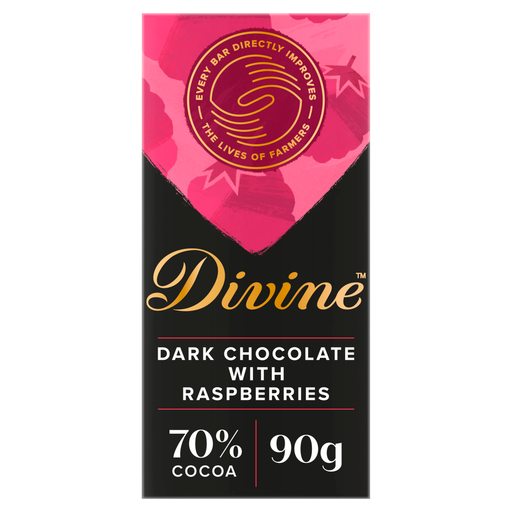
Divine Chocolate 70% Dark Chocolate with Raspberries 90g
A raspberry-flavoured 70% bar for shoppers seeking flavour alongside a stated cocoa percentage. Milk and vegan-suitability statements in the product information conflict, so check the current pack and supplier allergen information before making dietary claims.
View on Joybuy
Questions about choosing dark bars
What makes a dark bar useful for a high-cocoa range?
A stated cocoa-solids percentage lets shoppers distinguish the bars by that measure. For this range, solid bars marked 70% and 85% form distinct choices; a “dark chocolate” description without a stated percentage does not establish a comparable cocoa level. Read the current pack when assigning a bar to a cocoa tier.
Can a dark KitKat take the place of a 70% solid bar?
Not for a like-for-like solid-bar cocoa comparison. KitKat UK describes 4 Finger Dark Chocolate as a 41.5g crispy-wafer product covered in dark chocolate, with wheat and milk in its ingredients. It can serve a snack-format need alongside solid bars with declared cocoa percentages.
Is a vegan-recipe dark bar suitable for someone with a milk allergy?
A vegan-recipe description does not establish milk-allergy suitability. Lindt Shop UK says its Excellence 85% bar is made to a vegan recipe but is manufactured in a facility using milk and is not suitable for people with a milk allergy. Use the current product-specific allergy information rather than the recipe description alone.
What labelling matters if the shop packs chocolate on site for direct sale?
For food prepacked for direct sale, Food Standards Scotland says businesses in Scotland and the rest of the UK must provide the food name and a full ingredients list, emphasising any of the 14 regulated allergens that are ingredients. Check which requirements apply to the shop’s particular packing and selling arrangement before preparing labels.
What should be checked before publishing a bar’s product information?
Check the current pack and supplier information for the cocoa declaration, ingredients, allergen warnings and any dietary or sourcing claims you intend to display. Treat these as product-specific details, particularly when selling a flavoured variant or describing allergy suitability.


