Night-shift workers choosing a small chocolate snack
Compare cocoa intensity, declared sugars and pack size while planning when and how much to eat. Dark chocolate should not be treated as a way to improve sleep or alertness.


Start with an 85% cocoa bar if you want a high-cocoa snack without moving straight to the more intense flavour of 100% cocoa. Compare sugars and saturated fat per 100g, check the exact pack for allergens, and choose an amount that fits your planned sleep time; chocolate is not a sleep aid.
Compare cocoa intensity, declared sugars and pack size while planning when and how much to eat. Dark chocolate should not be treated as a way to improve sleep or alertness.
If sweetness matters less than declared sugar, a 100% cocoa product is worth comparing with 85% bars. Check its full nutrition and allergen information rather than judging it by sugar alone.
Food provided in state-funded schools calls for a separate check against the applicable school-food rules and menu policy. General advice about a retail night-shift snack does not establish whether a bar can be served at school.
Choose a flavour and format you would actually use, then compare nutrition on the same per-100g basis and read the exact pack’s allergen statement.
| Priority | What to check | Your needs |
|---|---|---|
| Cocoa flavour | Compare the cocoa percentage and flavour description. An 85% bar and a 100% cocoa bar offer different levels of intensity; percentage alone does not describe the whole recipe. | I want a pronounced cocoa flavour, but I would rather choose a bar I enjoy than buy one solely for its percentage. |
| Nutrition and amount | Compare sugars, saturated fat and energy per 100g, then consider the amount you plan to eat. Divine, Green & Black’s and Lindt list 13.9g, 14g and 15g sugars per 100g respectively for the cited 85% bars; Montezuma’s lists 0.6g per 100g for Absolute Black 100% Cocoa. | Declared sugar matters to me, but I also want to know what a modest amount means for the product I choose. |
| Timing | Consider when you expect to sleep and avoid treating chocolate as a sleep product. NHS guidance says large meals close to bedtime may make falling asleep harder; it does not establish a suitable chocolate portion or cocoa percentage. | If sleep is planned soon after my shift, I want to decide on the snack and its timing deliberately. |
| Allergens | Read the ingredients and allergen statement on the exact pack. Check whether an allergen is an ingredient, a possible trace or covered by a separate suitability warning. | I need to assess milk, nuts or another relevant allergen from the product’s own label, not from a vegan claim or the words “dark chocolate”. |
| School use | For food provided in a state-funded school in England, check the applicable rules and menu policy before buying. The Requirements for School Food Regulations 2014 define chocolate as confectionery; the Department for Education says changes proposed for September 2027 remain subject to Parliamentary approval. | If I am buying for school provision, I need an answer for that setting rather than assuming a retail snack choice is suitable. |
Montezuma’s Absolute Black 100% Cocoa lists less sugar per 100g than the cited 85% bars, but that single figure does not describe its saturated fat, energy or flavour.
Compare the nutrition panels on a per-100g basis, then consider the amount you would eat.
Lindt describes its Excellence 85% bar as made to a vegan recipe but says it is not suitable for people with a milk allergy. Other cited dark chocolates also carry allergen warnings.
Use the ingredients and allergen declaration on the exact physical pack when assessing an allergy.
Chocolate is not established here as a sleep aid. NHS guidance says large meals close to bedtime may make it harder to fall asleep.
If you choose chocolate during a shift, decide on the amount and timing with your planned sleep in mind.
The Requirements for School Food Regulations 2014 define chocolate as confectionery in the England school-food context. The Department for Education says proposed changes for September 2027 are subject to Parliamentary approval, not rules already in force.
Before buying for school provision, check the current rules for the relevant nation, the type of provision and the school’s menu policy.
These examples show why the exact product matters: cocoa percentage, nutrition and allergen wording can differ between bars and formats.
Its organic 85% dark bar is one high-cocoa option to compare for a night-shift snack.
Its 90g 85% dark bar offers another high-cocoa flavour and format to consider.
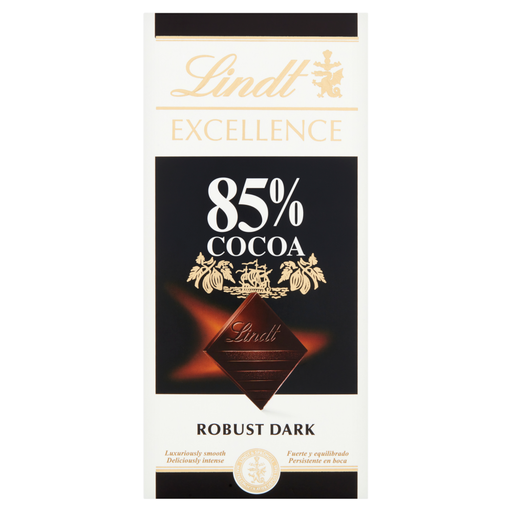
The Excellence 85% cocoa bar is a 100g option with product-specific nutrition and allergen information.
Absolute Black 100% Cocoa is relevant if an intensely bitter flavour and very little declared sugar are your priorities.
Its dark-chocolate range includes baton formats at both 70% and 85% cocoa.
The Collection 85% dark bar is a separate choice from M&S’s 70% cooking chocolate.
These options include 85% cocoa bars and lower-percentage dark chocolate for a night-shift snack. Compare the format you would use and check the exact pack before eating, particularly if you have an allergy.
 No image available
An 85% cocoa bar to consider if you want a high-cocoa snack. Plan how much of the 90g bar to eat, and check the physical pack’s ingredients and allergen statement.
 No image available
Another 85% cocoa bar for comparing high-cocoa flavours. Use the 100g pack’s nutrition panel and allergen statement when deciding whether it fits your snack plans.
 No image available
This 85% cocoa bar gives you a high-cocoa option in a 100g format. Lindt lists 15g sugars per 100g for its cited Excellence bar and warns of possible allergens including milk; check the exact pack before eating.
 No image available
If you want to compare a lower cocoa percentage with the 85% bars, this is a 72% cocoa option in a 100g format. Check its nutrition panel and exact pack’s allergen statement before choosing.
 No image available
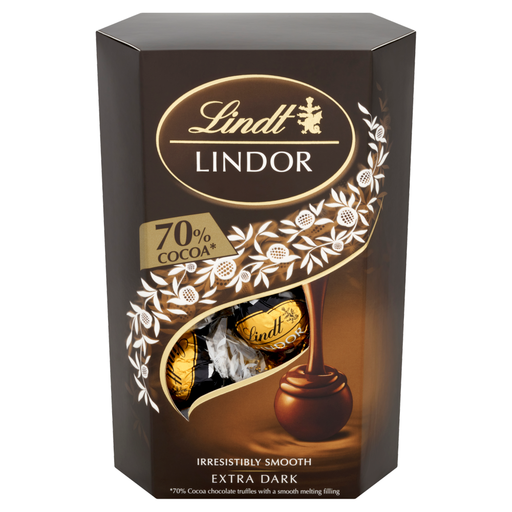
This 70% cocoa option offers a different format from the 85% bars. Compare its ingredients and nutrition on the pack, and decide on an amount rather than treating the 200g pack as a serving.
An 85% bar is a reasonable starting point if you want high-cocoa flavour without going straight to the more intense 100% cocoa option. Check the individual bar’s nutrition and allergens: Divine, Green & Black’s and Lindt list 13.9g, 14g and 15g sugars per 100g respectively for their cited 85% products.
No. Montezuma’s lists 0.6g sugars per 100g and no added sugar for Absolute Black 100% Cocoa, but sugar is only one part of its nutrition information. Check energy, saturated fat, ingredients and the amount you intend to eat, as well as whether you enjoy its intense flavour.
Do not choose it as a sleep aid. NHS guidance says large meals close to bedtime may make falling asleep harder; it does not identify a dark-chocolate percentage or portion that improves sleep. Consider your planned sleep time when deciding whether and when to have a snack.
Do not assume a retail snack choice is suitable for food provided in a state-funded school in England. The Requirements for School Food Regulations 2014 define chocolate as confectionery, so check the current rules for the particular provision and the school’s menu policy. The Department for Education says changes proposed for September 2027 remain subject to Parliamentary approval.
Not automatically. Lindt describes its Excellence 85% bar as made to a vegan recipe but says it is not suitable for people with a milk allergy because it is made in a facility using milk. Check the ingredients and allergen declaration on the exact physical pack.