Households sharing after school
A bag of buttons or discs offers separate pieces, while a bar needs dividing before it is handed round. Individually wrapped bars provide a defined item, though the household may still choose to split one.


For an after-school treat at home, choose the serving format before the brand: buttons or discs can be divided into pieces, individually wrapped bars provide a defined item, and a standard bar works when someone portions it before serving. Check the exact pack’s cocoa percentage, sugars, energy and allergen information; a higher cocoa percentage does not, by itself, settle the choice.
The useful distinction is how the chocolate will be served and whether anyone sharing it needs an exact allergen check.
A bag of buttons or discs offers separate pieces, while a bar needs dividing before it is handed round. Individually wrapped bars provide a defined item, though the household may still choose to split one.
Check the current pack for each person who will share it. Dark-chocolate products in these formats carry different milk, nut and other allergen statements; the word “dark” does not establish suitability.
Consider whether everyone wants the same cocoa intensity. Montezuma’s describes its 100% cocoa buttons as intense, so a familiar cocoa percentage alone is not a substitute for checking the particular product and deciding what to serve.
Start with how you will divide the chocolate, then compare the exact packs that fit that plan. A sharing label does not specify how much to offer each person.
| Priority | What to check | Your needs |
|---|---|---|
| Serving format | Check whether the pack contains separate pieces, individually wrapped bars or one bar to divide. Decide the amount to serve before opening it. | If several of us are sharing at once, I want pieces I can count out. For a household supply, a defined bar may be easier to allocate. |
| Cocoa and label values | Compare cocoa percentage, sugars and energy on the same per 100g basis, then consider the amount being served. Montezuma’s lists 0.6g sugars and 623 kcal per 100g for its 100% cocoa Absolute Black buttons; Lindt lists 29g sugars and 566 kcal per 100g for its EXCELLENCE 70% bar. These are different products and formats. | I want to judge the actual chocolate, not assume that a higher cocoa percentage means a lower-energy choice or a flavour everyone will enjoy. |
| Allergens | Read the exact pack’s ingredients and allergen statement, including any “may contain” warning. Recheck when changing product, flavour or pack. | Someone sharing may need to avoid a particular ingredient. I cannot use “dark” or “vegan recipe” as an allergy assurance. |
| Product type | Check the individual product rather than the retailer’s sharing-bag category: ranges can include milk chocolate, chocolate-coated fruit and nuts as well as dark-chocolate pieces. | I want to know whether I am choosing plain dark chocolate, a coated snack or a bar before deciding how to share it. |
Cocoa percentage does not tell you the sugars or energy in the amount served. The Montezuma’s 100% cocoa buttons and Lindt 70% bar have different declared per 100g values.
Compare the current labels on the same basis and decide the serving amount separately.
An open bag contains pieces to divide, but its format does not decide how many each person receives.
Count out pieces before serving, or consider individually wrapped bars if a defined item is more useful for your household.
Montezuma’s Absolute Black buttons may contain milk, nuts and peanuts; M&S states that its Extra Fine Dark Chocolate Discs are unsuitable for people with milk, nut, peanut or soya allergies.
Use the current label for the exact product, particularly if you switch flavour or format.
Department for Education school-food guidance addresses food and drink provided in state-funded schools in England. An after-school treat served at home is a different setting.
If a school, club or childcare provider will supply the food, check that setting’s policy and the rules applicable to it rather than assuming the at-home decision answers the question.
These examples show why it helps to compare individual products: a button bag, a multipack and a breakable bar solve different serving problems.
Its listed 120g dark-chocolate button bags include 60%, 74% and 100% cocoa options.
Its range includes dark-chocolate discs and sharing-bag products such as dark-chocolate-coated fruit and nuts.
A 30-pack of 35g, 70% dark-chocolate bars offers individual items rather than a loose sharing bag.
The EXCELLENCE 70% dark-chocolate bar is a 100g option to divide before serving.
Its dark-chocolate range includes batons, slabs and selectors at different stated cocoa percentages.
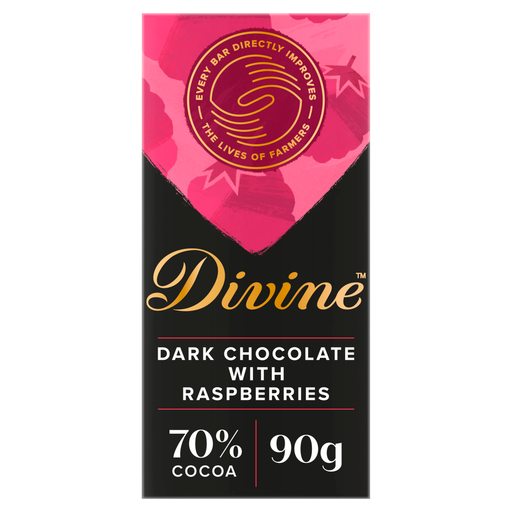
A 90g dark-chocolate bar labelled 70% is an option for a household planning to divide a bar.
These options include a box of separate dark-chocolate truffles and two bars that can be divided before an after-school treat at home. They are different serving formats, not interchangeable sharing bags.
 No image available
The box contains separate dark-chocolate truffles for sharing, rather than a loose button bag. Check the piece count and whether the truffles are individually wrapped if either matters to how you will divide them. The product information lists milk, soya and barley and says it may contain several types of nuts; check the current pack for allergy needs.
 No image available
This bar suits a plan to divide the chocolate before serving; it is not a bag of ready-separated pieces. The product information states a minimum of 70% cocoa solids and says it may contain milk and nuts. Check the current pack, including how the bar can be divided if that affects your serving plan.
 No image available
This raspberry dark-chocolate bar is an alternative when someone will divide a bar before serving. It is a 90g bar, not a sharing bag or individually wrapped multipack. The product information lists milk and says it may contain gluten and nuts; check the current pack rather than relying on a vegan-friendly description for dairy avoidance.
The Department for Education guidance on school food addresses food and drink provided in state-funded schools in England, not a parent’s choice of a snack served at home after school. If a school, club or childcare provider will supply the chocolate, check its policy and the rules applicable to that setting.
No. Montezuma’s Absolute Black 100% cocoa buttons list 0.6g sugars and 623 kcal per 100g, while Lindt’s EXCELLENCE 70% bar lists 29g sugars and 566 kcal per 100g. Those figures describe two specific products, not a rule for all dark chocolate; compare the exact labels and the amount you plan to serve.
Do not assume a dark-chocolate bag is suitable. Montezuma’s Absolute Black buttons may contain milk, nuts and peanuts, while M&S states that its Extra Fine Dark Chocolate Discs are unsuitable for people with milk, nut, peanut or soya allergies. Check the current label of the exact product before sharing.
Buttons and discs provide separate pieces that can be counted out before serving; individually wrapped bars provide a defined packaged item. A standard bar can also be shared if someone divides it first. None of those formats determines the amount your household wants to serve.
Follow the storage directions on the particular pack rather than applying one rule to every chocolate. M&S specifies cool, dry storage for its dark-chocolate discs and says to keep them away from sunlight; Lindt also specifies cool, dry storage for its EXCELLENCE 70% bar.