Parents baking sale items
If you are making brownies, cookies, traybakes or cakes, choose chocolate for the recipe and check the pack’s current allergen information before offering the finished bake at school.


For brownies, cookies or traybakes, start with a plain dark cooking bar that suits the recipe; for chocolate sold unchanged, small bars avoid cutting portions at the stall, but check whether the packs meet your serving plan. A 70% cocoa label can help you anticipate flavour, not allergy suitability: check the exact pack and follow the school’s allergy arrangements.
If you are making brownies, cookies, traybakes or cakes, choose chocolate for the recipe and check the pack’s current allergen information before offering the finished bake at school.
Small bars can save cutting chocolate at the stall. Check how each portion is packaged and keep its ingredient and allergen information available.
Check each product’s ingredients and precautionary warnings, then plan labelling, handling and separation in line with the school’s allergy arrangements.
Decide whether the chocolate will go into a bake or be sold as it comes, then check the exact product and the way food will be handled at the stall.
| Priority | What to check | Your needs |
|---|---|---|
| Allergens | Read the current pack’s ingredients and “may contain” statements. Check how finished items will be labelled and handled under the school’s allergy arrangements. | I need to tell buyers what is in each bake and avoid unnecessary contact between foods or serving utensils. |
| Product format | For a recipe, check whether the product is intended for baking. For treats sold unchanged, check portion size and whether each portion has suitable packaging. | Am I melting chocolate into brownies, adding pieces to cookies or handing over chocolate as a separate treat? |
| Cocoa and flavour | Compare the stated cocoa percentage with the recipe and check whether the chocolate is plain or flavoured. Hotel Chocolat describes cocoa percentage as an indicator of general flavour depth and sweetness, not a description of every ingredient. | I want the chocolate flavour to suit the planned bake without assuming that the highest cocoa percentage is the right choice. |
Cocoa percentage does not describe a product’s allergen profile. Lindt says its Excellence 70% bar is made to a vegan recipe but is not suitable for people with a milk allergy because it is made in a facility using milk.
Check the ingredients, allergen declaration and precautionary warnings on the exact pack you plan to use.
A cooking bar, small bars and flavoured chocolate serve different plans: a flavoured bar can also change the finished bake’s ingredients and taste.
Match the format to the recipe or stall plan. Lindt positions its Cooking 70% bar for cakes, tarts, brownies and cookies; Divine sells 4.2g mini bars as small portions.
Portioning can reduce cutting at the stall, but it does not tell buyers what an item contains or prevent contact with other foods during serving.
Keep product information available and follow the school’s arrangements for labelling, serving utensils and separation.
Ingredients and allergen information can change. M&S advises shoppers to read the product label rather than rely solely on its online food information.
Check the pack you actually buy before baking and before writing an ingredient or allergen label for the sale.
Lindt offers a 200g Cooking 70% bar positioned for baking, alongside 70% eating bars.
Divine offers a 70% dark bar and a pack of 100 small dark-chocolate bars.
Montezuma's offers 74% dark-chocolate buttons and a cherry-flavoured 70% dark bar.
M&S describes its 100g dark chocolate for use in cakes, cookies and desserts and also offers a Swiss dark-chocolate bar.
Hotel Chocolat offers 70% dark-chocolate slabs and discusses cocoa percentage as a guide to general flavour depth and sweetness.
These options cover cooking chocolate, chips, a plain dark bar and truffles. They serve different baking or treat plans; check the pack before deciding what to use or sell at school.
 No image available
A cooking-chocolate option for brownies, cookies, cakes or desserts. It contains milk and may contain other milk products, eggs, gluten and tree nuts; check the current pack and the school’s allergy arrangements.
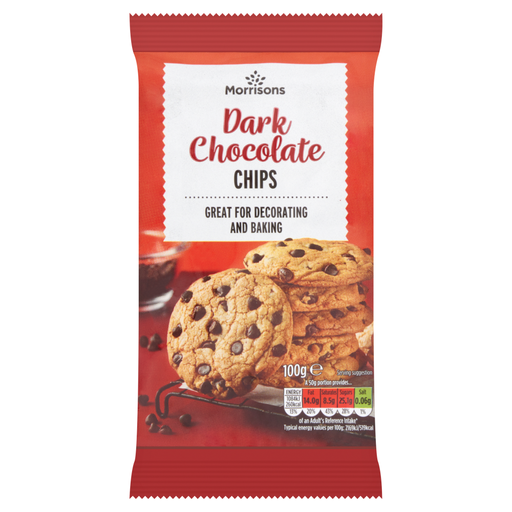 No image available
Chips for baking or decorating rather than a bar for chopping. The stated cocoa solids are 50% minimum; the product contains soya and may contain milk. Check the current pack before using it for the sale.
 No image available
A plain 70% dark bar to consider when selecting chocolate for a dessert. It is not identified as a cooking-specific bar or a ready-portioned sale item. The product information reports possible milk and nut cross-contact; check the current pack.
 No image available
A truffle format to assess if the stall will sell chocolate as a treat. Check how the truffles are packaged before planning individual portions; they are not identified as a baking ingredient. They contain barley, milk and soya and may contain nuts, so read the current pack.
A plain 70% cooking bar is a starting point when the recipe calls for dark chocolate. Lindt positions its Cooking 70% bar for brownies and cookies; check the recipe as well, because cocoa percentage indicates general flavour depth and sweetness rather than whether a particular bar meets every recipe or allergen requirement.
Not necessarily. Lindt says its Excellence 70% bar is made to a vegan recipe but is not suitable for people with a milk allergy because it is made in a facility using milk. Check the exact product’s current allergy statement rather than relying on “vegan” or “dark”.
Keep accurate ingredient and allergen information for each item and check the school’s arrangements before the sale. GOV.UK says food businesses must provide allergen information; Anaphylaxis UK recommends giving as much allergen information as possible at school bake sales. The organiser’s role and how the food is offered matter when establishing applicable requirements.
Follow the school’s allergy arrangements, label each bake accurately and use separate foods and utensils where those arrangements require it. Keep the ingredients of each recipe and its chocolate pack identifiable so allergen information is not lost between baking and serving.
Use the current pack to check ingredients and allergens before writing a label. M&S warns that its online food information can change and advises shoppers not to rely solely on the product page.